
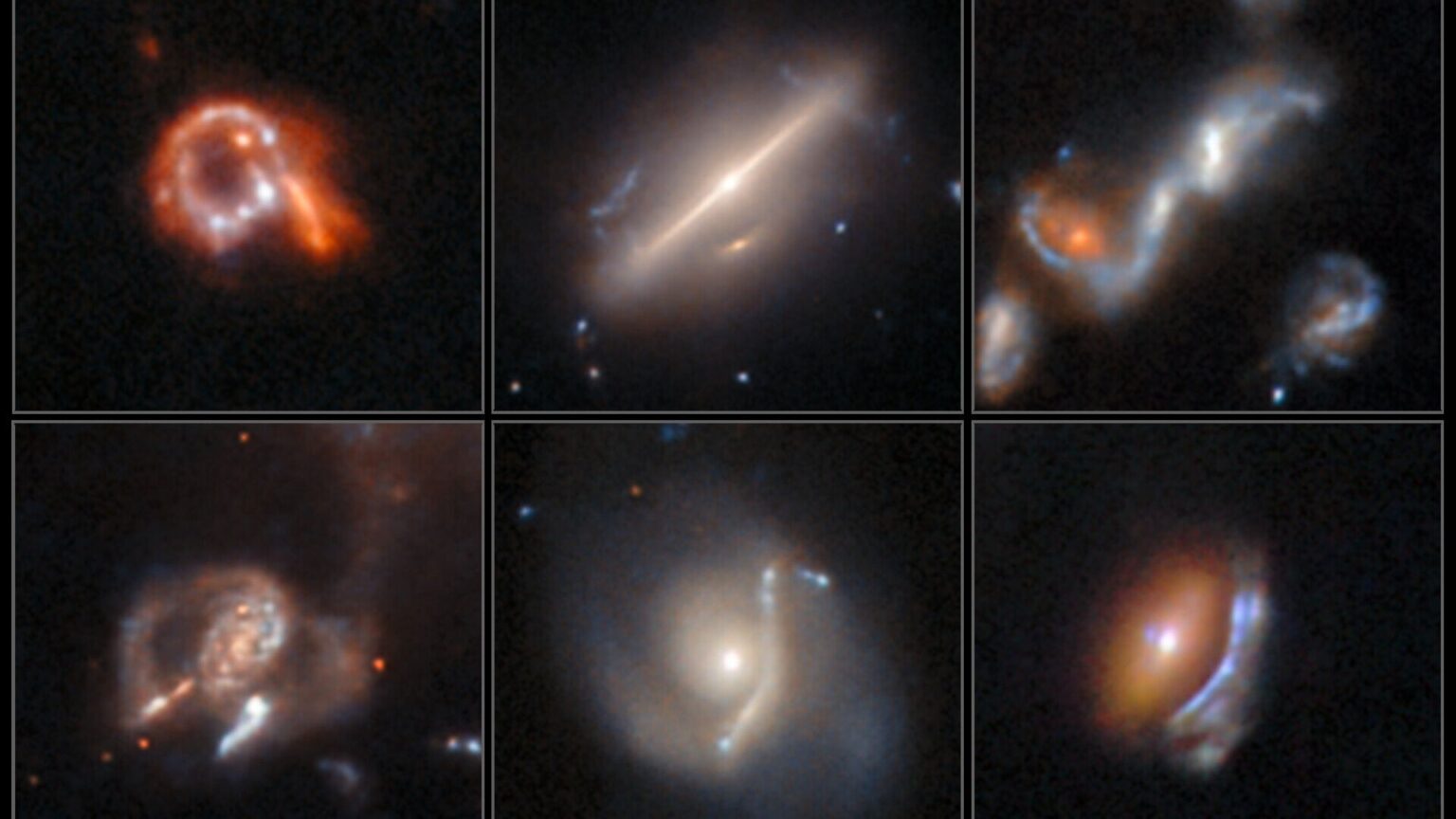
The Hubble Space Telescope takes a lot of pictures. In fact, NASA estimates Hubble has snapped 1.7 million images since it launched in 1990. But this poses a unique issue: It’s almost impossible for scientists to examine all of the images.
With this in mind, a pair of researchers at the European Space Agency (ESA) built an AI model called AnomalyMatch to comb through the vast Hubble Telescope dataset, and the AI managed to discover 1,300 anomalies, or objects with odd appearances. Hundreds of these anomalies have never been documented before.
“This is a powerful demonstration of how AI can enhance the scientific return of archival datasets,” Pablo Gómez, one of the ESA researchers who built the model, said in a statement.
You may like
Many of these new discovered objects of note actually defy classification, NASA explains. Most showed distant galaxies in flux as they merge and interact in strange ways and scientists specifically point out “galaxies with massive star-forming clumps, jellyfish-looking galaxies with gaseous ‘tentacles,’ and edge-on planet-forming disks in our own galaxy resembling hamburgers.”
A time crunch
The images Hubble gathers represent the largest volume of observational data in the history of astronomy that we can analyze, yet this dizzying amount of information presents a hurdle for human observers to examine. There’s just not enough time. That’s why it’s promising for NASA to say it took less than three days for the team to sift through nearly 100 million image cutouts using AnomalyMatch.
As for how it works? The researchers trained the AI model to detect weird objects through pattern recognition. AnomalyMatch was essentially built to analyze the images in a similar way to how we process visual information inside our brains.
NASA calls this project a significant advancement. It’s the first time a systematic search for astrophysical anomalies has been conducted on the entire Hubble Legacy Archive, which spans decades of deep space observation.
“Archival observations from the Hubble Space Telescope now stretch back 35 years, providing a treasure trove of data in which astrophysical anomalies might be found,” David O’Ryan, lead author of the research paper, said in another statement.
“The discovery of so many previously undocumented anomalies in Hubble data underscores the tool’s potential for future surveys,” Gómez said.
Astronomy and Astrophysics published the paper detailing AnomalyMatch and its findings in December of 2025.