
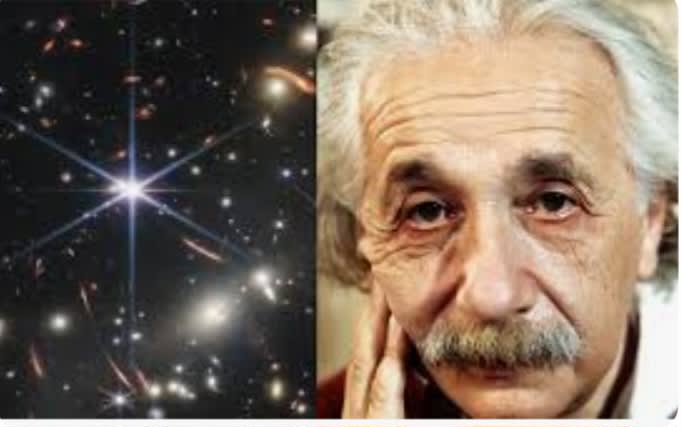
Albert Einstein is widely regarded as one of the greatest minds in human history. His ideas reshaped modern physics and transformed our understanding of space, time, energy, and the universe itself. More than just a scientist, Einstein became a global symbol of intelligence, curiosity, and intellectual freedom.
Early Life and Education
Albert Einstein was born on March 14, 1879, in Ulm, Germany, into a middle-class Jewish family. Contrary to popular myths, Einstein was not a poor student—though he disliked rigid schooling and rote memorization. From a young age, he showed deep curiosity about how things worked. A simple compass given to him as a child sparked his lifelong fascination with invisible forces.
Einstein studied physics and mathematics at the Swiss Federal Polytechnic in Zurich. After graduation, he struggled to find an academic position and eventually took a job as a patent clerk in Bern, Switzerland. Ironically, this quiet and modest job gave him the mental freedom to think deeply about the fundamental laws of nature.
The Miracle Year of 1905
In 1905—often called Einstein’s Annus Mirabilis (Miracle Year)—he published four groundbreaking papers that would change physics forever. These papers explained:
The photoelectric effect, which later helped develop quantum theory
Brownian motion, providing evidence for the existence of atoms
Special relativity, introducing the idea that time and space are relative
The famous equation E = mc², showing that mass and energy are interchangeable
This single year established Einstein as a revolutionary thinker, even though widespread recognition came later.
Theory of Relativity
Einstein’s most famous contribution is the Theory of Relativity, divided into Special Relativity (1905) and General Relativity (1915). General Relativity proposed that gravity is not just a force but a curvature of space-time caused by mass and energy. This theory predicted phenomena such as black holes and gravitational waves—ideas that were confirmed decades later.
Relativity challenged classical Newtonian physics and permanently changed how scientists understand the universe. Even today, Einstein’s theories are essential in technologies like GPS systems.
Nobel Prize and Global Fame
In 1921, Albert Einstein was awarded the Nobel Prize in Physics, not for relativity, but for his explanation of the photoelectric effect. By this time, he was already world-famous. His wild hair, thoughtful expressions, and witty remarks made him a cultural icon beyond science.
Despite his fame, Einstein remained humble and critical of blind authority. He believed imagination was just as important as knowledge, famously saying, “Imagination is more important than knowledge.”
Philosophy, Humanity, and Peace
Einstein was deeply concerned with social justice, human rights, and global peace. He spoke out against racism, supported civil rights in the United States, and criticized nationalism and war. Although he signed a letter warning the U.S. government about the potential development of atomic weapons, he later became a strong advocate for nuclear disarmament.
He also had a philosophical side, often reflecting on religion, ethics, and the meaning of life. Einstein did not believe in a personal god but felt a deep sense of awe toward the order and mystery of the universe.
Legacy and Impact
Albert Einstein passed away on April 18, 1955, but his legacy lives on. His work laid the foundation for modern physics and continues to influence scientific research today. Beyond equations and theories, Einstein represents the power of curiosity, independent thinking, and courage to challenge established ideas.
In a world that often values speed over depth, Einstein’s life reminds us that true breakthroughs come from patience, imagination, and the willingness to question everything.
Conclusion
Albert Einstein was not just a brilliant physicist; he was a thinker who changed how humanity understands reality itself. His ideas transcended science, influencing philosophy, culture, and our vision of the future. More than a century later, Einstein remains a timeless symbol of human intellect and wonder.