
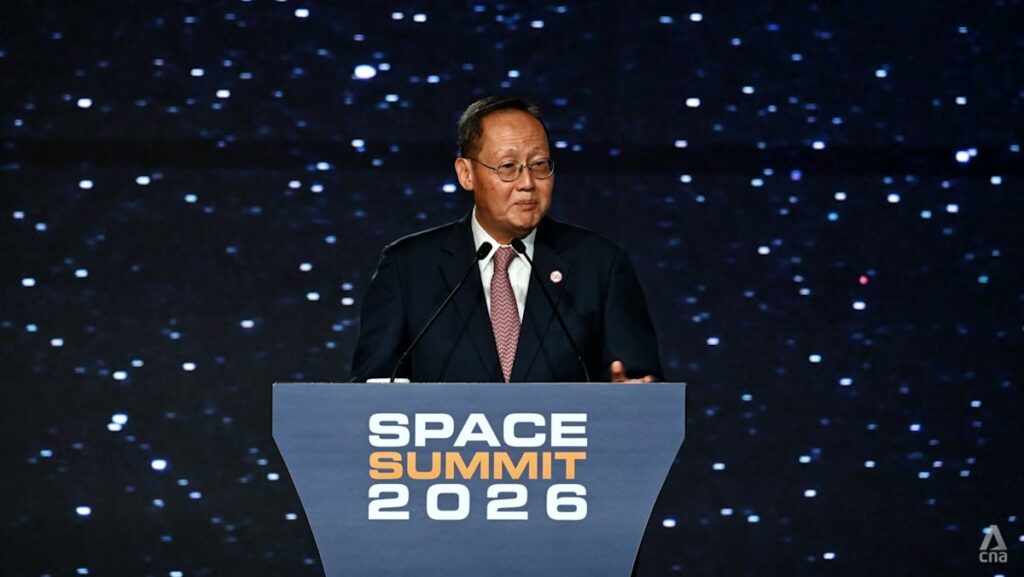
The NSAS will also develop legislation and regulation for the space sector, aimed at being pro-innovation and pro-business, while meeting high standards for space safety and space sustainability, said Dr Tan.
Guidelines for Singapore-related space activities were first established in 2024, covering the registration of space objects and ensuring space safety and sustainability.
“Building on this foundation, the agency will engage our space ecosystem on plans for national space legislation,” he said.
The NSAS will expand on the work of the Office for Space Technology and Industry (OSTIn) under the Economic Development Board, which since 2013 has been leading efforts to build up Singapore’s space technology sector.
Moving forward, Singapore will invest in emerging areas, such as climate and sustainability technologies, particularly satellite remote sensing for carbon monitoring; space sustainability technologies, including space situational awareness and approaches to debris remediation; and microgravity research in space to advance human health sciences.
“The government has set aside over S$200 million (US$157 million) since 2022 for space R&D projects through the Space Technology Development Programme, supporting research institutes and companies to develop and test their space technologies,” said Dr Tan.
He said that Singapore will continue to anchor space technology companies here and help them capture regional growth opportunities.
Singapore’s position as a trusted and connected hub, with a strong finance and logistics sector, makes it the ideal launchpad for companies offering space services across the Asia-Pacific region, said Dr Tan.
“We will continue to groom a strong talent pool, including a bench strength of local expertise, to support the growth of our space technology sector and to access the good jobs created,” he said.