
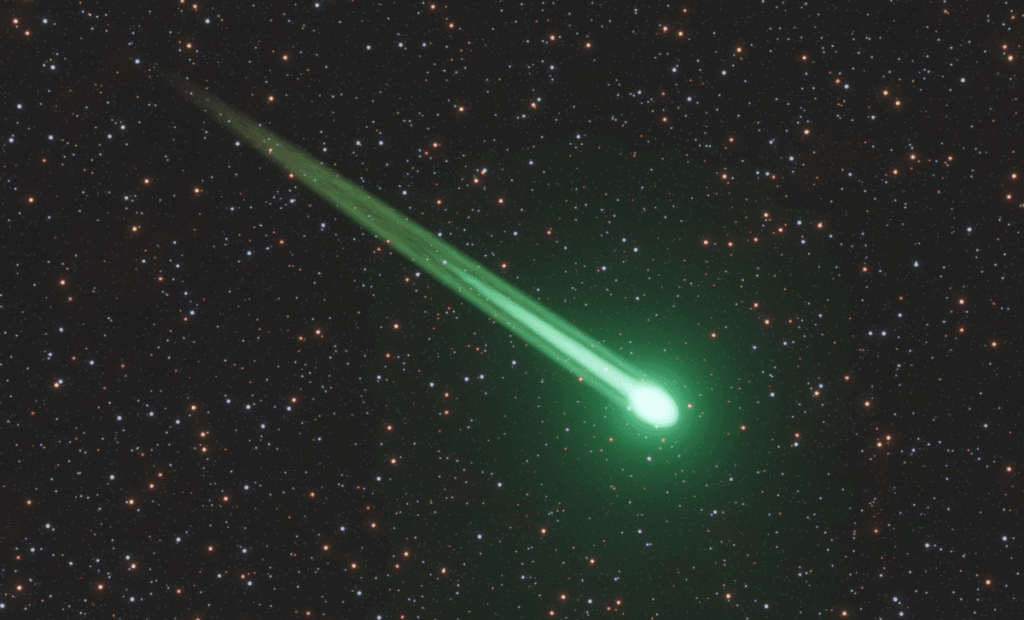
On January 30, 2026, an unusual and captivating phenomenon occurred above the city of Wellington, New Zealand. A bright streak of light was captured by a webcam at the Heretaunga Boating Club, sparking curiosity about its origin. BBC reports that the event may have been a meteor or space debris re-entering Earth’s atmosphere, but the mystery remains unsolved.
The Phenomenon: A Streak of Light Over Wellington
On that fateful night, a bright trail of light appeared over Wellington, leaving residents and onlookers in awe. According to the BBC, the event, captured by a webcam at the Heretaunga Boating Club, showed the streak reflected on the water below, adding to the ethereal beauty of the moment. The phenomenon was brief, but it was enough to raise questions about what it could have been. Was it a meteor, a piece of space debris, or something else entirely?
Meteors are common, and their fiery entry into Earth’s atmosphere often results in a bright flash of light visible to the naked eye. These objects typically burn up due to the friction they experience as they travel through the atmosphere. However, the possibility that this streak could have been space debris re-entering the Earth’s atmosphere has also gained attention. While meteors are natural, space debris is a growing concern as more and more satellites and rockets are launched into orbit, leaving behind discarded materials that can fall back to Earth.
The event was brief but spectacular, visible across a portion of New Zealand’s skyline. For some, it was a rare sight, one that they may never see again. The fact that the streak was reflected on the water below only added to its beauty, creating a moment that captivated those who witnessed it.
Space Debris: A Growing Concern for Our Skies
Space debris, or “space junk,” is a term used to describe discarded satellites, rocket parts, and other debris from human activity in space. While much of this debris burns up upon re-entry into Earth’s atmosphere, some pieces are large enough to survive the fall and reach the ground. This poses a risk not only to people on the ground but also to spacecraft and satellites in orbit.
Space debris is a significant problem that is only expected to grow as more satellites and spacecraft are launched into orbit. The growing number of objects in space increases the risk of collisions, which can create even more debris, perpetuating a cycle of space junk accumulation. The challenge of managing and tracking space debris is one that scientists and space agencies are working hard to address.
While the bright streak seen over Wellington could have been a meteor, the possibility that it was space debris adds an interesting layer of complexity to the event. Could this be a sign that the growing issue of space junk is becoming more visible and more dangerous?
The Science Behind Meteors and Space Debris
Meteors, which are often referred to as “shooting stars,” are small pieces of space rock that burn up upon entering Earth’s atmosphere. As these objects travel through the atmosphere, they experience extreme friction, causing them to heat up and emit light. This results in the bright streaks of light that we see across the sky. Most meteors are small and harmless, burning up long before they can reach the Earth’s surface.
On the other hand, space debris consists of man-made objects that are left behind after rockets and satellites complete their missions. Unlike meteors, which are natural, space debris is the result of human activity in space. Space junk is often made of materials like metal and plastic, and some pieces are large enough to survive re-entry into the atmosphere. When space debris re-enters the atmosphere, it can create similar streaks of light to meteors, but the path of the debris is usually less predictable, making it harder to track.
The study of meteors and space debris is a growing field within astronomy and aerospace science. Understanding how these objects interact with Earth’s atmosphere is crucial for both scientific research and public safety.