
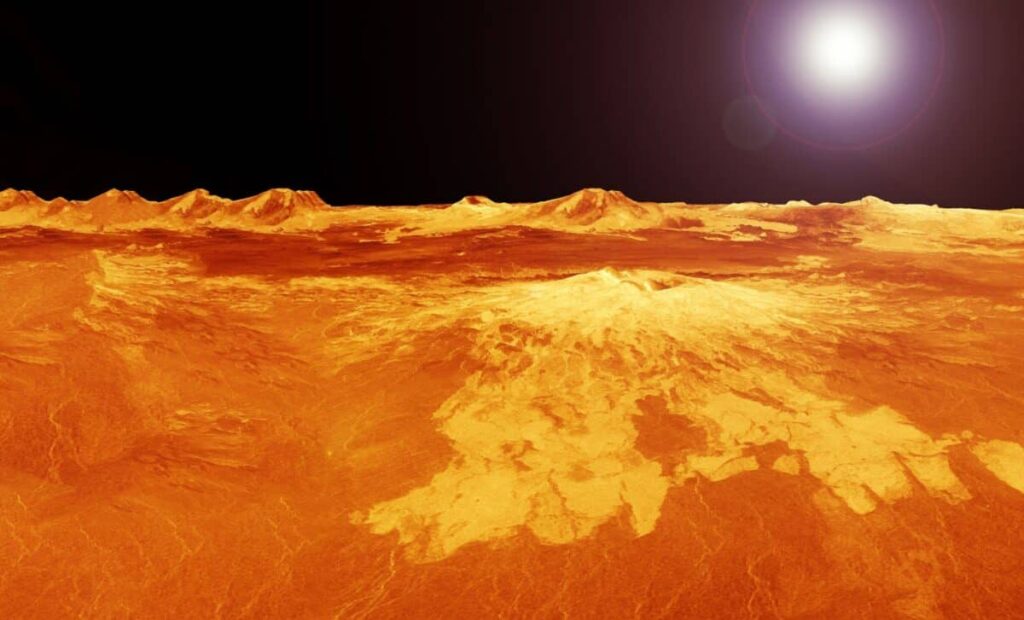
The surface of Venus is notoriously difficult to observe due to its thick, sulfuric atmosphere and crushing pressure. But the planet’s volcanic history is written across its plains, where winding channels and volcanic features hint at an active inner world. Scientists are now turning to lava tubes, long, hollow structures formed by flowing magma, as possible indicators of both past and present geologic activity.
A new wave of research is shifting focus beneath the Venusian crust, raising the stakes for upcoming space missions. These massive lava tubes, if confirmed, could reshape how we understand volcanic processes in extreme planetary environments, and offer new insights into Venus’s dynamic past.
Subsurface Structures May Stretch for Hundreds of Meters
A study published in Icarus used finite element limit analysis to model how large Venusian lava tubes could be while remaining structurally stable. The results? Widths of up to one kilometer are possible, particularly in regions where the rock mass exhibits high mechanical strength. “Lava tubes with widths of a few hundred meters may remain stable,” write Marcin Chwała and colleagues, noting that this range aligns with the sizes of channel-like features already seen in orbital imagery.
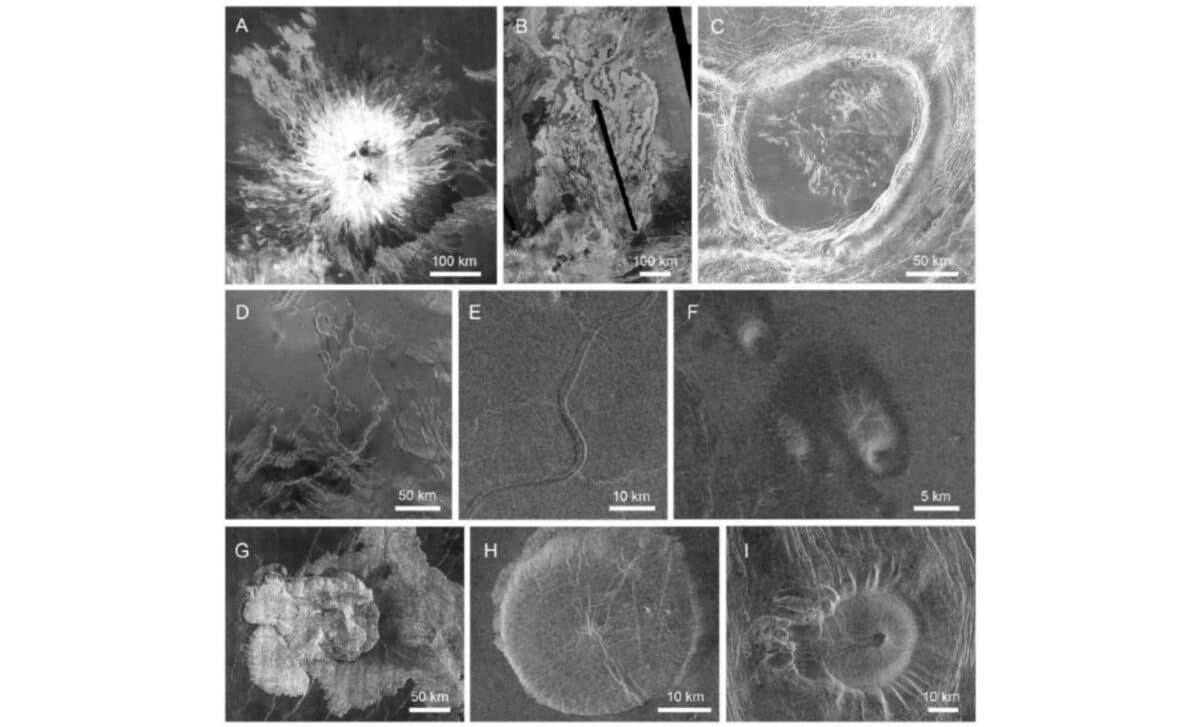 Representative Magellan radar imagery of Venusian volcanic features. ©NASA GSFC/JPL/USGS
The models considered various combinations of roof thickness, rock strength, and tube height. These parameters allowed researchers to bracket the maximum sizes of these voids. According to the team, such dimensions point toward a complex system of underground features, still invisible to current instruments, but likely leaving surface traces like pit chains or gravity anomalies.
Signs of Active Volcanism Continue to Mount
While lava tubes point to an active past, several findings suggest that Venus may still be volcanically alive. According to a comprehensive review in Geochemistry, “the combination of all evidence strongly indicates that Venus is volcanically active today.” The strongest signs come from regions like Maat Mons and Idunn Mons, where repeat radar observations show surface changes that may reflect lava flows or ash deposits.
Despite these leads, confirming volcanic activity remains a major challenge. The planet’s thick cloud cover prevents most optical instruments from peering through, forcing scientists to rely on radar and spectroscopy. Yet these tools have already captured hints of outgassing events and thermal anomalies, suggesting ongoing geologic processes beneath the surface.
Explosive Eruptions Could Reach the Venusian Cloud Layer
Explosive volcanism might also be contributing to Venus’s dynamic atmosphere. In a study published in Journal of Geophysical Research: Planets, researchers used the Earth-based FPLUME model to simulate how high volcanic plumes might rise under Venusian conditions. They found that under certain circumstances, plumes could shoot up to 15 kilometers, or even higher in some polar regions.
The simulations accounted for factors unique to Venus, such as its super-rotating winds and temperature-dependent atmospheric heat capacity. These variables significantly impact how far volcanic material can travel. According to the study, wind shear tends to bend and shorten plumes, while polar environments with weaker winds allow for taller columns of gas and ash. This interaction may influence sulfur cycles and atmospheric chemistry over time.