
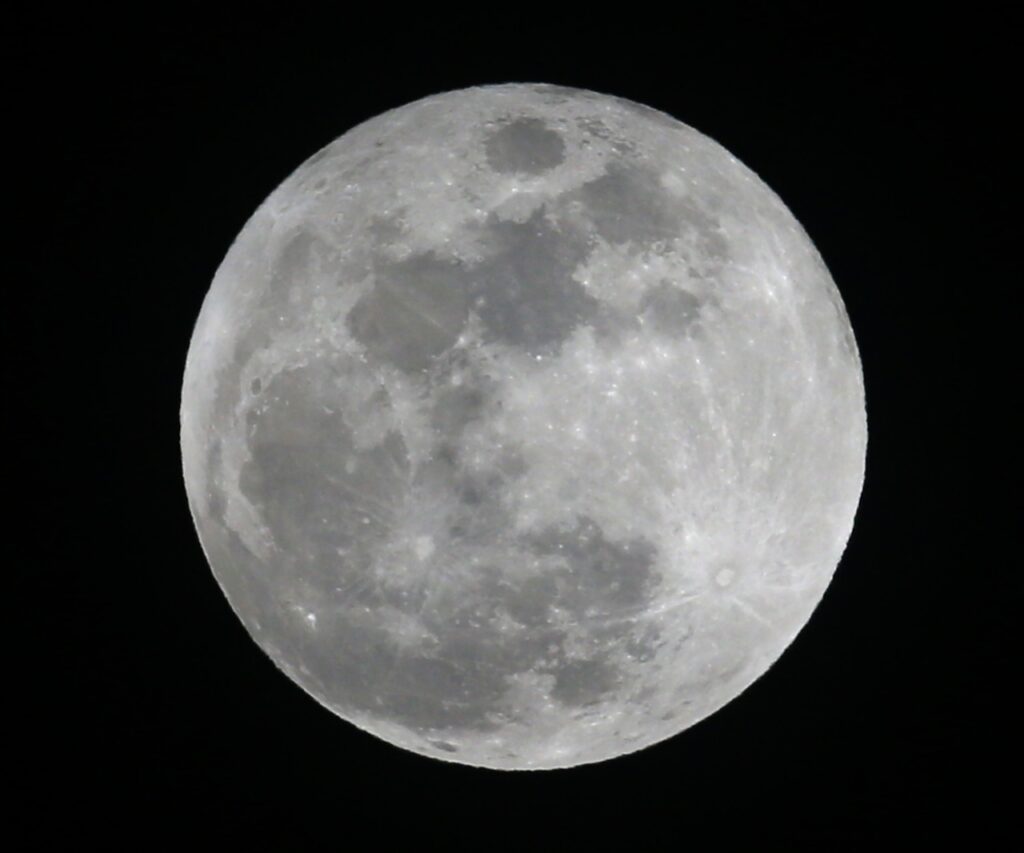
CLEVELAND, Ohio — February’s full moon will rise over Northeast Ohio and beyond this weekend, lighting up the winter sky with the glow of the “snow moon,” a name tied to the typically heavy snowfall that defines the heart of winter.
The moon will appear full and bright for several nights, offering multiple chances to catch it rising in the eastern sky — even after the moment of peak illumination passes Sunday evening.
When to see the snow moon in Northeast Ohio
The snow moon reaches peak illumination at 5:09 p.m. Sunday, Feb. 1, according to The Old Farmer’s Almanac. While the exact peak occurs before sunset locally, the moon will still appear full when it rises later in the evening.
In Northeast Ohio, moonrise times around the full moon include:
Sunday, Feb. 1: Moonrise at 5:33 p.m. (sunset at 5:42 p.m.)Monday, Feb. 2: Moonrise at 6:49 p.m. (sunset at 5:44 p.m.)Tuesday, Feb. 3: Moonrise at 8:00 p.m. (sunset at 5:45 p.m.)
The moon will remain more than 99% illuminated through Monday night and will still appear nearly full Tuesday evening, meaning skywatchers don’t need to limit viewing to a single night.
As the moon rises, it may appear larger and take on a yellow or orange hue near the horizon — an effect caused by Earth’s atmosphere scattering shorter wavelengths of light. This “moon illusion” often makes full moons especially striking at moonrise.
Why it’s called the snow moon
February’s full moon is traditionally known as the snow moon, a name that likely needs little explanation for Northeast Ohio this winter, thanks to the above-average snowfall the region has experienced so far.
The Old Farmer’s Almanac notes that February is, on average, the snowiest month of the year in much of the United States. Historical accounts from the 18th century describe deeper and more frequent snow during this period than at other points in winter.
Other traditional names for February’s moon reflect both wildlife and seasonal hardship. Some Indigenous North American groups used names tied to animals — including the “bear moon,” “raccoon moon” and “eagle moon” — while others referenced hunger and food scarcity during the late-winter stretch, according to the almanac.
What else to look for in the sky
Despite the brightness of the full moon, several familiar celestial sights will still be visible Sunday night:
Jupiter will shine prominently in the eastern sky, appearing as a bright “evening star” after reaching opposition earlier this month.The constellation Orion will be visible nearby, along with Aldebaran, the reddish star marking the eye of Taurus.Regulus, the brightest star in Leo, will appear close to the moon as it rises. On Monday night, the moon will pass directly in front of Regulus for observers in parts of North America and Africa.Saturn will be visible low in the western sky near sunset but will set a few hours later.
The full moon also will appear near the Beehive Cluster in the constellation Cancer, though the cluster will be difficult to spot because of the moon’s glare.
Snow moon viewing tips
No special equipment is needed to enjoy the “snow moon,” though a clear view of the eastern horizon at moonrise helps.
For photography, a tripod and a remote shutter or timer can reduce blur. The moon often looks most dramatic shortly after rising, when atmospheric effects enhance its color and apparent size. A cleaner, whiter view emerges later in the evening as it climbs higher into the sky.
If clouds cooperate, the February “snow moon” will offer several chances to look up — not just Sunday night, but well into the start of the new week.
When is the next full moon?
The next full moon after February’s snow moon will be the “worm moon,” which reaches peak illumination at 6:38 a.m. on March 3, according to The Old Farmer’s Almanac.
As with most full moons, it will appear full and bright the night before and the night of the peak, offering multiple chances for viewing depending on cloud cover.