
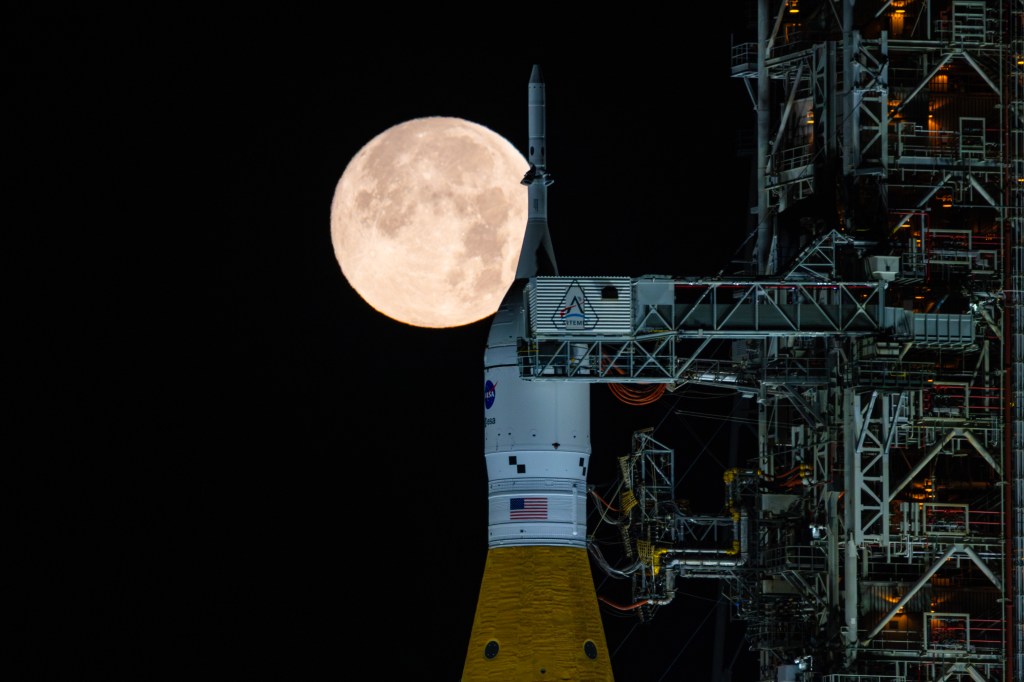
The cold weather didn’t stop NASA from calling employees to work Saturday night to begin the two-day countdown of a test run for its Artemis II moon mission.
Staff were called to stations at Kennedy Space Center at 8:13 p.m., which is 48 hours and 40 minutes before the opening of a planned simulated launch window coming Monday at 9 p.m. that will run into Tuesday morning until about 1 a.m.
Teams will be filling the Space Launch System rocket and Orion spacecraft with 700,000 gallons of cryogenic propellant during the wet dress rehearsal at KSC’s Launch Pad 39-B that will bring the countdown clock down to T-33 seconds mimicking the action that would be taken on an actual launch day. The hardware was rolled out to the pad from the Vehicle Assembly Building on Jan. 17.
The Monday night test was delayed from original plans to run it Saturday night, but the frigid weather that descended on Florida this weekend prompted NASA to call it off as temperatures would fall below the safety criteria for tanking had it been an actual launch.
“We always say, we test how we launch, and we would never launch under these conditions,” said Casey Swails, NASA’s deputy associate administrator on Friday.
Depending on the results of the test, NASA could deem Artemis II ready for launch with the earliest possible liftoff on Sunday night, Feb. 8, with backups on Feb. 10 and 11. The next launch windows are March 6, 7, 8, 9 and 11, then April 1, 3, 4, 5 and 6.
If any issues arise, NASA could still roll the rocket back to the VAB. During the Artemis I launch in 2022, the agency had to make several trips back and forth from the pad before finally launching.
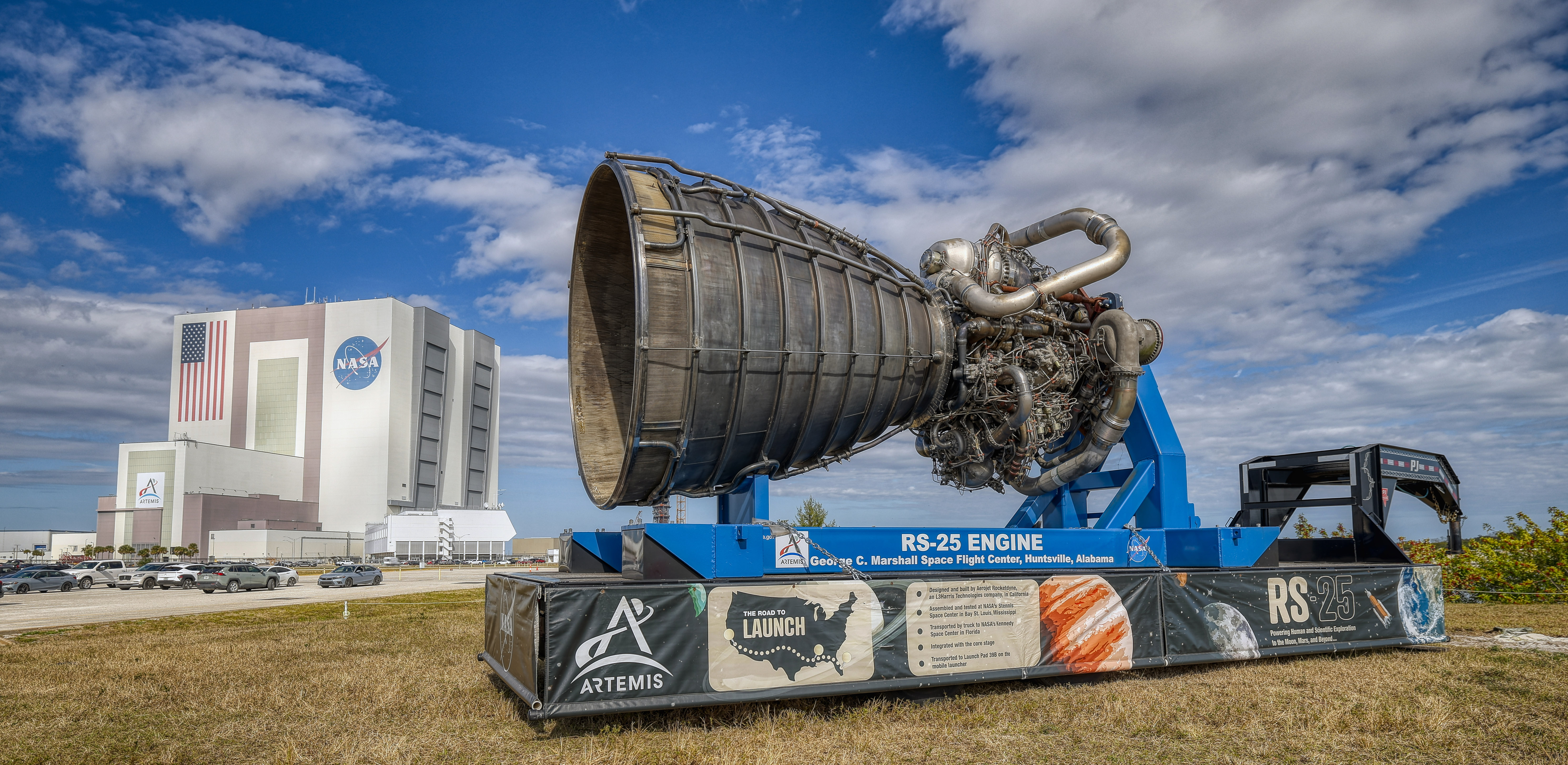
A RS-25 engine, used as the Space Shuttle Main Engine (SSME) and is used on the Space Launch System is on display at the Kennedy Space Center Press Site — with the Vehicle Assembly Building in the background, on Friday, January 30, 2026. (Ricardo Ramirez Buxeda/ Orlando Sentinel)
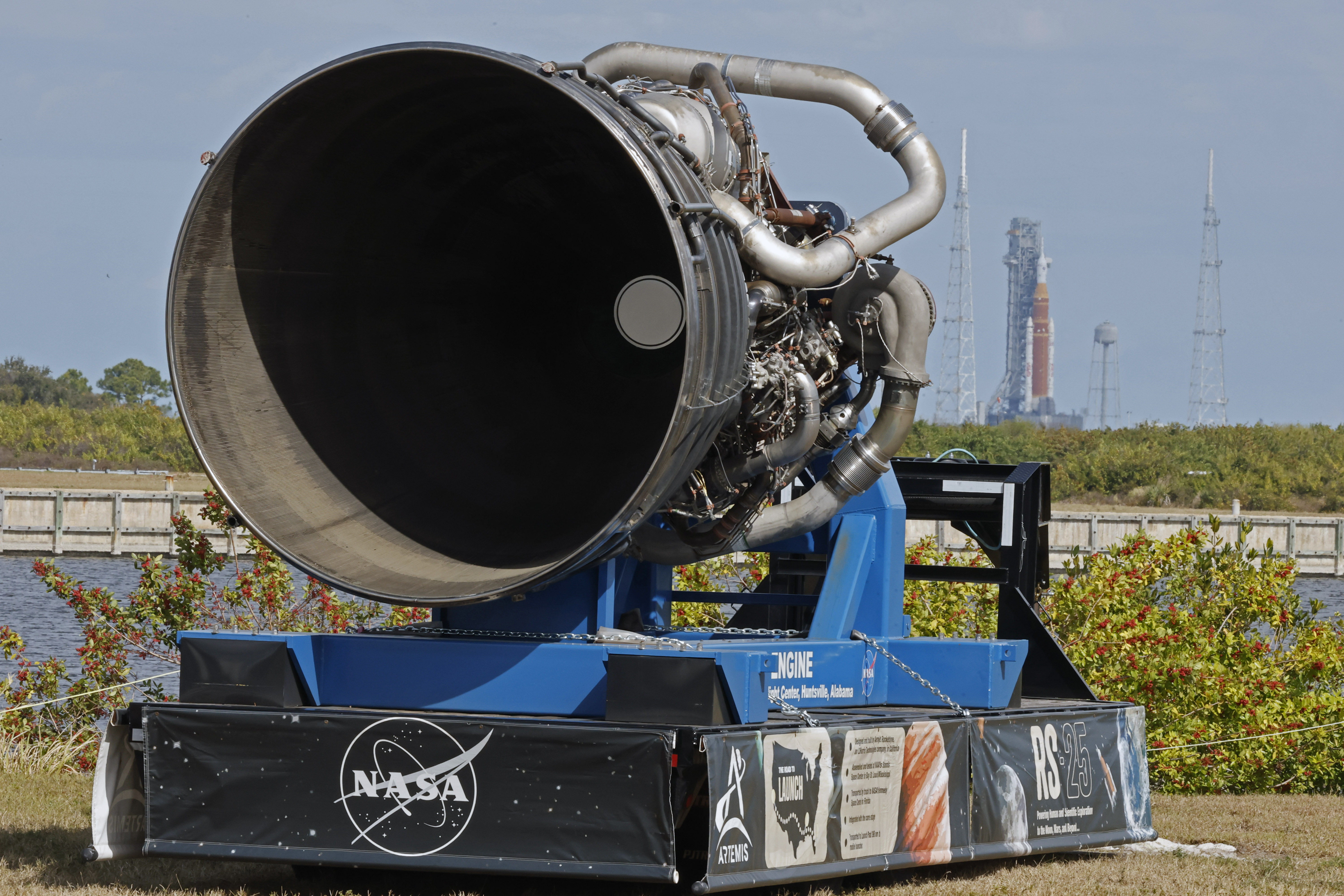
A RS-25 engine, used as the Space Shuttle Main Engine (SSME) and is used on the Space Launch System is on display at the Kennedy Space Center Press Site — with Artemis II: the Space Launch System rocket and Orion spacecraft at Launch Pad 39B in the background, on Friday, January 30, 2026. (Ricardo Ramirez Buxeda/ Orlando Sentinel)

A RS-25 engine, used as the Space Shuttle Main Engine (SSME) and is used on the Space Launch System is on display at the Kennedy Space Center Press Site — with Artemis II: the Space Launch System rocket and Orion spacecraft at Launch Pad 39B in the background, on Friday, January 30, 2026. (Ricardo Ramirez Buxeda/ Orlando Sentinel)

A RS-25 engine, used as the Space Shuttle Main Engine (SSME) and is used on the Space Launch System is on display at the Kennedy Space Center Press Site — with the Vehicle Assembly Building in the background, on Friday, January 30, 2026. (Ricardo Ramirez Buxeda/ Orlando Sentinel)
Show Caption
1 of 4
A RS-25 engine, used as the Space Shuttle Main Engine (SSME) and is used on the Space Launch System is on display at the Kennedy Space Center Press Site — with the Vehicle Assembly Building in the background, on Friday, January 30, 2026. (Ricardo Ramirez Buxeda/ Orlando Sentinel)
When it did, the SLS rocket became the most powerful to ever launch to orbit generating 8.8 million pounds of thrust on liftoff powered by four RS-25 engines from the Space Shuttle Program at the base of the massive core stage coupled with a pair of solid rocket boosters.
That will also be the most powerful rocket to send humans into space if all goes well.
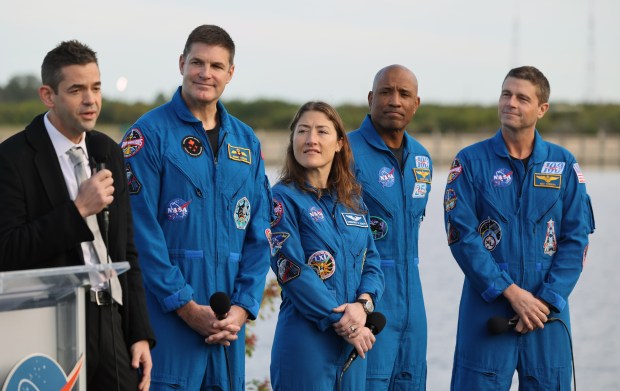 NASA administrator Jared Isaacman talks to the media as the Artemis II crew: Jeremy Hansen, mission specialist, Canadian Space Agency; Christina Koch, mission specialist, NASA; Victor Glover, pilot, NASA; and Reid Wiseman, spacecraft commander, NASA; look on, as the Artemis II rocket rolls out to Launch Complex 39-B at the Kennedy Space Center, on Saturday, January 17, 2026.
(Ricardo Ramirez Buxeda/ Orlando Sentinel)
Awaiting their ride are NASA astronauts Reid Wiseman, Victor Glover and Christina Koch along with Canadian Space Agency astronaut Jeremy Hansen. They look to become the first humans to fly beyond low-Earth orbit since 1972.
Making the first crewed flight of the Orion spacecraft, they intend to undertake a 10-day mission that will first orbit the Earth to ensure the capsule is safe, and then head out on a lunar fly-by before returning for a splashdown in the Pacific Ocean.
The goal of Artemis II is to test out Orion’s safety with crew and set up Artemis III, which aims to return humans to the lunar surface for the first time since the end of the Apollo program half a century ago. The Trump administration is pushing for that flight to take place by the end of 2028 before he leaves office.
That flight, though, will require more work on both new spacesuits being developed by Axiom Space, and the success of either SpaceX’s Starship or Blue Origin’s Blue Moon lander, which are now both vying to be the human landing system for the mission.
Starship is still flying test missions from SpaceX’s Texas launch site while a smaller, uncrewed version of the Blue Moon lander has been shipped from Florida to Houston to complete testing ahead of a planned launch to the moon later this year.