
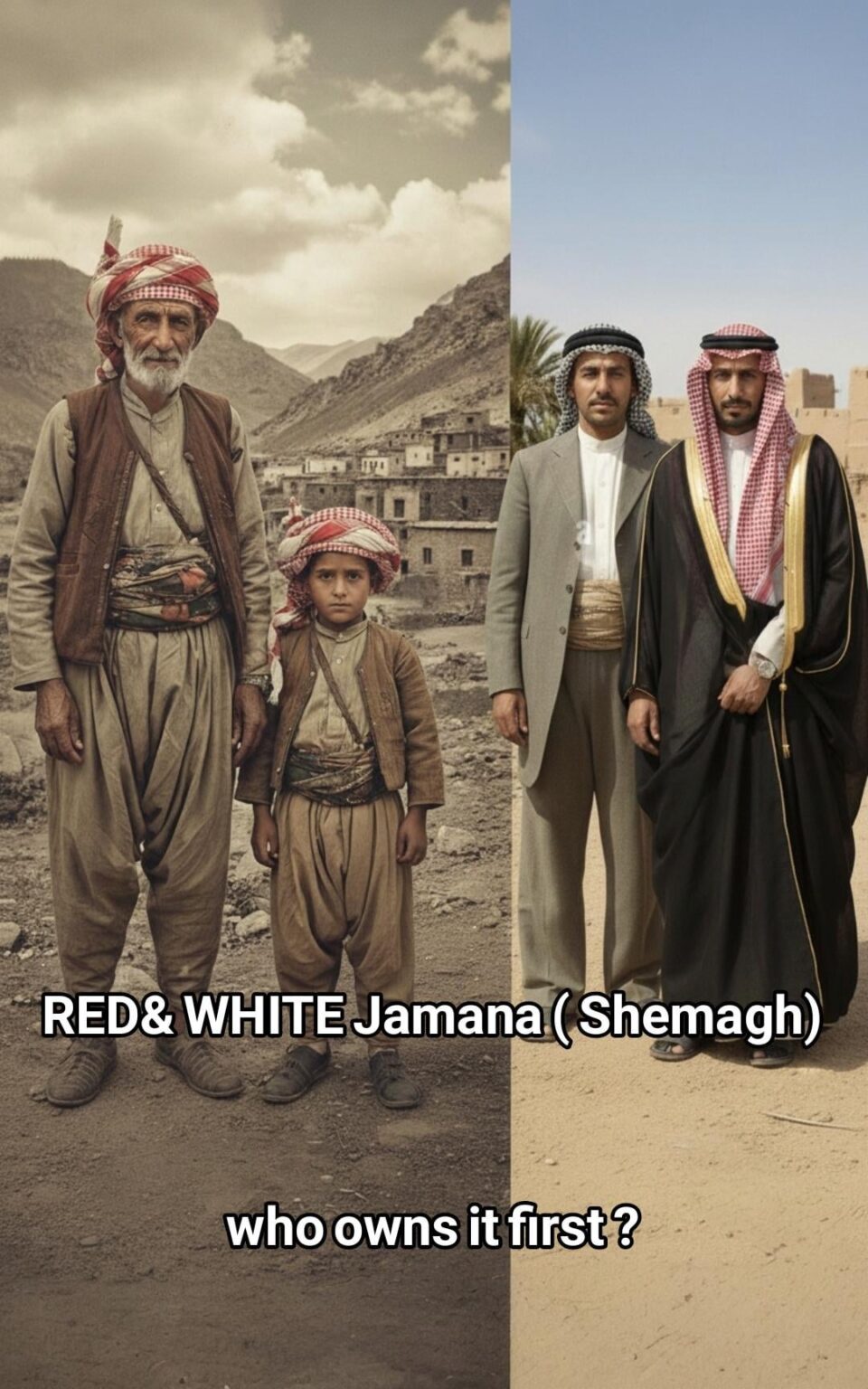
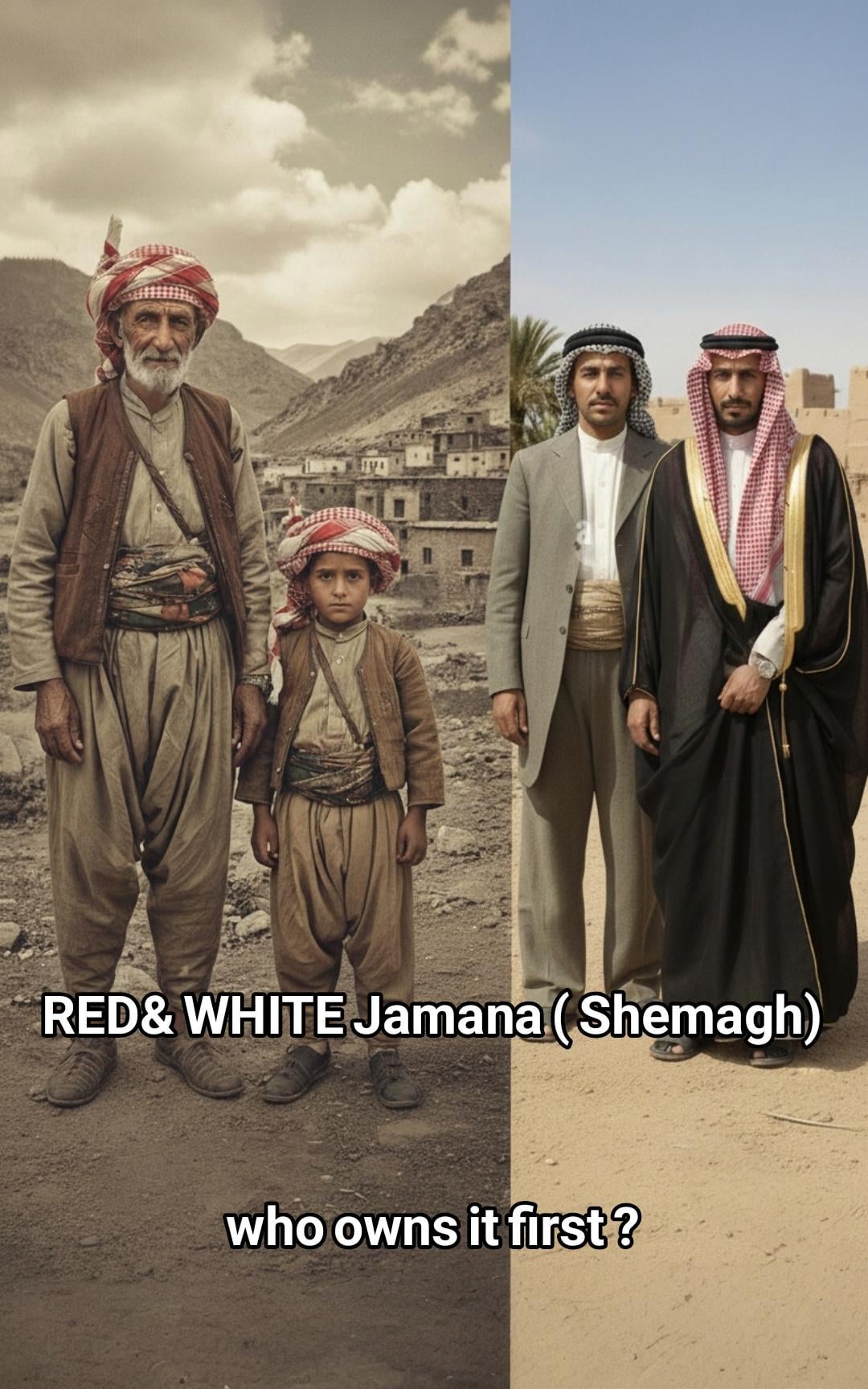
The History of the Red and White Jamana The red-and-white Jamana is more than just a headscarf; it is the "crown" of the Kurdish resistance and the Yazidi faith , the Barzani family and the people of Badinan adopted the red and white specifically to stand out as a symbol of their unique lineage and their refusal to submit to outside authorities. For the Yazidis and shexani , the color red is sacred, representing "the heat of the sun" and "the blood of life," making the Jamana a spiritual garment as well as a cultural one.
Who Wore It First and How?
1-The Sumerian Origin (The Pattern): Thousands of years ago, the Sumerians in Mesopotamia were the first to wear "fishnet" patterned cloths on their heads. This original design (called ashmagh in ancient Sumerian) was meant to represent a fishing net, a symbol of abundance and protection.
2-The Yazidi Preservation (The Spiritual Step): Long before modern politics, the Yazidi community preserved the red-and-white color scheme in their sacred clothing (like the Dazike string and the Jamana). They wore it to honor their ancient Mesopotamian roots and religious rites.
- The Barzani Revolution: A Symbol of Defiance In the early 20th century, Sheikh Ahmad Barzani and later Mulla Mustafa Barzani institutionalized the red-and-white Jamana as a powerful symbol of Kurdish identity and the refusal to surrender. Rather than just a tribal marker, it became a uniform of resistance.
4-The British Military Intervention (The Modern Step): In the 1930s, the British (under Glubb Pasha) adopted this existing regional pattern and mass-produced it in red and white for the Jordanian Arab Legion. This is why many people mistakenly think it is "Jordanian," but the British actually took a local design that was already present in Mesopotamia and the Zagros.
What it Symbolizes Totally ?
The Jamana represents three core values: Resistance: It is the official "uniform" of the Peshmerga of the Badinan region. To wear it is to say you are a defender of the land. Purity & Sacrifice: The white represents peace and the red represents the blood of the martyrs who fell for freedom. Ancestry: It is a direct link to the Sumerian and Assyrian ancestors of the region, signaling that the wearer is an indigenous son of Mesopotamia.
The Answer is : the red and white jamana belongs to kurdish , many people mistakenly think it is "Jordanian," but the British actually took a local design that was already present in Mesopotamia and the Zagros. But by origin the real owner is kurd
Source : Historical records and Kurdish oral tradition (documented in ethnographic studies of the Barzan region) confirm that the red Jamana was a tribal signature of the Barzanis long before the 1930s British-Arab military standardization.
Source : Historical records and Kurdish oral tradition (documented in ethnographic studies of the Barzan region) confirm that the red Jamana was a tribal signature of the Barzanis long before the 1930s British-Arab military standardization.
by Shexanii