

Halley’s Comet, known for its periodic return every 72 to 80 years, may have had its recurring orbit recognized as early as the 11th century by an English monk, more than six centuries before the formal calculations published in 1705 by the British astronomer Edmond Halley, according to new academic research.
A well-established name, but an earlier discovery.
Halley’s Comet was named in honor of Edmond Halley, who in 1705 reconstructed its orbit based on his own observations and historical records, identifying an approximate cycle of 75 years. This work made it possible to predict the comet’s return in 1758.
Recent research, however, indicates that Halley was not the first to recognize the periodic nature of the object. The study suggests that the English monk Eilmer, also known as Aethelmaer of Malmesbury, may have associated two observed appearances of the comet with an interval of about 77 years.
— ARTICLE CONTINUES BELOW —
See also other features
Dogs are dyed black and white, become “pandas” in zoos, and divide opinions around the world; the controversy highlights the ethical boundaries between entertainment, deception, and the pressure for virality on social media.

With 4,5 million liters of water, the largest marine aquarium in South America is located in Brazil and houses 10 animals of 350 species, a 3,5 million liter underwater tunnel in the “Big Tank,” and 27 auxiliary tanks.

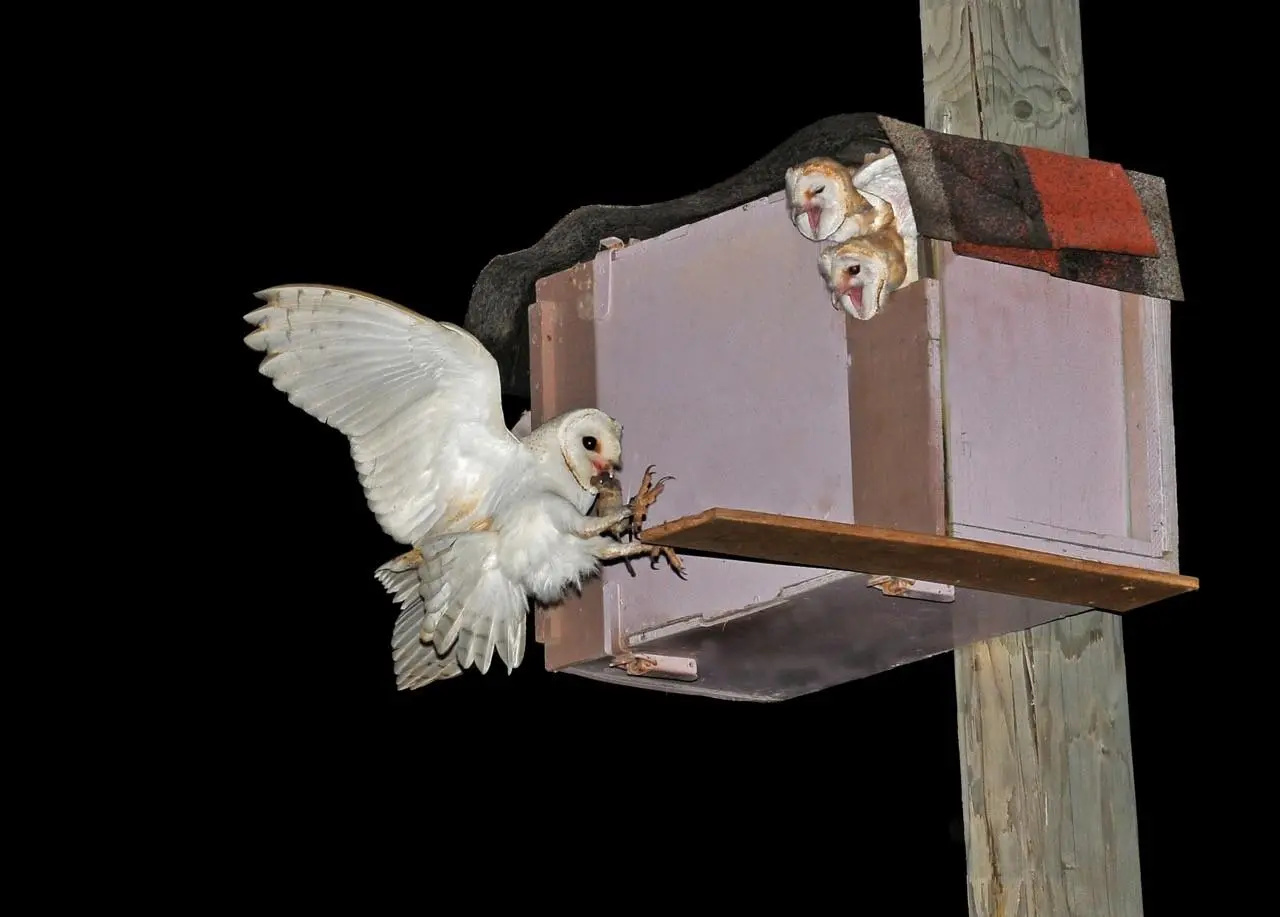
Barn owls are returning to the edges of U.S. cities, using nest boxes installed by humans to hunt rats and mice and help scientists understand how urbanization fuels urban pests.
Bosch CEO questions the current work schedule: “Are 40 hours enough in any situation to keep up with the pace of the world?”

Eilmer’s observations in 989 and 1066
According to historical accounts, Eilmer observed a comet crossing the skies of England in 989, when he was still a boy. Decades later, in 1066, he witnessed a new appearance of the same phenomenon and is said to have connected the two events as being from the same celestial body.
This interpretation is presented by Simon Portegies Zwart, an astronomer at Leiden University in the Netherlands, in a recent book. According to the author, the account suggests that Eilmer understood it to be a recurring phenomenon, something remarkable for the astronomical knowledge of the time.
The account preserved by William of Malmesbury
The main source about Eilmer is the 12th-century historian William of Malmesbury. According to him, upon seeing the comet in 1066, Eilmer exclaimed that it had been a long time since its last appearance and that now the celestial body seemed to announce the ruin of his homeland.
That year, England was experiencing a serious succession crisis following the death of King Edward the Confessor. The comet was also visually depicted in the Bayeux Tapestry, which portrays the Norman invasion led by William the Conqueror, after the comet’s appearance over Britain and the British Isles in April 1066.
A monk caught between flight and astronomy.
Eilmer is remembered not only for his celestial observations, but also for a pioneering attempt at human flight. Inspired by Greek mythology, he is said to have built wings and jumped from a tower in the late 990s or early 1000s.
According to William of Malmesbury, the monk glided for about 200 meters before falling and breaking both legs after a gust of wind interrupted his descent. Besides this episode, Eilmer maintained a great interest in astrology and astronomy, central areas of his studies.
Halley’s Comet in recorded history
Halley’s Comet was the first to be recognized by astronomers as periodic. Its highly elliptical orbit around the Sun causes it to approach Earth every 72 to 80 years, leaving a luminous trail of dust visible in the sky.
The earliest likely record of the comet dates back to 239 BC, in a Chinese chronicle. Since then, it has been observed dozens of times and frequently interpreted as an omen. In 66 AD, the historian Flavius Josephus associated its appearance with the fall of Jerusalem.
Late recognition and current debate
Edmond Halley accurately linked the apparitions of 1531, 1607, and 1682, correctly predicting the return in 1758, although he died in 1742 before seeing his prediction confirmed. His calculations were considered remarkable for the time.
Portegies Zwart argues, however, that the initial credit for gathering information about the comet’s appearances centuries earlier should be given to Eilmer.
This thesis was presented in a chapter co-authored with Michael Lewis, from Museum British, in the book Dorestad and Everything After: Ports, Townscapes and Travelers in Europe, 800-1100, published in 2025.
The next visible passage of Halley’s Comet is predicted for the end of July 2061, when the phenomenon may again be observable from Earth.