
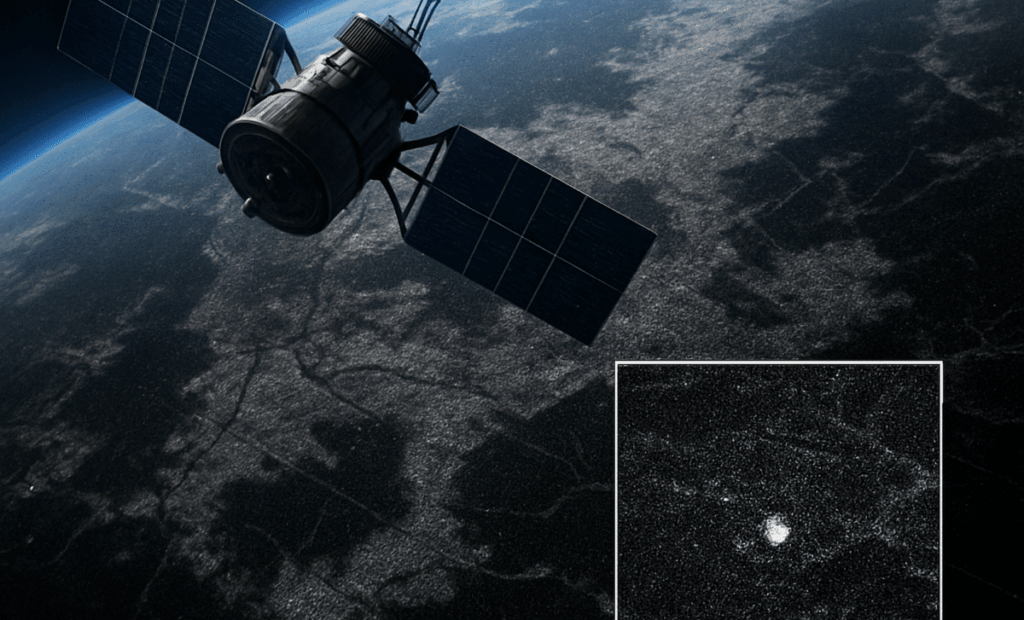
A recent event involving a Russian satellite, the Luch/Olymp, which appears to have disintegrated in orbit, has raised alarming questions about the rising threats posed by space debris. The satellite, initially launched in 2014 to inspect other spacecraft, was placed into a higher orbit after it was decommissioned in 2025. According to ground-based observations, the satellite suffered a fragmentation event in late January 2026, leading to serious concerns about the growing debris problem in space.
The Rise of Space Debris: How The Luch/Olymp Satellite Event Highlights Growing Risks
Space debris, also known as “space junk,” is one of the most pressing challenges facing modern space exploration. The recent fragmentation of the Russian Luch/Olymp satellite exemplifies the dangers that such debris poses to operational satellites and the overall safety of space missions. The Luch/Olymp satellite, launched in 2014, was once an active “inspector” satellite used to monitor and track other spacecraft in geostationary orbit. However, after its decommissioning in October 2025, it was sent into a higher orbit, known as the graveyard orbit, which is typically used for deactivated satellites.
According to Space.com, this particular satellite breakup occurred months after its retirement, raising questions about the increasing risks of collision and debris impact in this higher orbital region. As satellites are placed in orbits closer to Earth or in graveyard orbits, the likelihood of collision with existing space debris becomes more probable. A collision could lead to more debris, creating a dangerous feedback loop that threatens future missions. Ground-based observers have reported that the Luch/Olymp satellite’s disintegration was likely caused by an impact from an external debris object, highlighting the critical need for better space debris management and mitigation strategies.
LUCH (OLYMP) has started to tumble in its graveyard orbit tonight. Additional objects around the satellite can also be visually detected. An analysis of our photometric data is currently in progress. pic.twitter.com/8eFWu65zSX
— s2a systems (@s2a_systems) January 30, 2026
The Growing Crisis of Space Junk: Luch/Olymp Satellite’s Disintegration
The latest disintegration of the Luch/Olymp satellite isn’t an isolated incident, but part of a broader trend that has seen increasing amounts of space debris cluttering Earth’s orbit. As more nations and private companies send satellites into space, the likelihood of space collisions grows. While many satellites are placed into orbit with care, the lack of adequate cleanup strategies for decommissioned satellites means that older, defunct satellites, like the Luch/Olymp, are left to contribute to the growing debris field.
In the case of Luch/Olymp, the satellite was placed into a high-altitude graveyard orbit in 2025, which is intended to be a safe area for deactivated satellites. However, as demonstrated by its recent breakup, these orbits are not entirely free from danger. An impact with another piece of space debris could result in the creation of even more fragments, further exacerbating the issue. Experts now fear that the debris in this part of Earth’s orbit may be more dangerous than previously believed, and the situation could escalate quickly if left unchecked.
The Role of External Debris in Satellite Breakups: Luch/Olymp’s Disintegration Raises Questions
While some satellite breakups are caused by internal factors, such as battery malfunctions or fuel tank ruptures, the disintegration of the Luch/Olymp satellite seems to have been caused by an external force: space debris. Jonathan McDowell, a prominent astrophysicist and satellite tracker, suggested that a collision with debris could be the cause of the satellite’s disintegration. This theory is supported by the fact that, upon retirement, the satellite’s internal energy sources, like fuel and batteries, should have already been vented. Therefore, an internal malfunction is unlikely to be the cause.
The possibility that an external debris impact triggered the breakup of the satellite underlines the dangers that space debris presents to satellites and other objects in orbit. Although this particular event occurred in a graveyard orbit, the risk of debris-related incidents is not limited to this region. Geostationary orbit (GEO), where satellites are typically placed for communication and other critical functions, also faces increasing dangers from debris. As the amount of space junk continues to grow, experts are calling for more effective solutions to track, manage, and remove debris from Earth’s orbits.
Will Space Debris Cleanup Be Too Late? Satellite Breakup Highlights Need for Action
The disintegration of the Luch/Olymp satellite underscores a critical question: is it already too late to clean up space debris? With thousands of pieces of debris already orbiting the Earth, both active and inactive satellites are at risk of being struck by this floating junk. The Luch/Olymp incident could serve as a wake-up call for the global community to take serious action on space debris mitigation.
In the aftermath of this event, experts are calling for stronger international cooperation to create a coordinated approach to debris removal. While some organizations are already working on strategies to remove or repurpose debris, there is still no universally agreed-upon solution. Technologies such as robotic arms, lasers, and nets are being developed to capture and deorbit space junk, but these solutions have yet to be fully tested on a large scale. Until a viable method is found, the risk of future collisions will remain a major concern.
Space Race, Space Risks: How Nations Are Competing to Monitor and Control Orbits
As space exploration expands, nations around the world, including the United States, Russia, and China, are racing to enhance their space capabilities. The development of advanced satellite technology and inspection satellites, like the Luch/Olymp, reflects this growing competition. While such satellites are designed to track and inspect the movements of other spacecraft, they also present new challenges when it comes to space debris. The closer satellites get to other objects in orbit, the higher the risk of collision.
The Luch/Olymp satellite’s breakup highlights another issue: as countries continue to advance their space capabilities, the demand for precise monitoring and management of the space environment will grow. Countries that develop the best debris tracking and removal technologies will have a significant advantage in ensuring the safety of their space assets. However, with limited resources and coordination, many space missions remain at risk of being impacted by debris.