


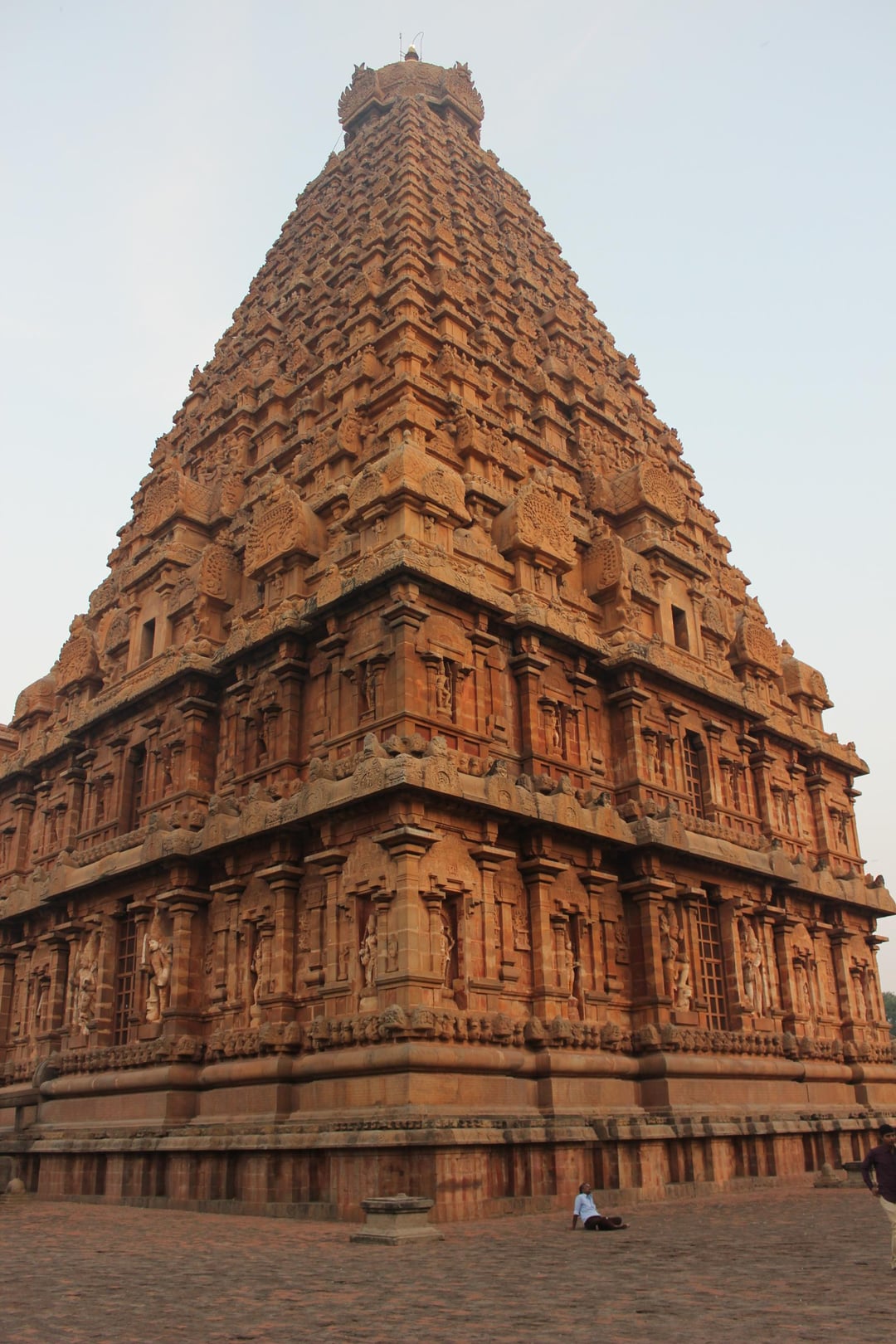
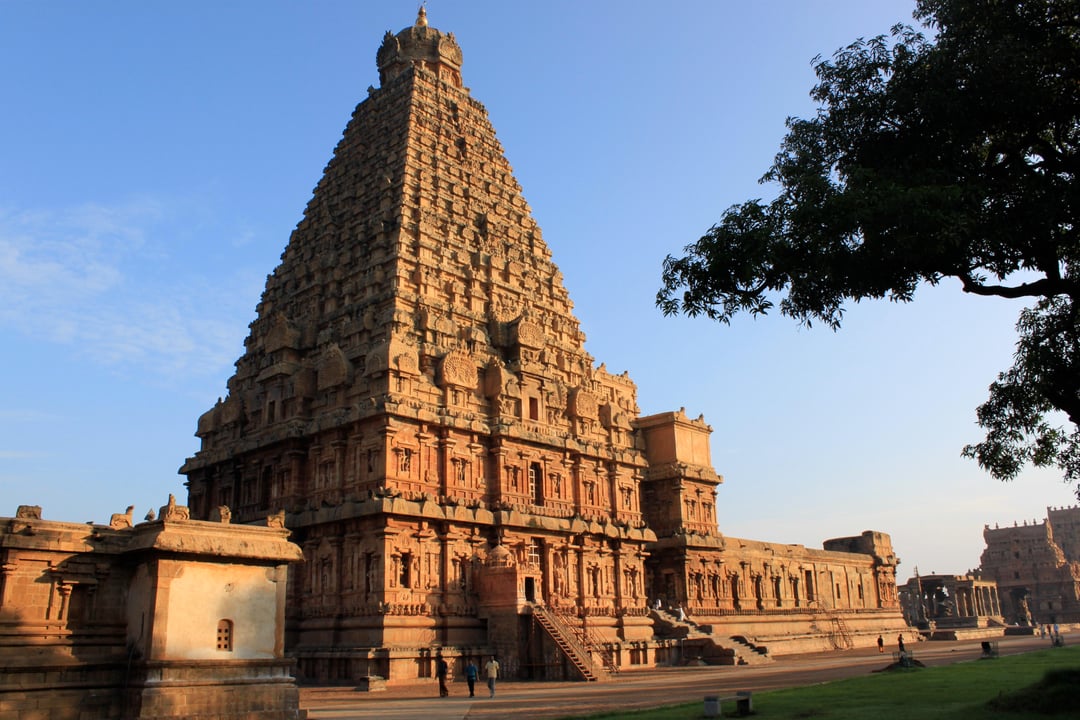
The Brihadeeswara Temple in Thanjavur, South India, was completed around 1010 CE during the reign of Rajaraja Chola I. The temple tower rises approximately 66 meters high and is constructed entirely from solid granite. The structure was built without mortar; the stones are held in place solely by their weight, precise shaping, and exact alignment.
There are no local granite sources in the immediate area of Thanjavur. The nearest known quarries are located more than 100 kilometers away, making the transportation and logistics a significant part of the construction effort.
One of the most remarkable elements of the temple is the monolithic granite capstone at the top of the tower. This single block is estimated to weigh roughly 70–80 tons and was carved from one piece of stone. How this block was transported and positioned at such height is not conclusively documented.
The most commonly cited explanation is the use of a massive earthen ramp, possibly several kilometers long, which would have allowed the stone to be slowly moved upward using rollers, ropes, human labor, and possibly elephants. However, no direct archaeological evidence of such a ramp has survived.
I’m interested in hearing how specialists today evaluate the ramp theory. Are there alternative explanations supported by archaeological or engineering research? And how feasible is this construction method using the known technology of the early 11th century?
by UAPRealitys
2 Comments
Good reconstructions of a ramp used for the transport. I have no idea what evidence there is for the specific methods shown here or an original source for the images.
> https://i.imgur.com/mDdNCX0.png
> https://i.imgur.com/5QOZFua.jpeg
Ramps are reconstructed in a lot of contexts in Egypt since they are preserved at sites from a number of periods and texts refer to their use. I haven’t read much Indian archaeology, but I wonder if there is similar evidence at other sites – unfinished architecture showing construction methods is reasonably common worldwide. And there is writing surviving from the period that might discuss construction methods. I need to dig more into the archaeology here at some point.
From the video,
> No steel
Steel has been present in India since at least 300 BCE.
Simple tools like ropes, ramps, levers, pulleys, and so on. Same way people have always lifted heavy stones.
There’s no mystical missing technology here. Never was.