
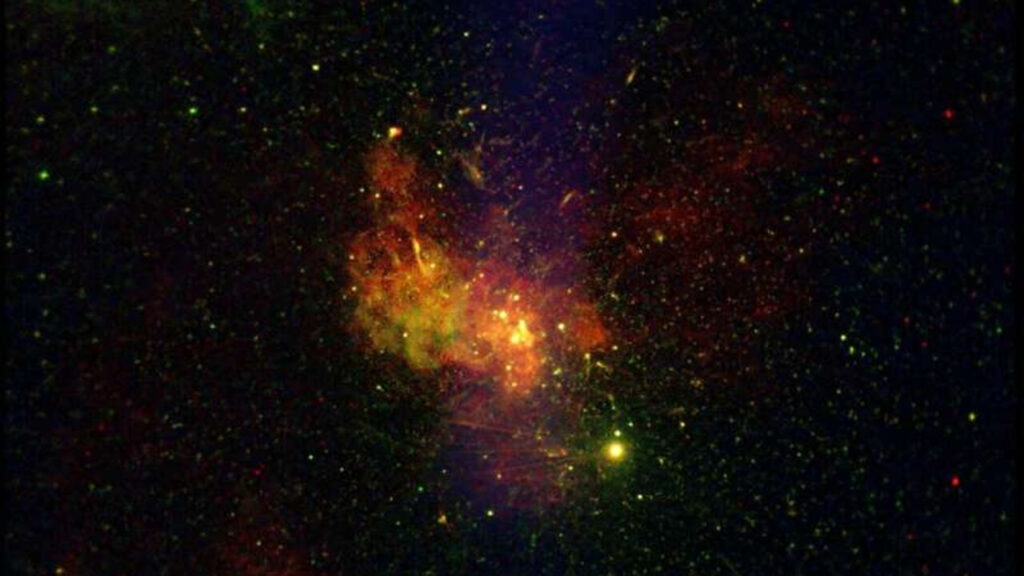
Originally launched in 1999, the NASA Chandra X-ray Observatory has now amassed a catalogue of over 1.3 million individual detections. These detections are available for viewing in the Chandra Source Catalogue (CSC) 2.1 version, which contains over 400,000 unique compact and extended X-ray sources as well as over 1.3 million individual detections.
NASA Chandra X-ray Observatory Achieves A New Milestone
One of the goals of space science, as we know it, is to learn more about our universe and the individual celestial bodies within it. The NASA Chandra X-ray Observatory is just one of the tools that scientists rely on to study our universe.
Chandra is still fully functional and gathering X-ray data regarding our universe, but so far, it has amassed a catalogue of over 1.3 million detections. These individual detections were gathered from the launch of the observatory in 1999 through 2021.
The catalogue is being compiled in the Chandra Source Catalogue (CSC), which helps scientists combine data from Chandra with other Earth or space telescopes for the advancement of space science. The most recent version of the Chandra Source Catalogue, the CSC 2.1 version, was released in 2024.
Most of the observations made by the space telescope and available for viewing in the CSC 2.1 version were captured with either the ACIS or HRC-I instruments. Using these instruments over the years, NASA Chandra has been able to detect over 3300 individual X-ray emitting sources in space.
Over the years, the space telescope has observed some of these individual X-ray emitting sources multiple times. For this reason, various complications of the catalogue account for multiple sightings.
A Close Look At NASA Chandra X-ray Observatory Detections
In the video above, each dot signifies an individual detection that the space telescope has made in space. It starts from the first Detections made after the telescope’s launch in 1999 and closes off at the most recent compiled detection from 2021. With the telescope still running, cataloguings will continue for years.