
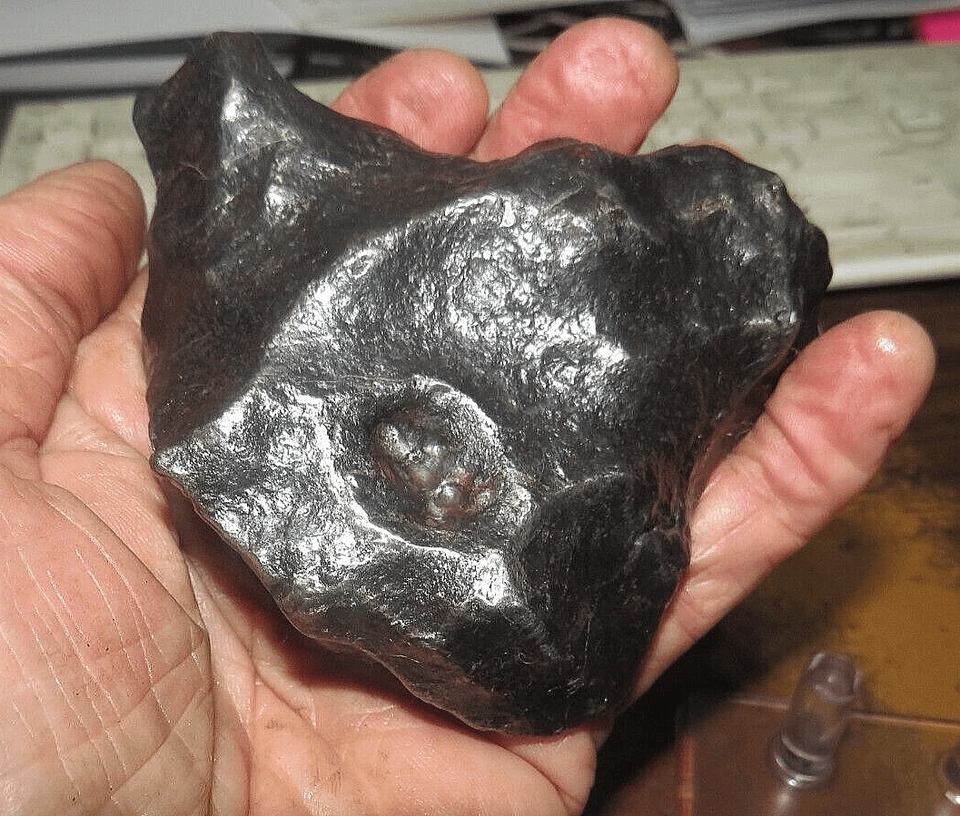
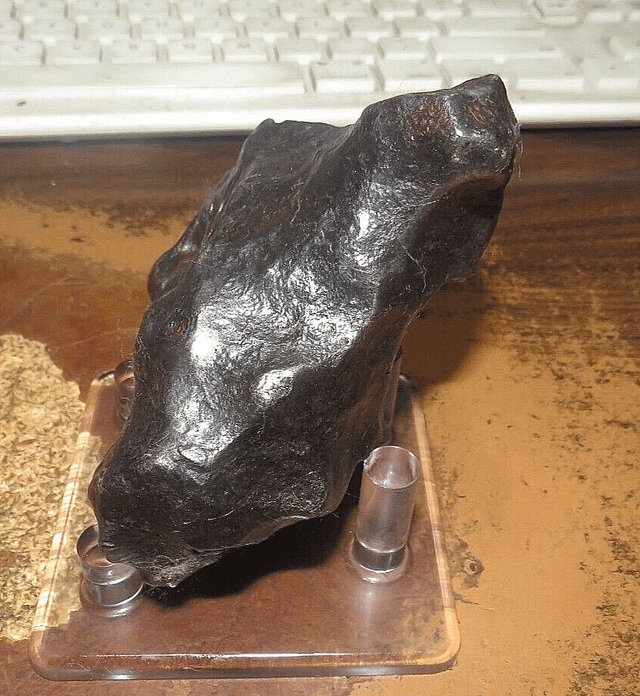
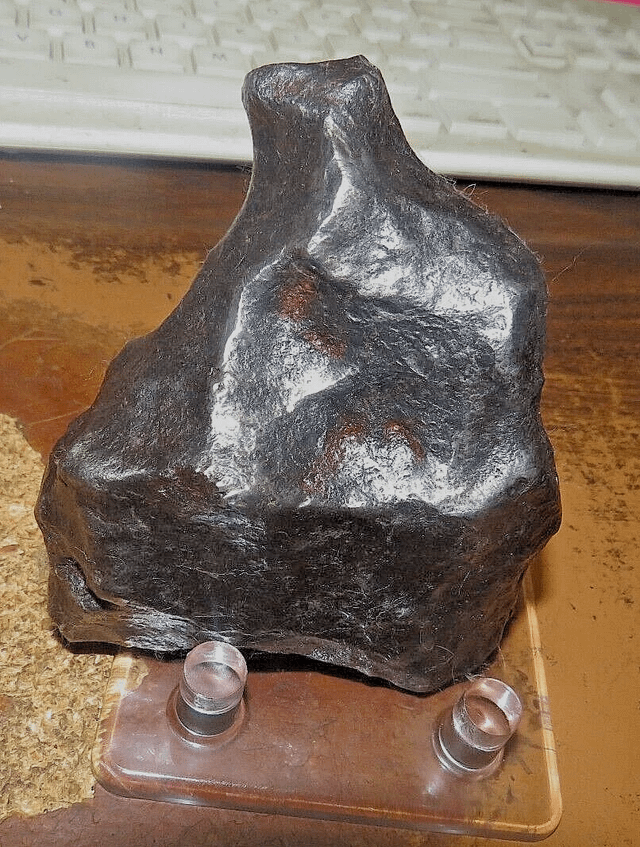
It’s the surviving debris from a massive iron asteroid that once rocketed through space and violently collided with Earth ~49,500 years ago, creating what we now call Meteor Crater in Arizona.
The Canyon Diablo fragments are part of the IAB Main Group of iron meteorites, predominately iron-nickel alloys with Widmanstätten patterns — crystalline structures that only form through extremely slow cooling in an asteroid core.
Researchers use isotope ratios (like noble gases and nickel) in the fragments to trace back major collision events in space — showing evidence that the parent body may have suffered at least two or three break-ups hundreds of millions of years ago before finally arriving here.
Canyon Diablo belongs to the IAB-main group iron meteorites, a complex group believed to originate from a differentiated parent body that underwent metal-silicate segregation very early in Solar System history. Isotopic models (e.g., tungsten and molybdenum systematics) suggest this parent asteroid experienced metal–silicate differentiation between about ~1.7–5 Myr after CAI formation, either through internal heating by 26Al decay if it accreted early, or through impact heating if accretion was later.
On this parent body, molten metal segregated from silicate material — at depths likely >2 km — and pooled into large reservoirs where fractional crystallization occurred over long timescales. These slow cooling processes allowed the characteristic octahedral Widmanstätten patterns (kamacite-taenite intergrowths) to develop, which are diagnostic of iron meteorites that cooled at rates of a few °C per million years.
by Hour-Detective5296
1 Comment
Canyon Diablo meteorite’s entry in the [Meteoritical Bulletin Database](https://www.lpi.usra.edu/meteor/metbull.cfm?sea=canyon+Diablo&ants=&nwas=&falls=&valids=&stype=contains&lrec=100&map=ge&browse=&country=All&srt=name&categ=All&mblist=All&rect=&phot=no&strewn=no&snew=0&pnt=Normal+table&sfor=names&code=5257).