
When the ministerial council of the European Space Agency (ESA) gathered for their triennial meeting in Bremen, Germany, late last year, the delegations faced big decisions.
Many crises and challenges were competing for attention and resources in ESA member states, including Ireland, yet ministers were being asked to approve the largest ever funding request for an agency with increasingly high ambitions.
In the end, they agreed, collectively backing an unprecedented €22.3 billion package of programmes to be delivered over the next three years.
The ESA described it as “a historic step forward for Europe’s space technology leadership”, with key investments across Earth observation, exploration, human space flight, space safety, telecommunications and transport.
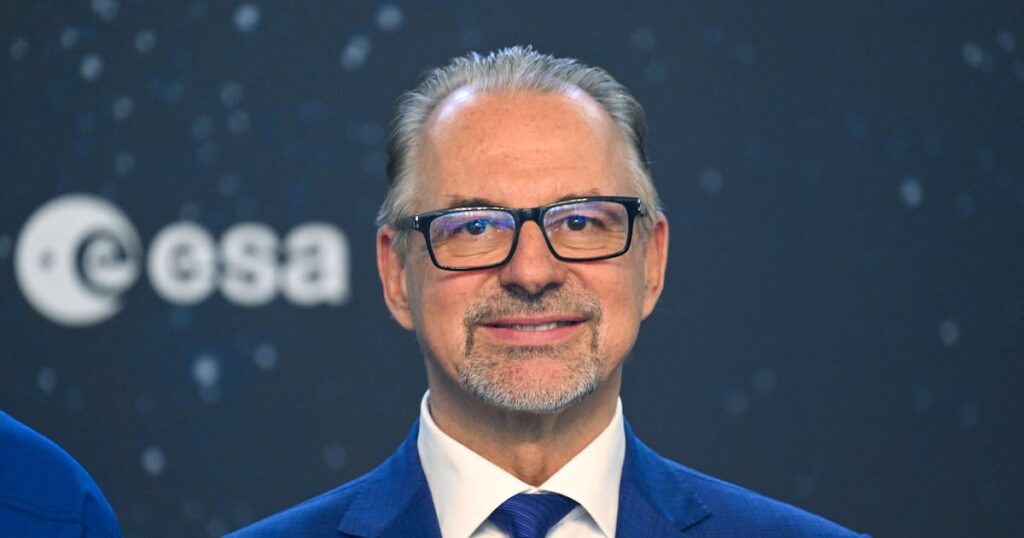
ESA director general Josef Aschbacher did not hide his delight – the allocation was 94.7 per cent of the bold package he had proposed.
It would mark the beginning of the first implementation phase of Strategy 2040, the long-term roadmap finalised earlier in the year.
“This is a great success for Europe, and a really important moment for our autonomy and leadership in science and innovation,” he said.
I had met Aschbacher a few months earlier at the International Astronautical Congress (IAC) in Sydney where he spoke with the contained urgency of a man preparing for a pivotal moment.
The 76th IAC had been a busy week for Europe: new co-operation agreements, a strong technical programme and a visible confidence that ESA was preparing to step into a more autonomous role on the world stage.
“Decisions in the coming months will define our place in a rapidly changing global sector,” Aschbacher told me then.
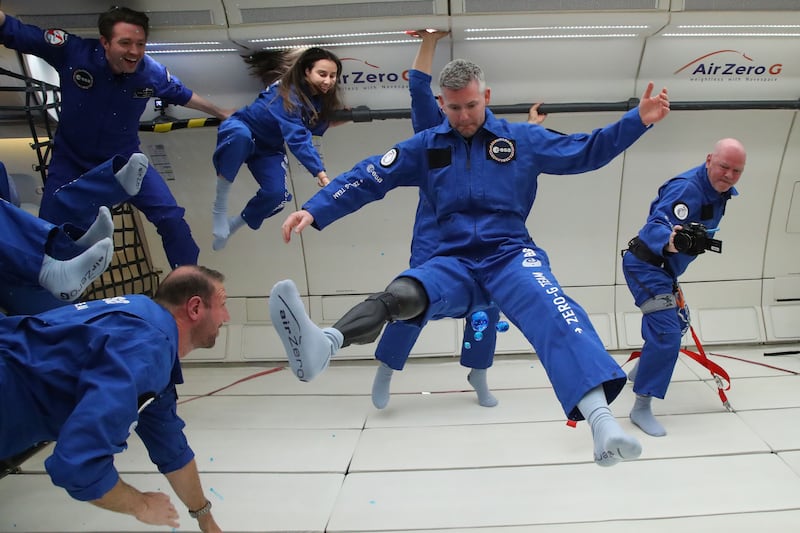 ESA astronaut John McFall completes a series of parabolic flights under the Fly! feasability study. Photograph: Courtesy of European Space Agency
The long-term roadmap framed much of our conversation in Sydney. Strategy 2040 is centred on five goals: protecting the planet, exploring and discovering, boosting commercial competitiveness, inspiring Europe, and, crucially, building autonomy and resilience.
Aschbacher explained it as “the hinge between vision and delivery”, and Bremen was where that hinge finally turned.
“It is not about words; it is about what we fund, what we build, and what kind of Europe we want to be,” he said.
Autonomy, for him, was not a rhetorical flourish but an operational necessity.
Europe had experienced the vulnerability of launch capability interruptions during the long delays to Ariane 6.
“The call for Europe to build up more strength has never been greater,” he said.
The ministerial council (CM25) responded with new commitments to accelerate Europe’s launcher ecosystem, including commercial reusable rockets through the European Launcher Challenge.
The ESA will no longer rely solely on single large systems but will act “both as a customer and a catalyst”, broadening access and resilience.
Autonomy, Aschbacher said, also meant entering partnerships from a position of strength.
Sydney was full of that energy. The ESA signed a memorandum of understanding with the Korea Aerospace Administration on space communications and space-weather co-operation.
Agreements with Japan, India and Australia – some newly signed, others renewed – signalled a more confident and outward-looking ESA.
“To be a good partner, you have to have something in your pocket,” said Aschbacher.
“You cannot just collaborate and rely on others. You have to bring real capability to the table.”
Europe, he said, had always been adept at co-operation, “but co-operation only works when both sides are strong”.
That balance between autonomy enabling partnership was visible again in Bremen.
CM25 secured full backing for major European-led missions including Hera, the asteroid-deflection mission following Nasa’s Dart impact; Ramses, a new planetary-defence mission targeted at the asteroid Apophis; and a significant expansion of the ESA’s Space Safety programme, which received €955 million, more than had been requested.
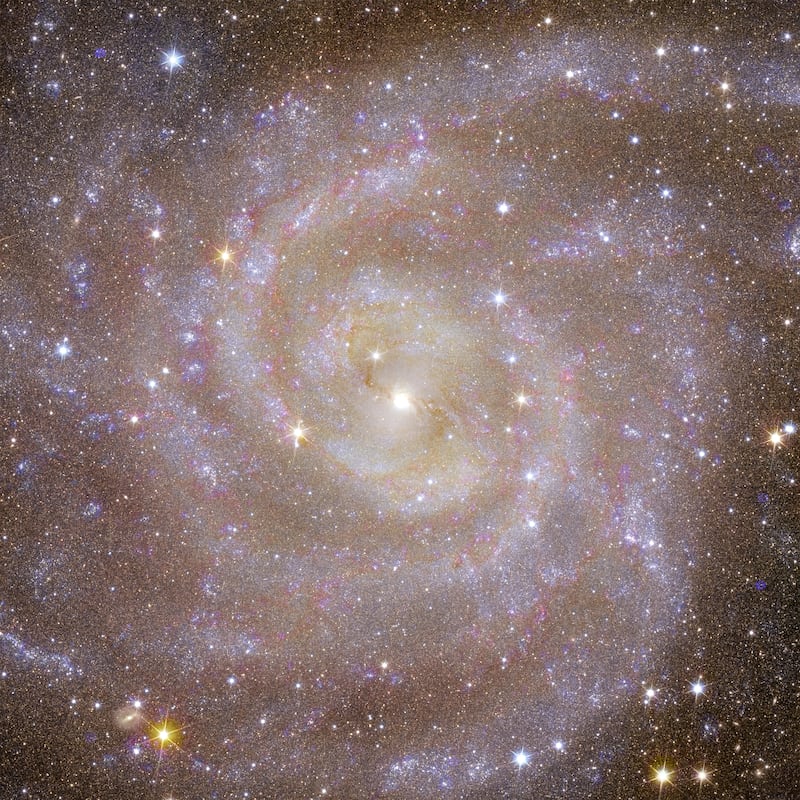 A new view of the spiral galaxy IC 342, captured by the European Space Agency’s Euclid telescope. Photograph: ESA/Euclid Consortium/Nasa/The New York Times
Investments were also approved for the Rosalind Franklin Mars rover, astronaut access to the International Space Station through to 2030, new cargo-return services from low Earth orbit, and next-generation Earth-observation missions for climate monitoring. There was also a historic agreement to increase the ESA Science Programme budget by 3.5 per cent annually above inflation.
But while policy and budgets dominated the headlines, Aschbacher had repeatedly returned to the human dimension of space exploration in our interview.
An astronaut had once told him that if every person could see Earth from orbit, “we would have no wars”. That single image of our fragile planet without borders underpins his belief in the inspirational power of space.
“When a European astronaut launches, it’s not just a technical event,” he said. “It’s a symbol that Europe can dream big. That’s how you keep young people motivated and how you build political support.”
Ireland featured strongly in our conversation. When I asked him how important smaller countries are in the ESA’s decision-making process, he did not hesitate.
“Every country has one vote,” he said. “Ireland’s vote is as valid as any of the larger member states, and that is something I value greatly. It’s a principle that keeps the ESA democratic and fair.”
He pointed to Ubotica, the Dublin-based company that developed the first AI chip flown in space. It began as a small, experimental idea where “the initial chip was bought on Amazon for €70,” Aschbacher mentioned, laughing.
It went on to win the ESA’s 2024 award for Best Research in Positioning, Navigation and Timing.
“A small country can be at the frontier of innovation,” he said. “Irish companies show how imagination and courage can compete within any budget.”
That spirit was evident again in Bremen. Ireland reaffirmed its commitment to ESA through what the Department of Enterprise, Trade and Employment (DETE) described as “a significant and strategic investment” in key ESA programmes.
Minister of State for Employment, Small Business and Retail, Alan Dillon, led the Irish delegation, accompanied by officials from DETE and Enterprise Ireland.
In its formal statement, the department confirmed that Ireland had allocated more than €170 million in funding across Earth observation, telecommunications, space safety and the General Support Technology Programme (GSTP), among others. These align with the sectors where Irish companies have been strongest in recent years.
According to Enterprise Ireland, Irish industry secured a record €24 million in ESA contracts in 2024, marking 50 years of Ireland’s ESA membership.
“Ireland continues to see strong engagement from innovative companies and research organisations across ESA’s optional programmes,” Enterprise Ireland said.
“The ministerial [council] was an important milestone as Ireland builds on its growing reputation as a valued contributor to the European space ecosystem.”
These achievements sit against the backdrop of Ireland’s National Space Strategy, first published in 2019. That strategy set ambitious targets for supporting companies, increasing revenues, boosting participation in ESA and EU programmes, and growing public awareness.
By 2023, 95 per cent of those targets had already been achieved. A refresh of the strategy, according to DETE, “is under active consideration”, and the investment decisions made at the CM25 will feed directly into the next iteration.
The question now is how Ireland chooses to use its position. The ministerial council was not simply a vote on European programmes; it was also a moment for reflection at home.
Ireland’s space sector has expanded rapidly, built on skills, ambition and a strong research culture. The country has earned its place at the ESA table. What remains is to decide how boldly we wish to build on it.
The next National Space Strategy will offer that opportunity: whether to continue on a steady path, or to match the ambition Europe has now clearly embraced.
Bremen showed that the ESA is entering a decisive new era, which is ambitious, outward-looking and increasingly self-confident. Aschbacher believes Europe is ready to lead rather than follow.
“We have the ideas, we have the partnerships,” he said. “Now we need the means.”
CM25 provided those means on an unprecedented level. Whether Europe delivers on that promise will depend, as always, on the collective decisions of its member states, large and small.
As our conversation in Sydney drew to a close, Aschbacher summarised it in a sentence that feels even more relevant now: “Space is where Europe comes together.”
Ireland was at the table in Bremen. The opportunity ahead is to decide what we want to do with that seat.
Dr Niamh Shaw is an engineer, scientist and writer