
Over its 35 years of operation, the Hubble Space Telescope has accumulated a colossal archive of data — tens of thousands of observation sets. But this treasure trove hid a problem: the human brain simply cannot analyze such a volume of information manually. Even experienced astronomers could not check every fragment of the images for rare anomalies. Artificial intelligence managed to solve this problem.
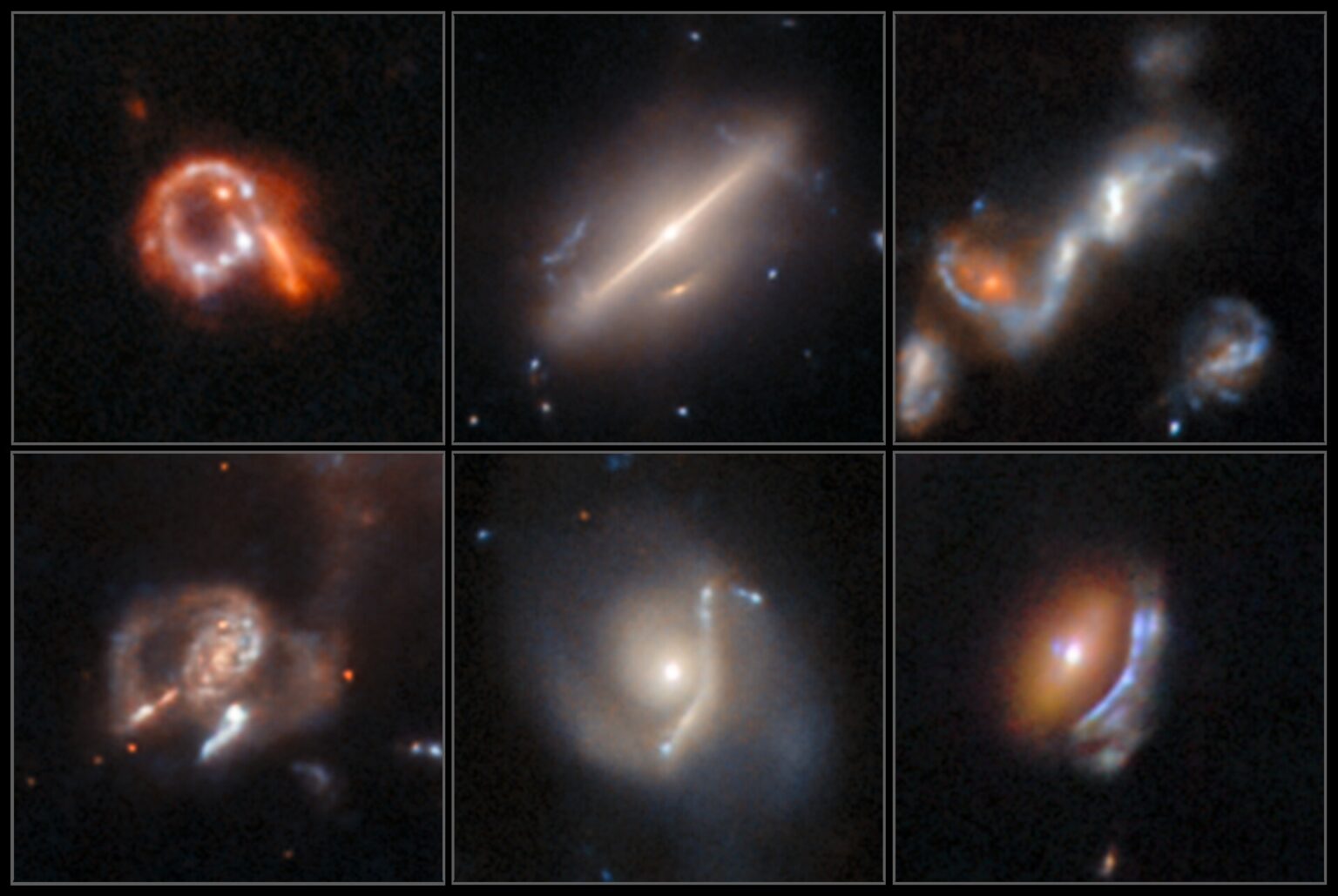
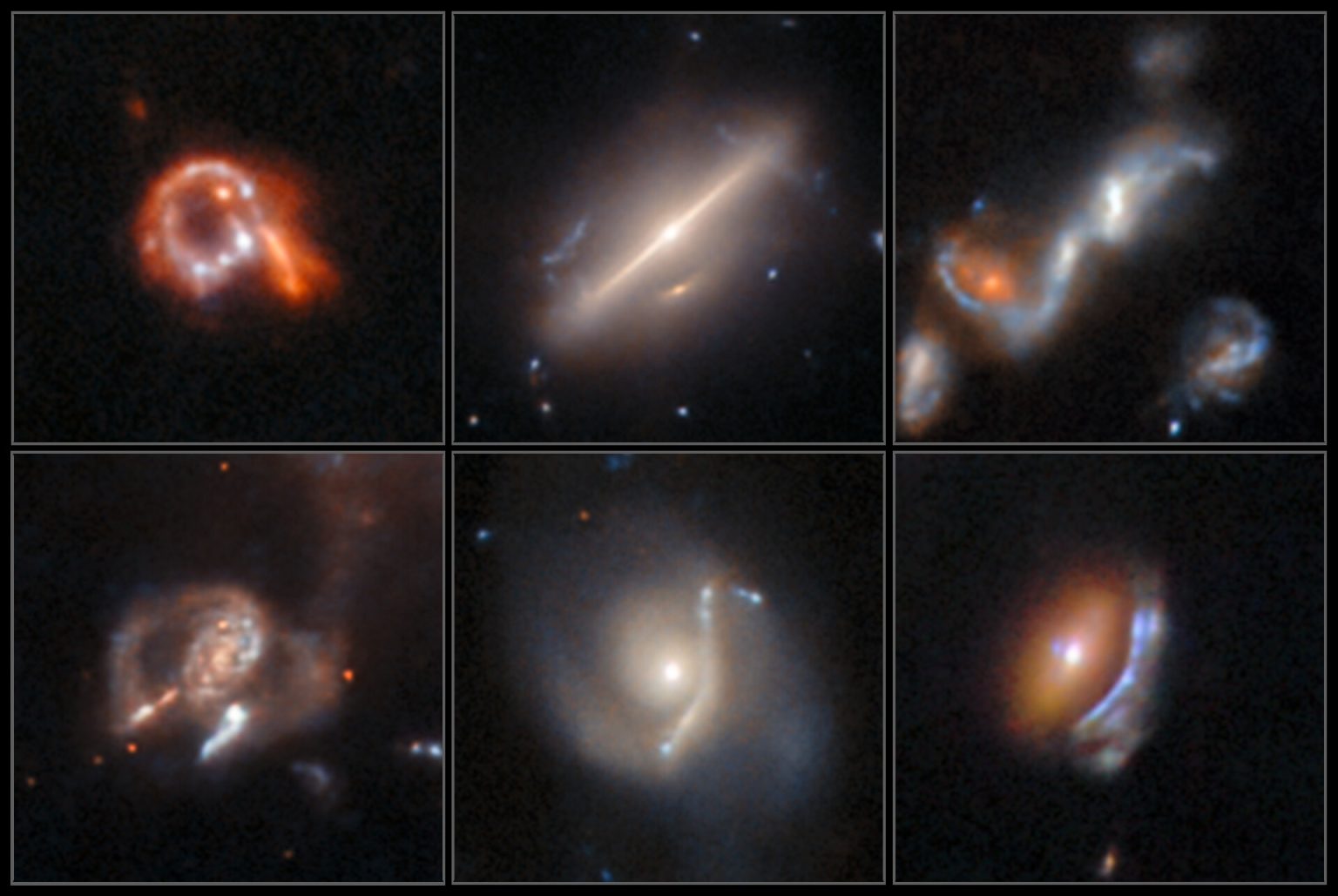 A team of astronomers used a new artificial intelligence-based method to search for rare astronomical objects in the Hubble Legacy Archive. In three days, the team reviewed nearly 100 million image fragments and discovered nearly 1,400 anomalous objects, more than 800 of which had not previously been documented by science. Photo: esahubble.org
New assistant for astronomers
Two scientists from the European Space Agency, David O’Ryan and Pablo Gomez, have created a specialized neural network called AnomalyMatch. Its single purpose is to scan millions of image fragments from the Hubble archive and look for anything that differs from the norm: strange shapes, unusual structures, undocumented phenomena.
A phenomenal result in record time
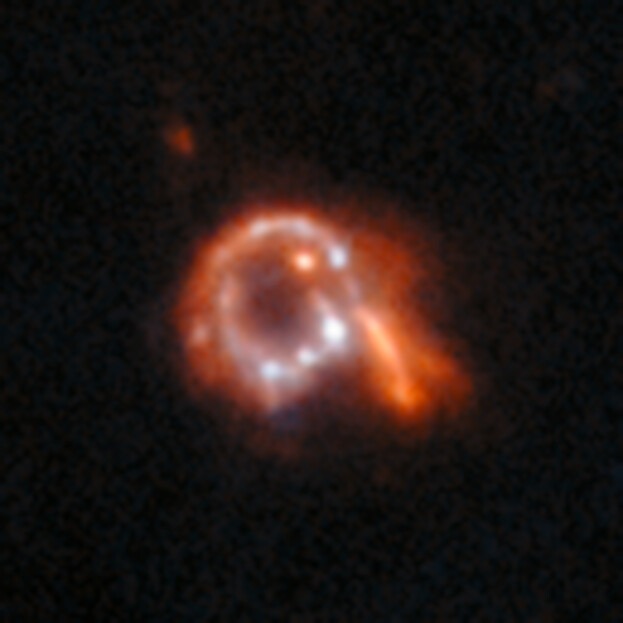 An unknown astrophysical anomaly discovered in the Hubble Space Telescope archive. Photo: esahubble.org
AnomalyMatch completed a task that would have taken humans months or even years in less than three days. The system scanned nearly 100 million image fragments and compiled a list of 1,400 of the most promising anomalous objects. Gomez and O’Ryan did the final check of this list. The result is impressive: more than 800 of the objects found had not been documented by science before.
What did the “anomaly hunter” find?
Among the discoveries of artificial intelligence:
Galaxies in the process of merging, which collide to form bizarre, distorted shapes.
Gravitational lenses – optical illusions where light from distant galaxies bends to form rings and arcs.
Protoplanetary disks – the embryos of future planetary systems, looking like thin “edges.”
Jellyfish galaxies with stellar tails.
However, even more objects did not fit into any known categories, which opens up new avenues for research.
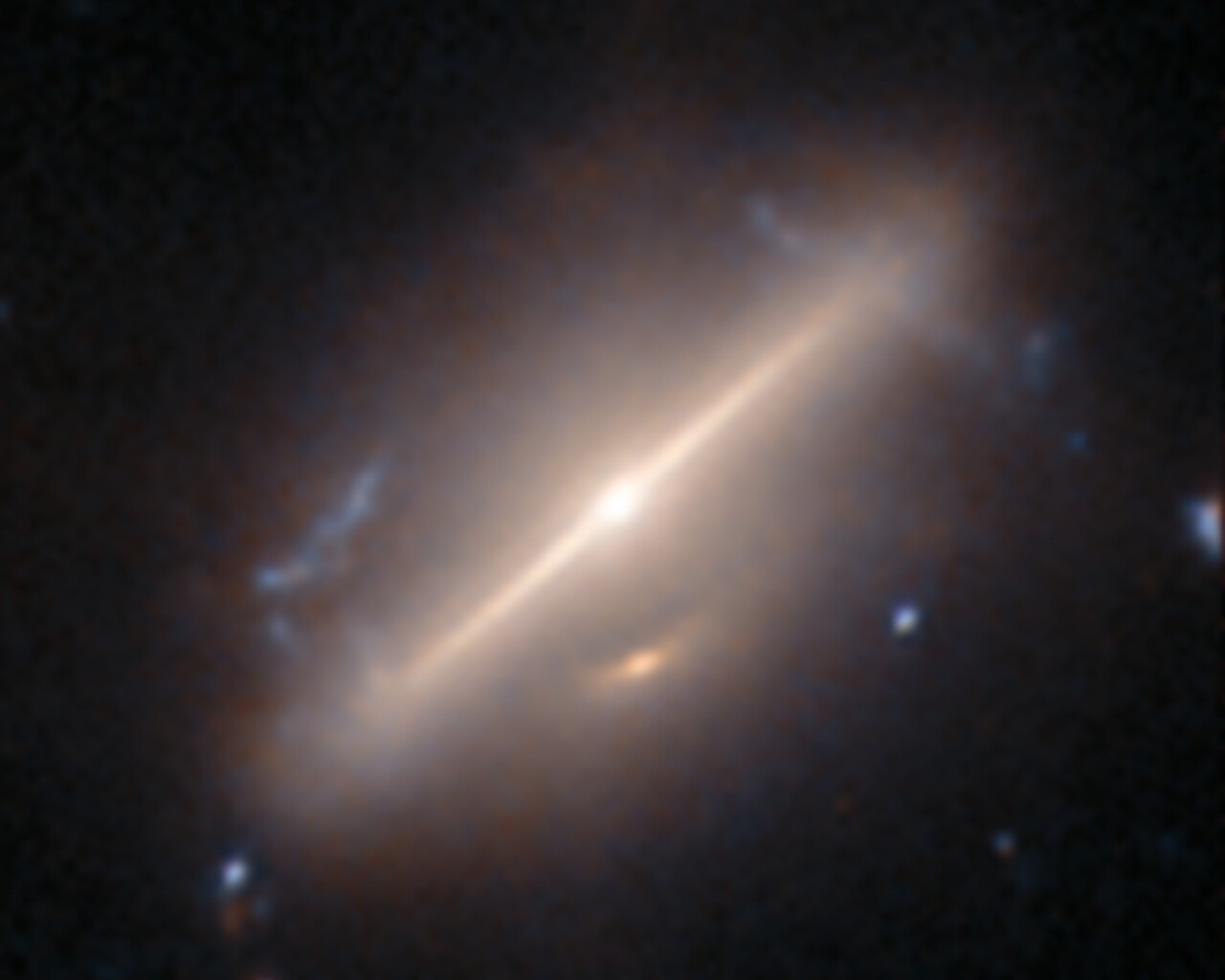 An inexplicable astrophysical anomaly discovered in the Hubble Space Telescope archive. esahubble.org
“This is a fantastic result,” says Pablo Gomez. “Finding such a large number of anomalies in what appears to be a well-studied Hubble archive is incredible. Our tool shows how artificial intelligence can maximize the scientific return from existing data.”
AnomalyMatch has not replaced astronomers, but has become their powerful assistant, allowing them to quickly and accurately find a needle in a haystack of space data. This success paves the way for similar research on other large archives, promising new discoveries using existing information.
Earlier, we reported on how Hubble captured an anomalous globular cluster.
According to esahubble.org