
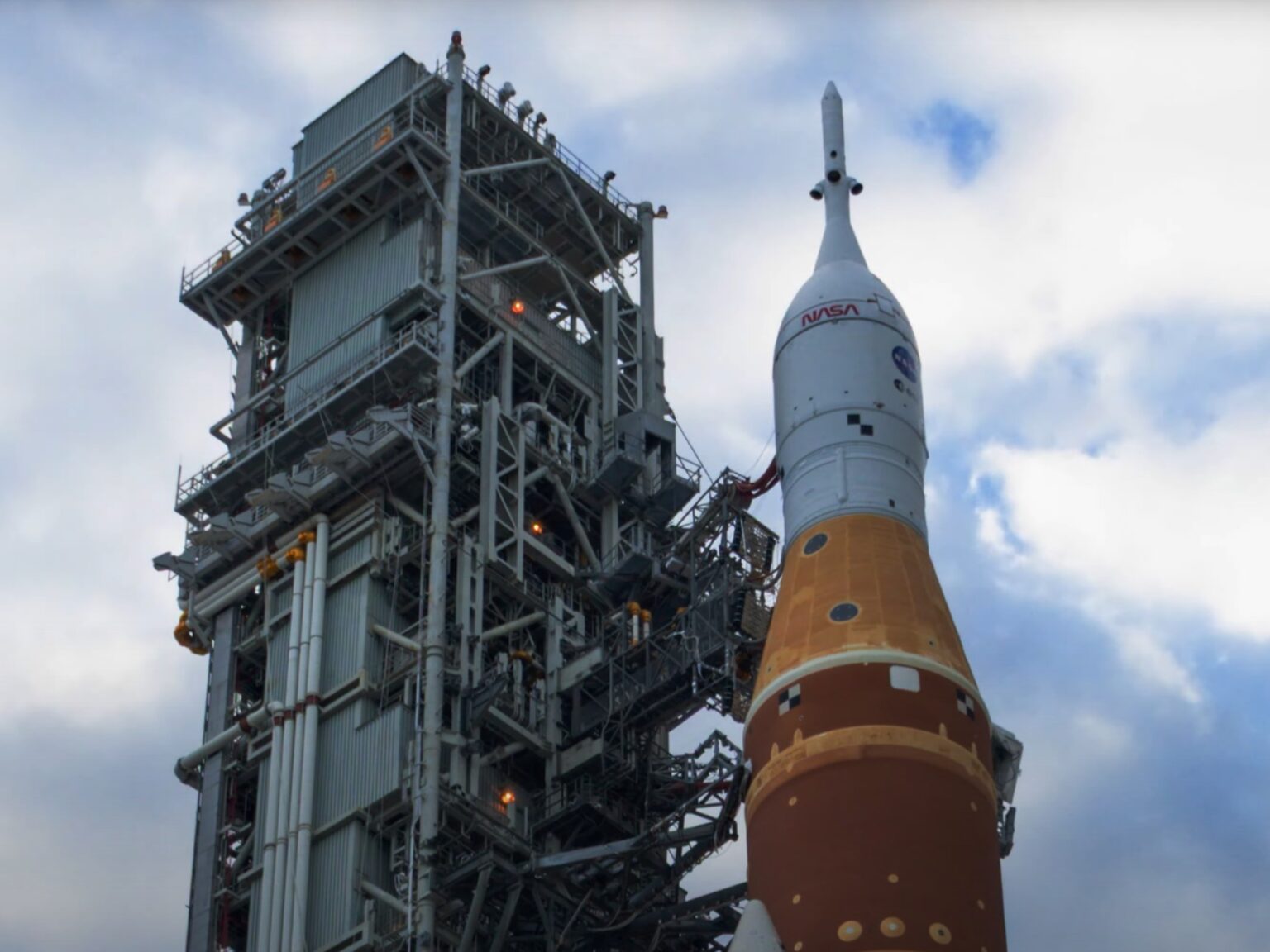
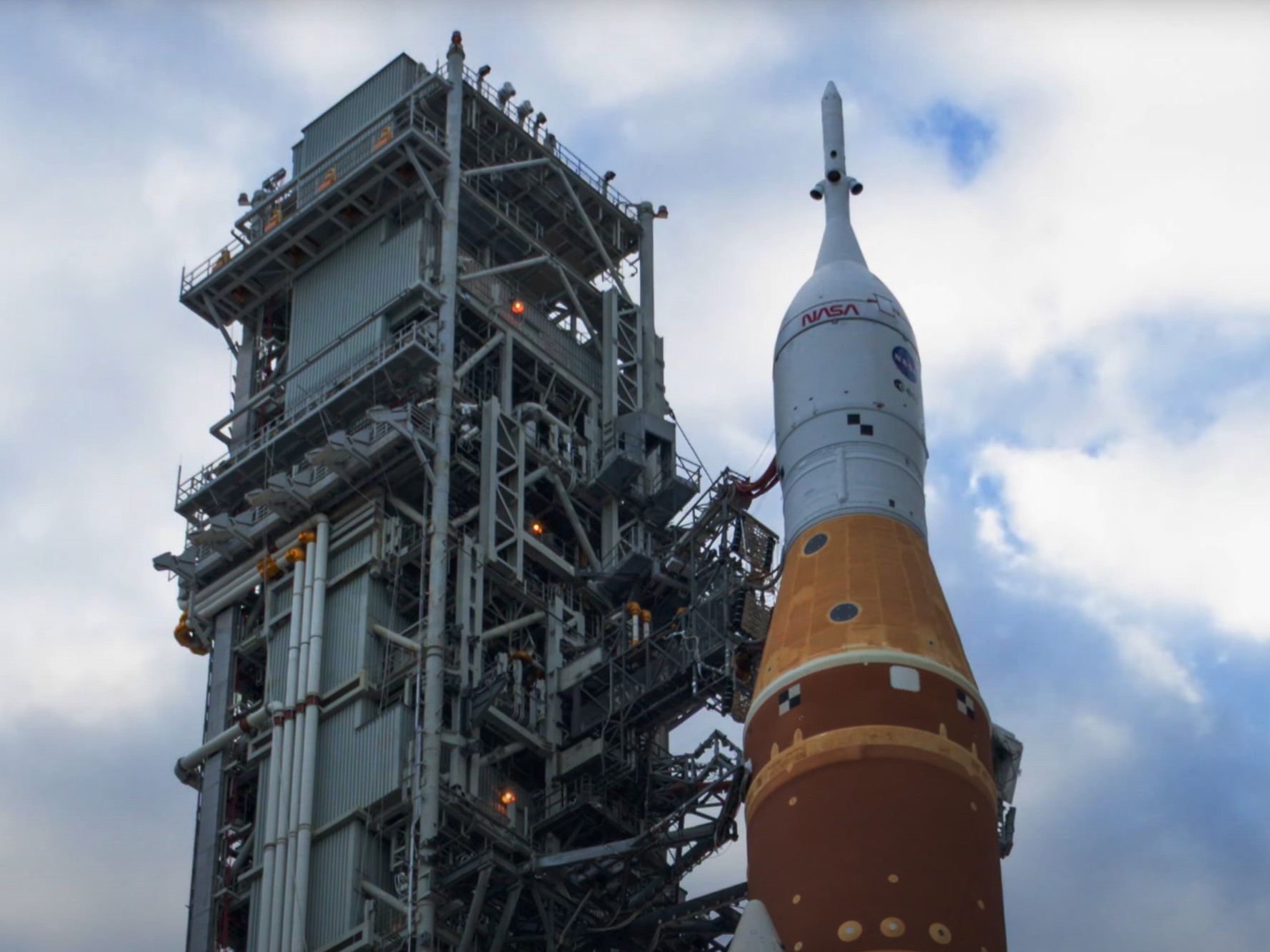
 Artemis II with ESA Logo and NASA Logo (Source ESA via YouTube)
The European Space Agency is providing more than just propulsion for the upcoming lunar mission; it is also sharing spectacular imagery of the rollout. A new ESA time-lapse follows the rocket’s path to the launchpad, underscoring the close cooperation with NASA.
The European Space Agency (ESA) has released a short video showcasing the complete rollout of the Artemis II moon rocket in a compact time-lapse. It is no coincidence that the imagery comes from ESA, as the mission is a joint project. While NASA provides the massive Space Launch System, ESA supplies one of the most critical components with the European Service Module (ESM). This powerhouse sits directly below the Orion capsule, supplying the crew with electricity, water, air, and the necessary propulsion for the course to the Moon. Consequently, the ESA logo is prominently visible on the spacecraft.
The ESA video condenses the actual twelve-hour journey from the Vehicle Assembly Building to Launchpad 39B into just over 90 seconds. Before the rocket sees daylight, however, the footage grants an impressive look inside the Vehicle Assembly Building (VAB). With a height of 160 meters and a volume of approximately 3.7 million cubic meters, the assembly hall is one of the world’s largest buildings, providing a massive backdrop that dwarfs even the massive SLS rocket.
In reality, the gigantic crawler-transporter moves forward at a maximum of 1.6 km/h (1 mph), a speed at which even pedestrians could effortlessly overtake it. The special vehicle has been in service since 1965 and has transported numerous rockets and shuttles. The time-lapse compensates for the leisurely pace and impressively stages the 6.5-kilometer (4 mi) route as well as the sheer dimensions of the rocket.
Following the arrival at the pad, preparations for the historic launch are now entering the hot phase. Artemis II is set to send four astronauts on a ten-day flyby of the Moon, becoming the first manned flight into deep space in half a century. The European Service Module takes over control after separation from the rocket. If the upcoming tests proceed successfully, initial launch dates are already scheduled for February, with a departure targeted for April at the latest. Since the rollout of the rocket, Artemis II can be followed in a live stream on YouTube.

From an early age I liked to thoroughly examine all kinds of devices to see how they worked, which also involved taking my own devices apart and therefore not always to the delight of my parents. Nevertheless, with my grandfather’s support, I became a computer and electronics tinkerer. With the family PC and Lego Mindstorms, my interested in software and programming took off, and I am currently an engineering program student. I enjoy building all sorts of gadgets with Arduino and 3D printers, and I still like to put electronic devices through their paces. By joining the Notebookcheck editorial team, I have been able to turn my hobby into a profession.