
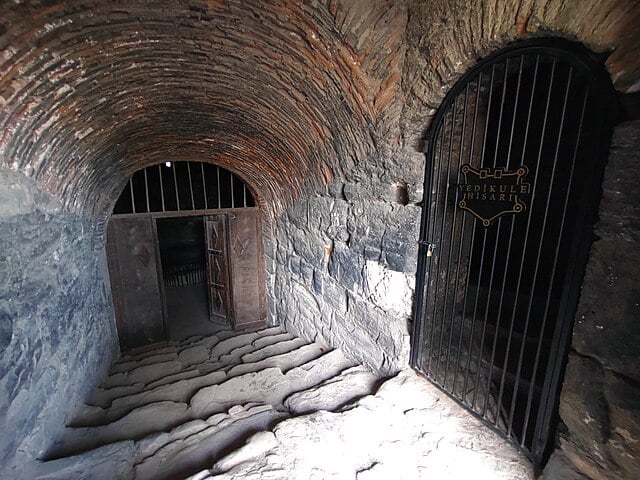
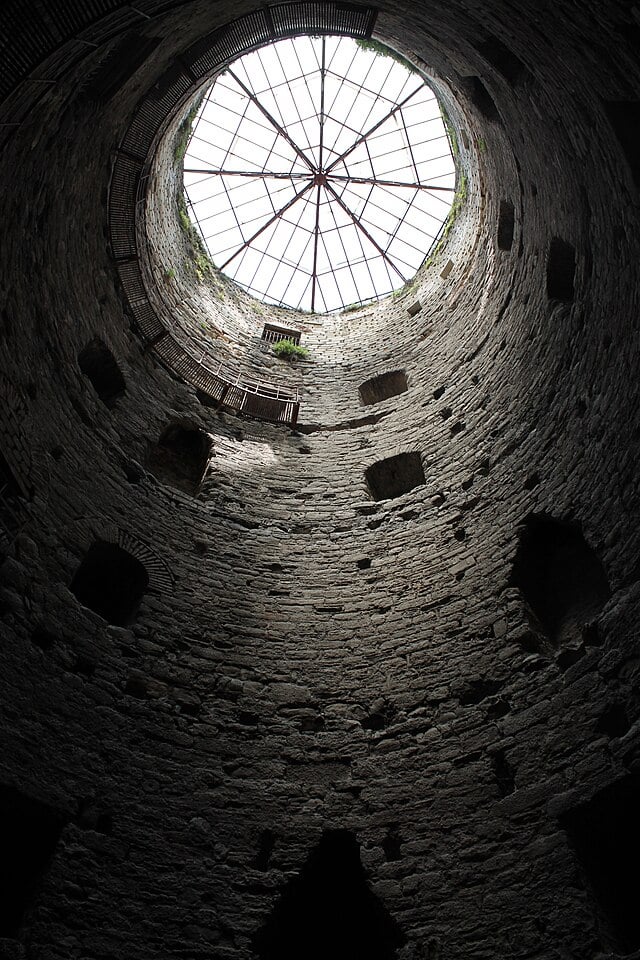
The Yedikule Dungeons (Fortress) is not just a historical castle; with the suffering it has accumulated over 1,600 years, it is one of the most eerie places in Istanbul. Here are the legends explaining why it has such a "strange" atmosphere:
1. The Curse of the Walls
During the Byzantine era, Yedikule served as the "Golden Gate," the triumphal arch for emperors. However, it later turned into a dungeon. According to legend, a prisoner who was tortured to death sang a hymn in ancient languages before dying, cursing the stones of the fortress. Even today, some people claim to hear a strange frequency or odd sounds emanating from the walls while inside the tower.
2. Sultan Osman II’s Chamber
Sultan Osman II (Young Osman), aged only 18, was brutally murdered here by the Janissaries. Historical records state that Osman showed great resistance before his execution. Visitors to the "Young Osman Tower" often describe an extreme chill in the center of the room and an overwhelming sense of dread. It is said that even the night guards avoid entering this specific tower.
3. The Bloody Well
Inside the dungeons lies a place known as the "Bloody Well." This was once a pit where the severed heads of prisoners were thrown, connected to a secret tunnel leading to the Sea of Marmara. Old Istanbulites used to tell urban legends about headless silhouettes seen near the shore.
4. Names Carved with Fingernails
In the "Tower of Inscriptions," you can see many names and writings on the walls. The terrifying part is that many of these were not carved with tools, but by prisoners using their fingernails or small stones out of sheer desperation. Touching those walls makes it almost impossible not to feel the terror of thousands of people in their final moments.
5. Atmospheric Heaviness
This is more than just a museum; the air is stagnant, the stones are cold, and it feels as if every corner is watching you. If you ever visit, try not to stay after dark, as the "heaviness" there is truly psychologically taxing.
by bortakci34
2 Comments
Cool
Can’t tell if this would be the worst or best AirBnB