
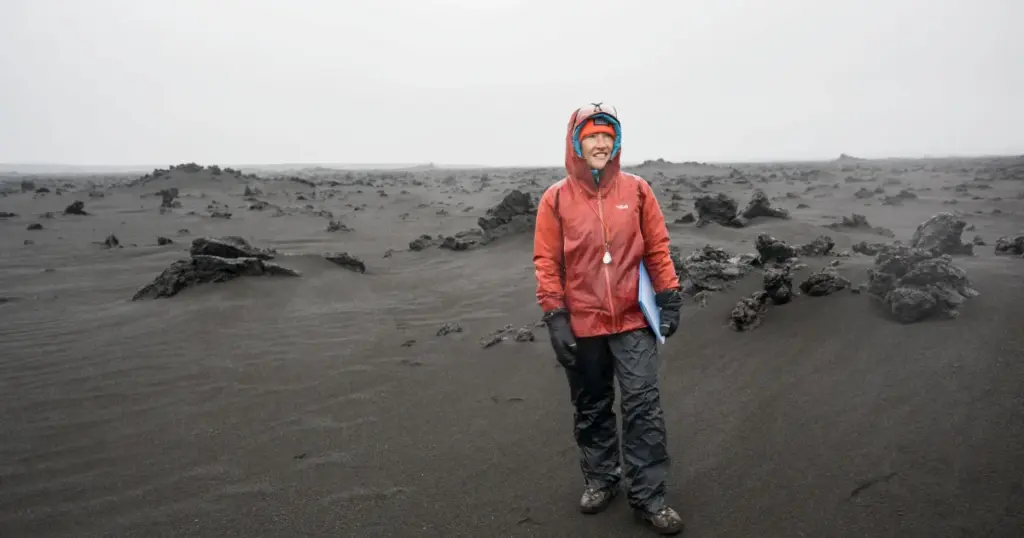
Christina Koch and her Artemis II crewmates have been training since 2023 for the mission that will return humans to lunar orbit for the first time in more than 50 years. Among the most distinctive elements of that preparation was time spent far from the classroom, exploring Iceland’s windswept volcanic wilderness.
Iceland’s Vatnajökull National Park served as a stand-in for the Moon’s surface, for the crew as they learned to read the landscape like planetary scientists. Astronauts examined basalt lava flows and breccias, practiced documenting geologic features, and honed navigation skills in terrain as barren and unforgiving as what they will observe from lunar orbit.
Iceland’s rugged geology, shaped by ancient volcanic eruptions interacting with ice and water, closely resembles features expected near the Moon’s south pole and other regions of high scientific interest. What the crew learned there will enable them to connect orbital imagery with real-world geology, a skill that will be essential for future surface exploration.
“Apollo astronauts said Iceland was one of the most lunar-like training locations they visited during their training,” said Cindy Evans, Artemis geology training lead at NASA’s Johnson Space Center in Houston.
Canadian Space Agency crew member Jeremy Hansen hosted his crewmates along his country’s northeastern coast at a meteorite impact crater in northern Labrador. They learned how to identify, collect, and describe rock samples. Using hammers, chisels, and scoops adapted for bulky spacesuit gloves.
While Artemis II will not land on the Moon, the crew’s observations will still contribute to lunar science. Photographs and detailed descriptions of surface textures, colors, and reflectivity will help refine scientists’ understanding of the Moon’s geology and support future mission planning, including the selection of landing sites for Artemis crews that follow.
Like the Apollo 8 and Apollo 10 astronauts before them, the Artemis II crew will pass behind the Moon and fly over the far side during portions of their mission. Artemis II’s trajectory and timing will allow the astronauts to view regions of the lunar surface never before seen by human eyes, adding a new chapter to human exploration of the Moon even before the next footprints are made.