
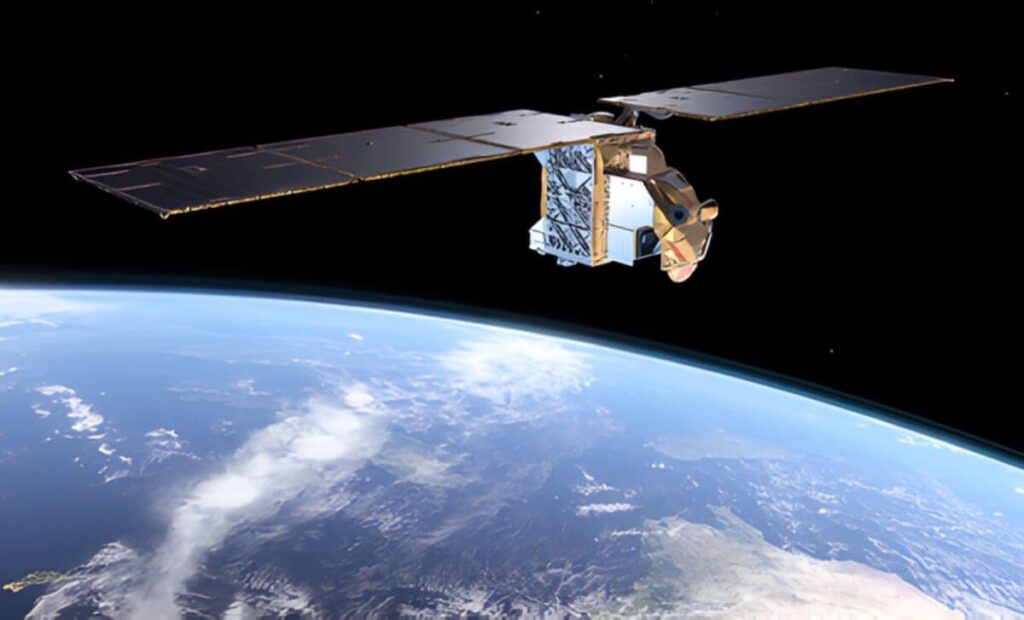
The European Space Agency’s Arctic Weather Satellite (AWS), once a modest prototype, has successfully laid the foundation for a new constellation of meteorological orbiters. Its data quality and operational performance have already prompted Europe’s weather satellite organization, Eumetsat, to commit to building out a full fleet, expected to begin launching in 2029.
Originally launched in August 2024, the AWS was built in just three years and on a limited budget. ESA set out to demonstrate how small space units could deliver reliable data under the demanding conditions of polar orbits, using a new, cost-effective approach to Earth observation.
Built For Speed And Precision In The Arctic
The satellite was built to capture frequent snapshots of temperature and humidity, focusing especially on water vapor, which is known to fluctuate quickly in Arctic regions. These fluctuations often challenge forecasters, and the scarcity of timely data has long been a weak point in current global satellite coverage.
Equipped with a cross-track scanning microwave radiometer, the AWS measures atmospheric humidity and temperature with fine detail. As reported by the European Space Agency, the data has already been integrated into operational forecasts by the European Centre for Medium-Range Weather Forecasts (ECMWF). This integration marks a notable endorsement, as the space probe was not originally expected to supply operational data.
The goal, according to ESA, was to test how a fleet of similar polar-orbiting satellites could offer more consistent and rapid updates for nowcasting, a technique focused on very short-term weather forecasting. The space probe’s success now serves as a blueprint for building such a fleet.
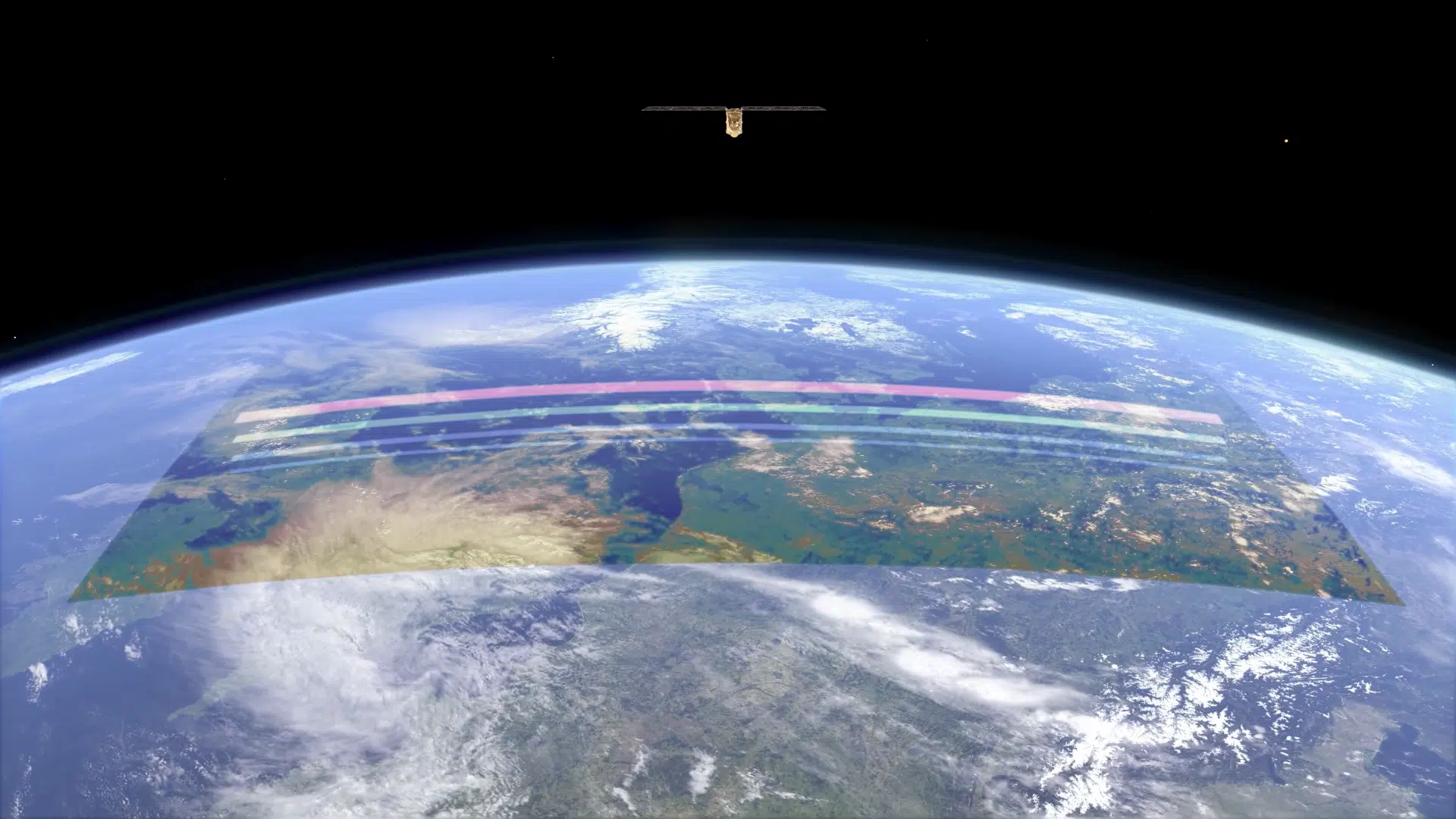 The AWS captures atmospheric data over Earth with high-resolution scanning tracks. Credit: ESA
The EPS-Sterna Constellation Moves Forward
Following the AWS’s performance, Eumetsat has confirmed that it will proceed with a full-scale mission: the Eumetsat Polar System, Sterna (EPS-Sterna). This new system will be made up of six operational satellites and two spares, with replenishment cycles planned throughout its lifetime to ensure continuous data availability until at least 2042.
According to ESA, the constellation will enable revisit times of less than three hours for the same location on Earth, compared to the current standard of only two observations per day. This marks a significant leap forward for orbiter-based meteorology, particularly in regions where severe weather systems can emerge and evolve quickly.
ESA will oversee the procurement of the EPS-Sterna satellites, using a cooperative model similar to its Meteosat and MetOp programs. The first launches are set for 2029, with a formal agreement between ESA and Eumetsat to be signed soon.
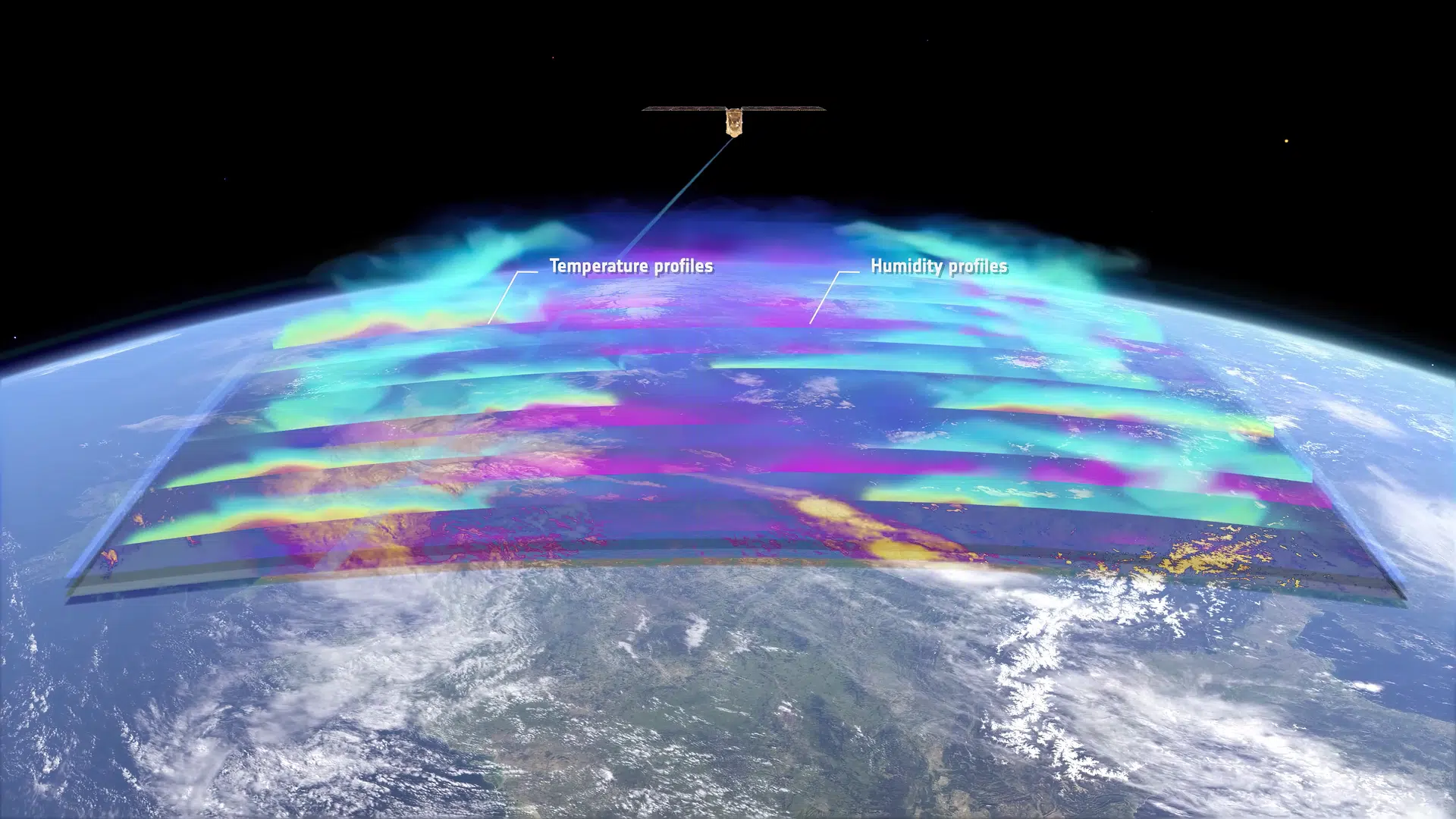 ESA’s Arctic Weather Satellite scans Earth’s atmosphere, capturing temperature and humidity profiles for improved forecasts. Credit: ESA
A Prototype That Outperformed Expectations
Ville Kangas, project manager for ESA’s Arctic Weather Satellite, expressed pride in the mission’s performance and development.
“We developed this innovative satellite under very tight time and budgetary constraints, proving that this approach can be adopted for a constellation of such satellites,” he stated. He also highlighted that the satellite exceeded expectations by being operationally useful, a goal not originally required.
The Arctic Weather Satellite’s measurements complement existing data from larger systems run by agencies such as NOAA in the United States and the China Meteorological Administration. This compatibility with global networks enhances its value in joint forecasting efforts.