
Kenya, 21 January 2026 – High above Kenya’s ancient forests, satellites now play a quiet but critical role in the survival of one of the country’s most endangered animals—the elusive mountain bongo.
In the misty highlands of Mount Kenya, the Aberdare ranges and the dense canopies of Kakamega Forest, conservationists have long struggled with a familiar challenge: how to protect fragile habitats that are vast, remote, and constantly under pressure from climate change and human activity. Today, help is coming not just from rangers on the ground, but from space.
The Kenya Space Agency (KSA) has rolled out Project Centinela, an innovative satellite-driven conservation initiative that blends space science with wildlife protection. The project brings together KSA, the Mount Kenya Wildlife Conservancy (MKWC), and global Earth-imaging firm Planet Labs in a partnership aimed at safeguarding forest ecosystems that are vital to the survival of the endangered mountain bongo.
For communities living around these forests, the project is more than a technological milestone—it is a renewed promise that science, conservation and human stewardship can work together to protect what is left.
Using high-resolution satellite imagery, Project Centinela allows conservationists to “see” forests in ways that were previously impossible. Archived satellite data helps scientists understand how forest cover and vegetation have changed over decades, while near real-time images reveal current threats such as deforestation, encroachment or habitat degradation.
“This technology allows us to understand the past, manage the present and plan for the future,” said Charles Mwangi, Acting Director of the Kenya Space Agency, during the project’s launch in Nanyuki.
“Project Centinela reflects our mandate to apply space-based technologies to real-world challenges. We are strengthening evidence-based environmental management and building national capacity for biodiversity conservation,” Mwangi said.
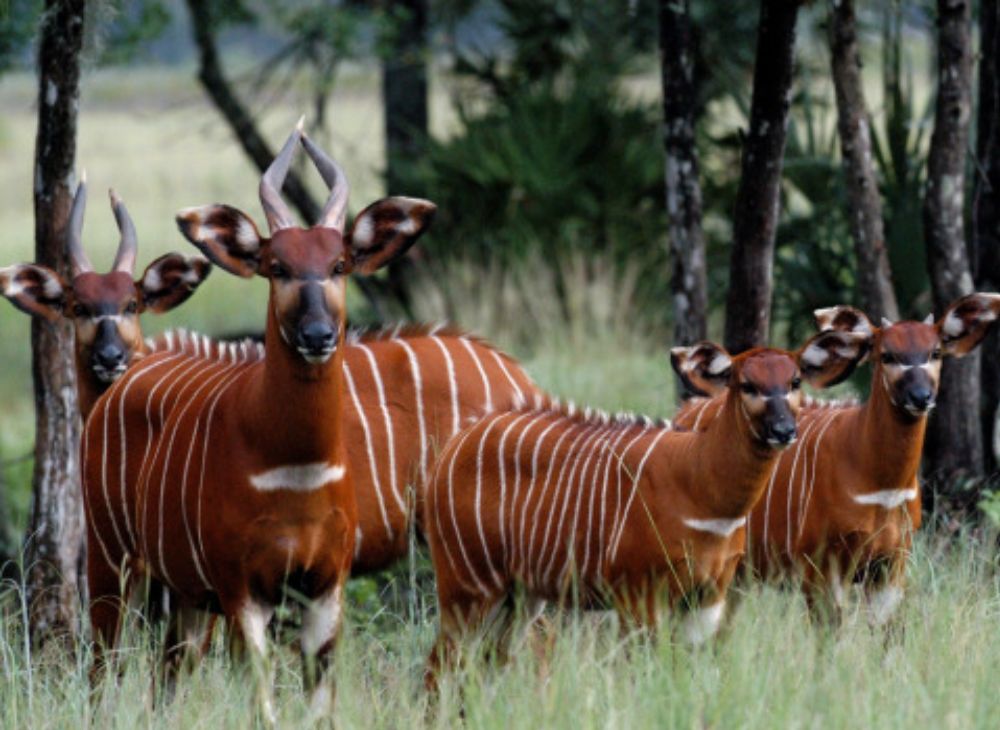
At the heart of the initiative is the mountain bongo, a critically endangered antelope species whose survival depends on healthy, undisturbed forest habitats. Once widespread, bongos have been pushed to the brink by habitat loss, poaching and environmental change.
For the Mount Kenya Wildlife Conservancy, which runs a breeding and rewilding programme for the species, accurate habitat data is essential.
“Understanding how these habitats have changed over time is critical to the survival of the mountain bongo,” said Dr Robert Aruho, Head of Conservancy at MKWC.