
iNDICA NEWS BUREAU-
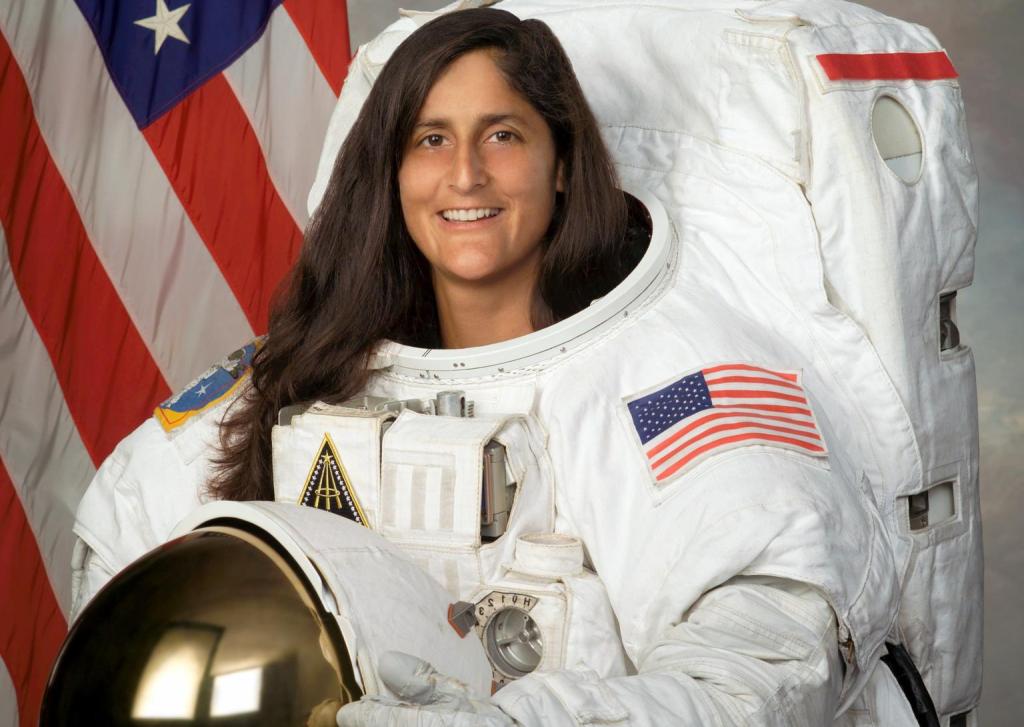
Sunita Williams, one of the most respected and accomplished figures in human spaceflight, has retired from NASA, bringing to a close a remarkable 27-year career marked by record-setting missions, leadership in orbit, and lasting contributions to space exploration.
Williams retired from the NASA effective December 27, 2025, the agency said in a statement.
Her retirement comes after completing an unexpected nine-month mission aboard the International Space Station, the longest of her career, following technical issues that extended what was originally planned as a short stay.
“Suni Williams has been a trailblazer in human spaceflight, shaping the future of exploration through her leadership aboard the space station and paving the way for commercial missions to low Earth orbit,” said NASA Administrator Jared Isaacman while announcing her retirement.
“Her work advancing science and technology has laid the foundation for Artemis missions to the Moon and advancing toward Mars, and her extraordinary achievements will continue to inspire generations to dream big and push the boundaries of what’s possible. Congratulations on your well-deserved retirement, and thank you for your service to NASA and our nation,” Isaacman added.
Born in Euclid, Ohio, Williams considers Needham, Massachusetts, her hometown. Her father, Deepak Pandya, was born in Jhulasan in Gujarat’s Mehsana district and later moved to the U.S., where he married Bonnie Pandya, who is of Slovenian origin.
Outside her professional life, Williams enjoys spending time with her husband, Michael, and their dogs, along with outdoor activities, home renovation projects, and working on cars and aircraft.
Williams first flew to space on December 9, 2006, aboard Space Shuttle Discovery as part of the STS-116 mission and returned with the STS-117 crew on Space Shuttle Atlantis. During Expeditions 14 and 15, she served as a flight engineer and completed four spacewalks, setting a record at the time and earning recognition for her technical skill and endurance.
In 2012, she launched from the Baikonur Cosmodrome for a 127-day mission as part of Expeditions 32 and 33. She later became commander of Expedition 33, joining a small group of women to lead the space station. During the mission, she carried out three spacewalks to repair a leaking radiator and replace a critical power system component.
Her third and longest mission began in June 2024, when Williams and fellow astronaut Butch Wilmore launched aboard Boeing’s Starliner spacecraft as part of NASA’s Crew Flight Test. Technical issues extended the mission to more than nine months, during which the pair joined Expeditions 71 and 72 before returning to Earth in March 2025.
Beyond her missions, Williams played a key role in astronaut training and leadership. She took part in NASA’s NEEMO underwater mission, served as deputy chief of the Astronaut Office, worked as Director of Operations in Star City, Russia, and most recently contributed to developing helicopter training programs for future Moon landings.
Over her career, Williams logged 286 days on a single mission, tying her for sixth-longest spaceflight by an American astronaut. She completed nine spacewalks totaling 62 hours and 6 minutes, the most by any woman and the fourth-highest total in NASA history. She also became the first person to run a marathon in space.
Her retirement marks the end of a career that helped shape modern spaceflight and inspired a new generation of explorers on Earth and beyond.
Photo courtesy: www.nasa.gov