
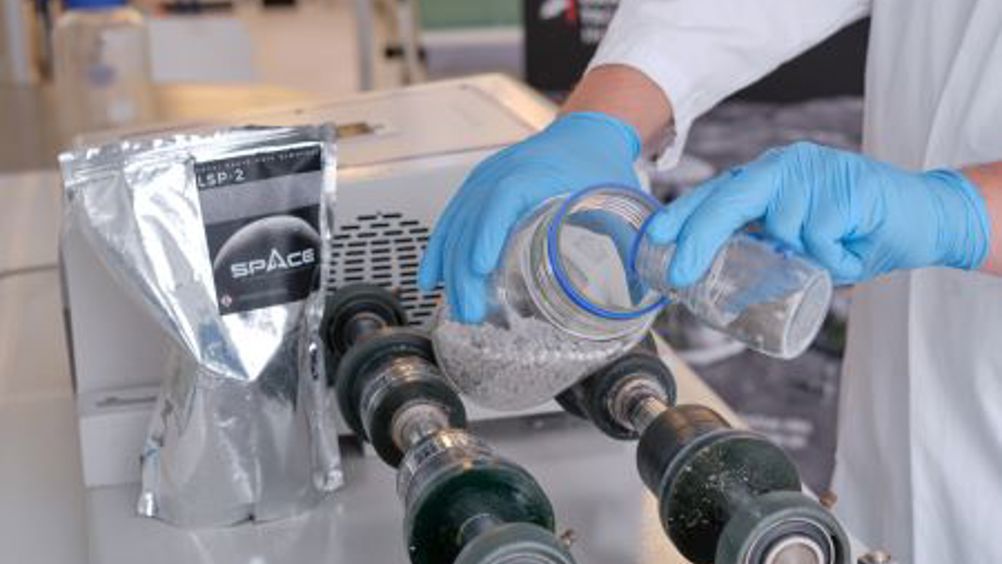
Led by the Danish Technological Institute, the project aims to show how lunar regolith – the loose material covering the Moon’s surface – can be used not only to extract oxygen but also to produce metal‑rich compounds capable of conducting electricity. These materials could be formed into inks for printed electronics or powders suitable for additive manufacturing.
Transporting equipment and materials from Earth remains one of the main challenges facing long‑term lunar exploration, due to cost and logistical constraints. By using locally available resources, future missions could become more autonomous and resilient.
The project builds on efforts to extract oxygen from lunar regolith using molten salt electrolysis, a process developed by UK‑based Metalysis. The technique heats calcium chloride electrolyte to between 800°C and 1,000°C, applying an electrical current that releases oxygen chemically bound in the soil. Lunar regolith contains an estimated 40 to 45 per cent oxygen by weight.
Metalysis is supplying simulated and de‑oxygenated lunar soil for the experiments, drawing on work it has carried out with the UK Space Agency and ESA since 2019 on oxygen extraction techniques.
“Our process was originally designed as an alternative method for titanium production,” said Dr Ian Mellor, managing director and chief scientist at Metalysis. “The technology is applicable to nearly 50 elements in the periodic table, and it is feedstock agnostic – so it can process lunar regolith. Our immediate focus terrestrially is upon high‑charge tantalum powders and aluminium scandium alloys for the electronics sector.”
Once oxygen is removed, the remaining metal alloy mixture could be used for structural components, repairs or construction. The current project, however, focuses on converting this conductive residue into printable materials for electronics manufacturing.
“The primary innovation of the project is converting the conductive part of regolith into a digitally printable material,” said Christian Dalsgaard, senior consultant at the Danish Technological Institute. “This opens completely new opportunities for off‑Earth manufacturing of electronics for future space missions.”
The initiative is supported by aerospace and defence technology manufacturers, which see potential in in‑situ resource utilisation (ISRU) as a way to support sustainable exploration of the Moon and Mars.
Dalsgaard noted that launching materials into space is highly resource‑intensive. “Every time you want to send a kilo into space, you need 15 kilos of fuel to move it,” he said. “So, there is an enormous advantage in being able to utilise local materials available on the Moon, for example to repair critical parts.”
To validate the concept, the project team plans to produce conductive raw materials from processed simulated regolith and demonstrate their use in printed electronics and additive manufacturing methods that could be replicated in space.
“We produce conductive inks and powder and test that it can be used to additively manufacture a piece of conductive wire,” said Andreas Weje Larsen, a 3D printing specialist at the Danish Technological Institute. “By doing this, we demonstrate that the conductive powder can, for example, be used to manufacture antennas directly on the Moon.”
Potential applications include the repair of robotic systems, electrical installations within habitats, and the construction of communication networks for lunar and Martian missions. The technology could also support scientific instruments by enabling local modification or repair.
The €155,000 project is structured as a proof‑of‑concept and is expected to lead to further ESA‑supported research exploring regolith as a raw material for electronic components. The project is funded under an ESA programme, although the participating organisations note that the findings do not represent the official views of the agency.