
![ESA Switches on Night-Time Imaging for Sentinel-2A Copernicus Satellite [PHOTOS]](https://www.ufofeed.com/wp-content/uploads/2026/01/gas-flares.jpg "ESA Switches on Night-Time Imaging for Sentinel-2A Copernicus Satellite [PHOTOS]")
The European Space Agency (ESA) has begun testing the veteran Earth-observation satellite Sentinel-2A during nighttime passes. The findings suggest that future Copernicus missions could extend Earth monitoring well beyond daylight hours.
Promising Early Results From Night Tests
According to ESA’s announcement on 15 January 2026, the satellite was able to detect a range of nighttime targets. These included oil field gas flares, large fires, and the lights of fishing vessels.
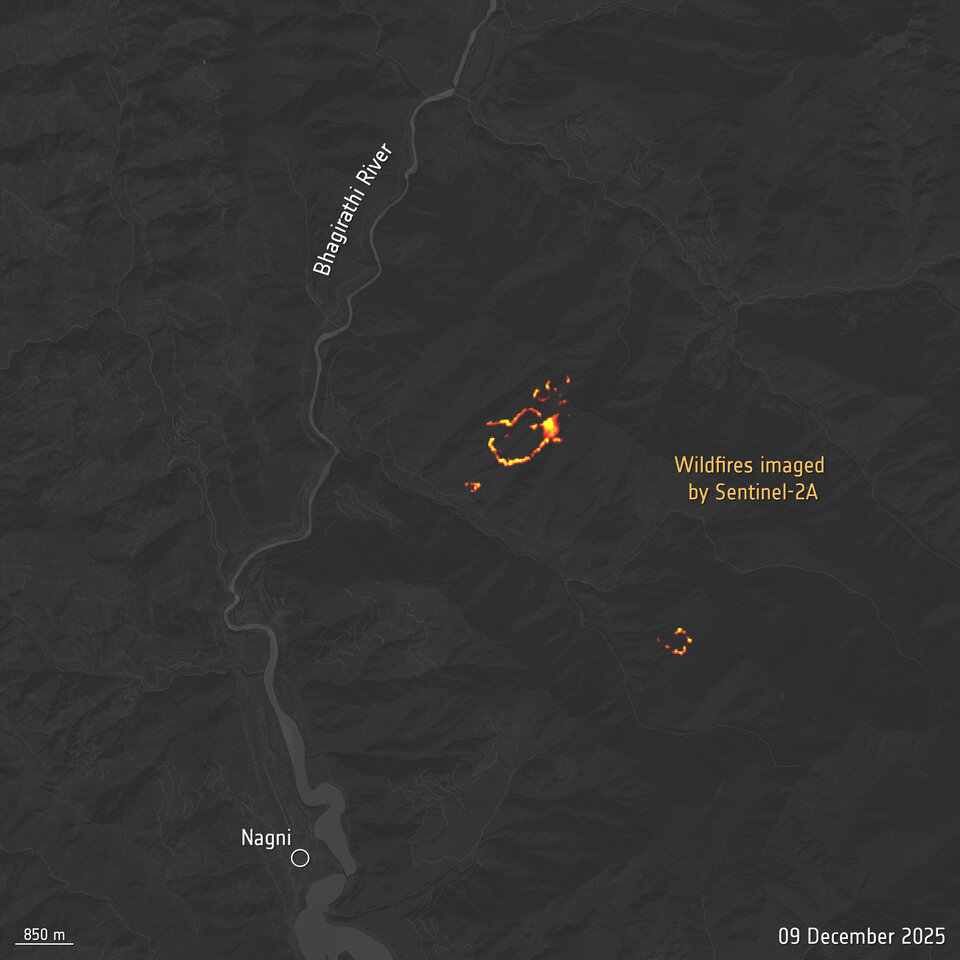 Wildfire in India imaged by Sentinel-2A at night. Credit: ESA
‘We are extremely pleased with these results, which help pave the way for the Sentinel-2 Next Generation mission,’ says Simon Proud, ESA’s Sentinel-2 Next Generation Mission Scientist. ‘The current Sentinel-2 mission remains outstanding, delivering a wealth of data for Copernicus operational services, the commercial sector and for science, but we are now further pushing the boundaries of what an optical mission can do.’
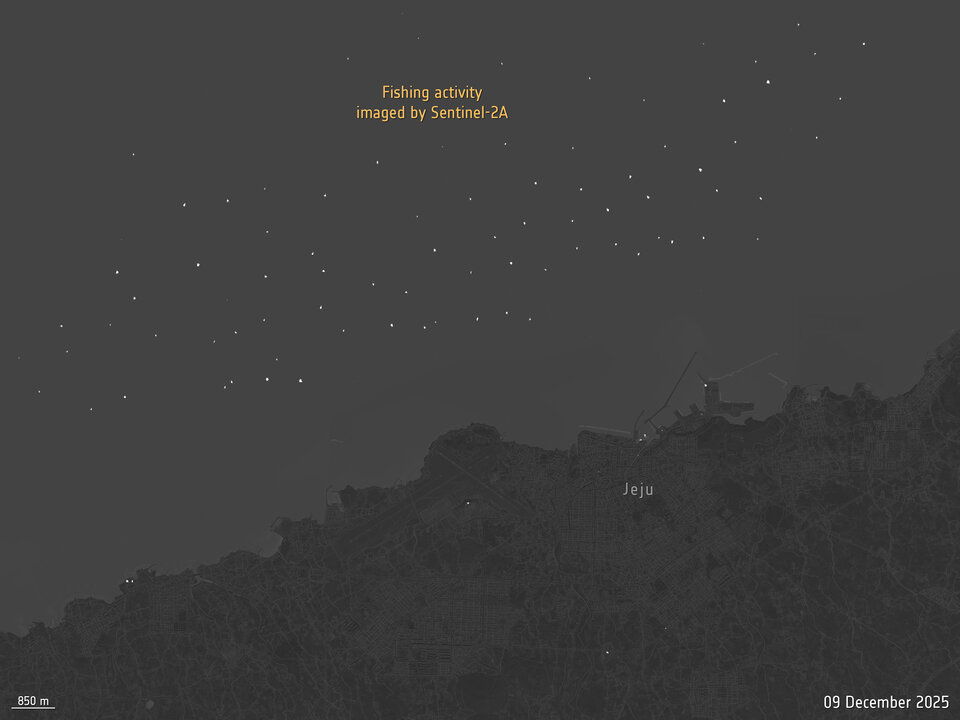 Fishing boats off South Korea imaged by Sentinel-2A at night. Credit: ESACopernicus and the Sentinel-2 Mission
Copernicus is the Earth observation part of the European Union’s space programme. It monitors the planet and supports services such as environmental protection and land management. Sentinel-2A launched in 2015. Since then, the satellite has provided high-resolution, colour-like images of Earth with wide coverage. These images are mainly used for tracking land, agriculture, forests, and coastal areas. Later, in 2024, the mission expanded with Sentinel-2B in 2017 and Sentinel-2C satellites.
Why Sentinel-2 Satellites Normally Switch Off at Night
All Sentinel-2 satellites carry optical instruments that rely on sunlight reflected from Earth’s surface. As a result, under normal operations, their imagers are switched off during nighttime passes. The current generation of satellites, including the future Sentinel-2D, was not designed to operate in darkness. Instead, night-time imaging is planned as a capability of the Sentinel-2 Next Generation mission. Expectedly, it will be able to observe selected regions after sunset.
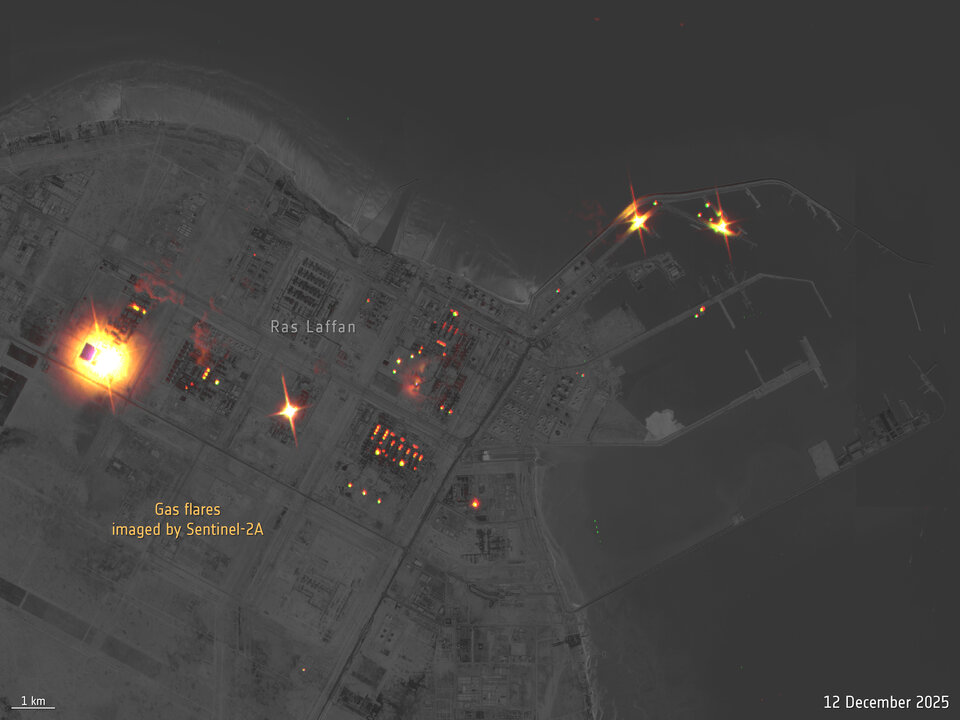 Gas flares in Qatar imaged by Sentinel-2A. Credit: ESA
‘These experiments are providing invaluable insight as we design Sentinel-2 Next Generation, which is being developed with the ambitious goal of delivering even higher resolution imagery and imaging some parts of the planet even when the Sun is down,’ adds Simon Proud.
Preparing for Sentinel-2 Next Generation
As Sentinel-2A approaches the later stages of its operational life, ESA is using the satellite both to support ongoing Copernicus services and to test new ideas for the future. Switching it on at night has allowed engineers and scientists to explore how optical Earth observation could be expanded once the next generation of satellites enters service.
Why Night-Time Earth Observation Matters
Night-time imaging is increasingly valuable because it can reveal activities and changes that are difficult to detect during the day. Observations after dark can help monitor city lights as an indicator of urban growth, track gas flares from energy infrastructure, and detect fishing activity at sea. The Sentinel-2A trials suggest that future Copernicus missions could provide a new layer of information after sunset. This could strengthen Earth monitoring for environmental, security, and economic applications.
Published by Space Enthusiast
An amateur rocket enthusiast with a keen interest in all space-related activity. Looking forward to the day when the UK starts launching rockets into space and I’m able to watch launches (from a safe distance of course).