
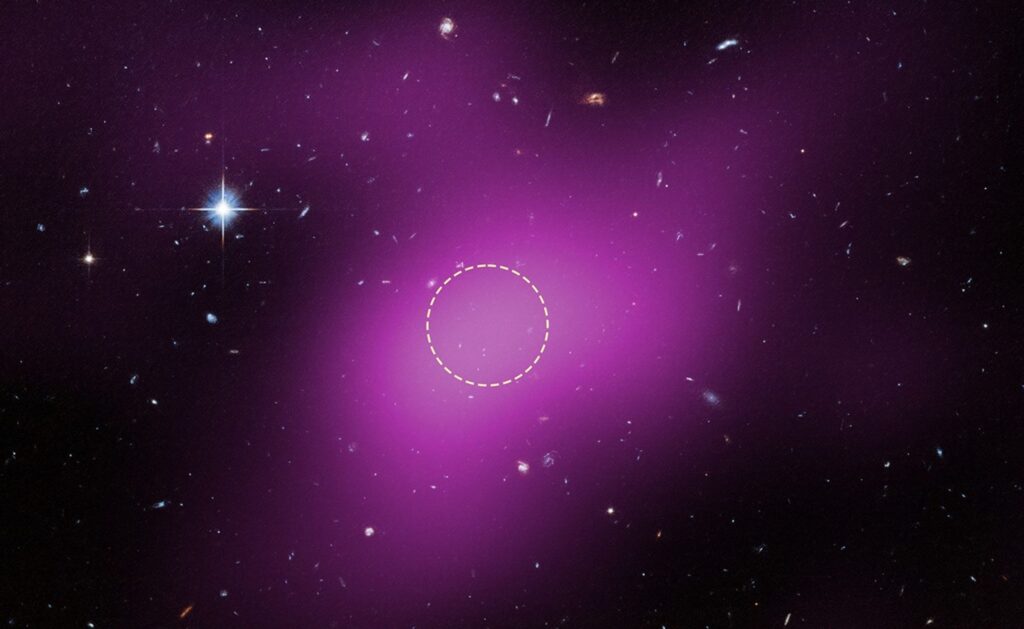
A team of astronomers working with the Hubble Space Telescope has made a unique discovery. For the first time, scientists have confirmed the existence of a mysterious object that is essentially a cloud of dark matter filled with gas but devoid of stars. This “starless” relic, named Cloud-9, is believed to be a surviving “building block” of a galaxy from the early Universe.
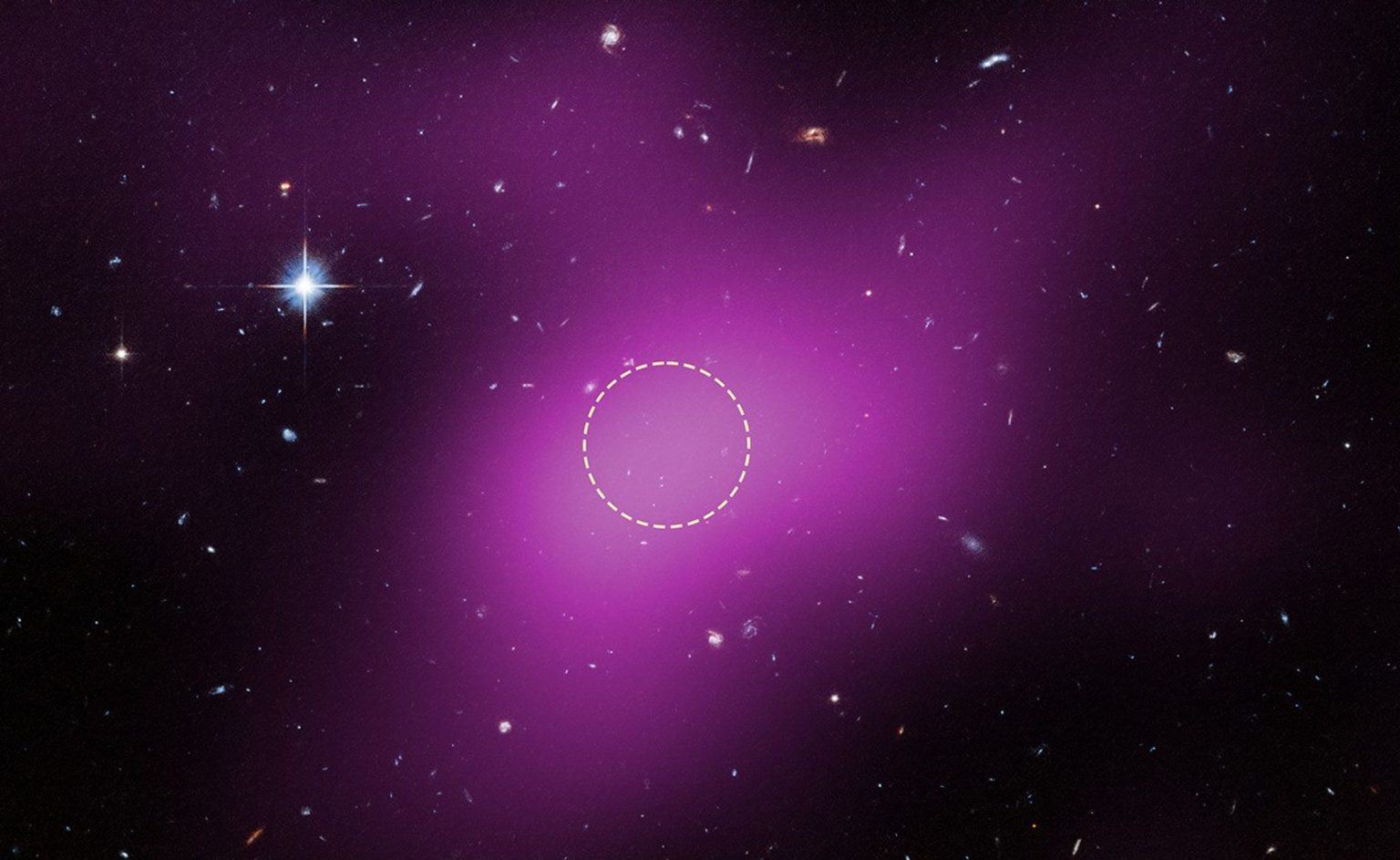 A relic called Cloud-9. Photo: NASA / ESA
RELHIC
“This is a story about a failed galaxy,” says research leader Alejandro Benitez-Llambay. The absence of stars in this object is not a drawback — on the contrary, it confirms theories. Cloud-9 is a kind of primary “building block” from which a galaxy could have formed. But for some reason, this process never started.
The object belongs to a new class that scientists have named RELHIC — a cloud of neutral hydrogen with limited reionization. It is a remnant from the early days of the Universe, which has been preserved in an amazing way to this day. “This cloud is a window into the dark Universe,” explains astronomer Andrew Fox. Since dark matter does not emit light, such objects provide a rare opportunity to study its nature.
How was it possible to see the invisible?
For a long time, scientists could only speculate about the existence of such “phantoms.” Even powerful ground-based telescopes could not definitively confirm whether Cloud-9 was a faint dwarf galaxy or something else. Only Hubble’s highly sensitive camera made it possible to establish the fact that there really are no stars there. “We can confirm that it is empty,” said lead author Gagandeep Anand. The discovery came as a surprise.
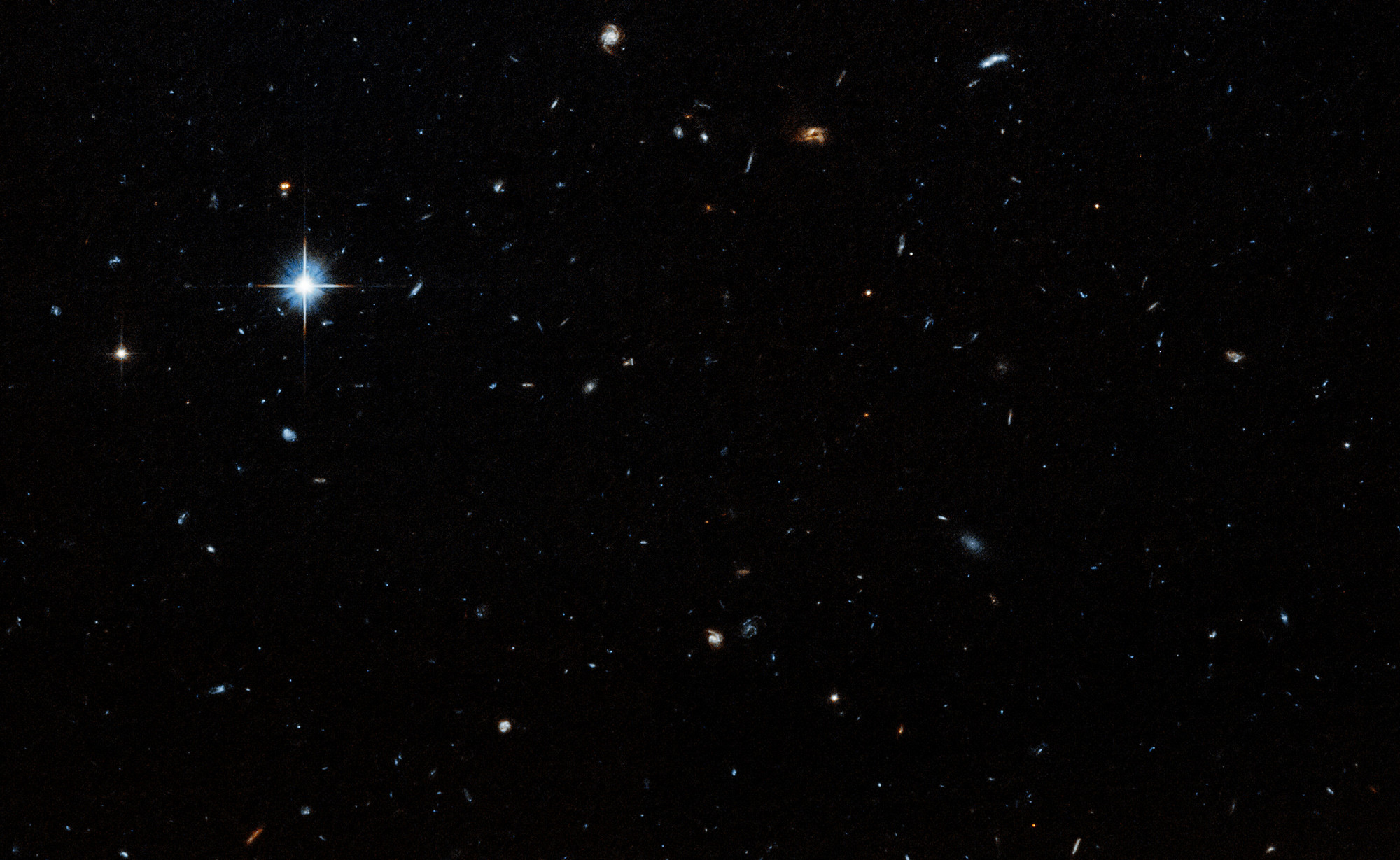 Photograph of an empty field in the surrounding area of Cloud-9. Photo: NASA/ESA
The core of Cloud-9 consists of neutral hydrogen and has a diameter of about 4,900 light-years. The mass of hydrogen in it is a million times greater than the mass of the Sun, but this is only the tip of the iceberg. Analysis shows that the cloud is held together by the gravity of a massive dark matter halo, whose total mass may reach 5 billion solar masses.
This object is located near the spiral galaxy Messier 94. Radio telescope data indicate a possible weak interaction between them. Cloud-9 is smaller, more compact, and much more spherical than typical hydrogen clouds, which makes it special.
Why is this discovery so important?
The discovery of Cloud-9 provides a direct glimpse into the early stages of galaxy formation. It confirms that the Universe contains many small structures dominated by dark matter — peculiar “failed” galaxies. Studying them reveals the secrets of the dark components of the cosmos, which cannot be seen by observing stars alone.
The future of Cloud-9 itself is uncertain. It may remain a relic, collapse and form stars if it gains mass, or disperse under the influence of external forces. Further searches for similar objects using new telescopes promise to expand our understanding of the nature of dark matter and the earliest history of the Universe.
Earlier, we reported on how a mysterious source of gamma radiation attracted the attention of scientists.
According to NASA