
Astronomers scanned the interstellar object 3I/ATLAS for alien signals using the Green Bank Telescope, but found none. The object behaves like a normal comet, made of ice, dust and rock, yet studying it helps scientists learn about objects from other star systems.
In 2025, astronomers discovered a rare object called 3I/ATLAS moving through our solar system. This interstellar object is only the third in line to be discovered, coming after 1I/Oumuamua and 2I/Borisov. Its peculiar speed and source led to scientists’ interest, and some even speculated about it being a non-ordinary meteorite.
What is 3I/ATLAS?
3I/ATLAS did not turn out to be an alien spacecraft, but rather, it acted as a typical comet. The comet has a coma, that is, a fuzzy cloud of gas and dust surrounding it, and its behaviour throughout movement and emissions coincides with that of a natural comet. Even though the object comes from an alien star system, scientists still agreed that it was composed of ice, dust and rock, just like with other comets.
The scientific investigation:
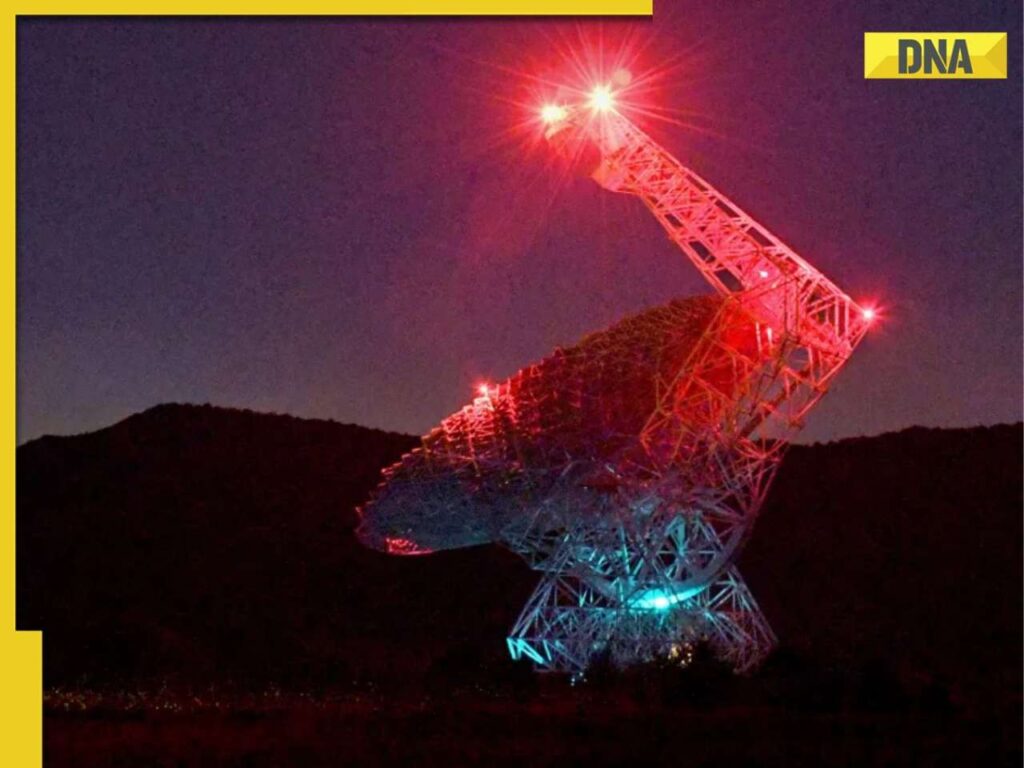
Researchers from the Breakthrough Listen initiative have thoroughly examined the comet 3I/ATLAS. They have utilised the Green Bank Telescope, the largest single-dish radio telescope globally, situated in the United States, for this purpose and have searched the comet for possible technosignatures, which are radio waves that may suggest the presence of extraterrestrial intelligence. The study was primarily concentrated on the comet during its nearest encounter with Earth in December 2025.
Results of the investigation:
Following a meticulous scanning procedure, the outcome was unequivocal: the presence of extraterrestrial technology was ruled out. Every signal that was detected turned out to be natural or the result of some interference from Earth. The object did not display any artificial radio emissions, which means it is not a ship or gadget of an intelligent civilisation.
Why it matters:
Scientists find 3I/ATLAS thrilling even if it doesn’t give away alien signals. The research on such interstellar objects helps scientists to learn about the formation of objects around different stars and their subsequent travel to the galactic centre. Henceforth, every new interstellar object serves as a source of precious information to us regarding distant planetary systems and the cosmic history of our galaxy.