
Published 01/03/26 at 8:25 a.m.
By Oregon Coast Beach Connection Staff
(Portland, Oregon) – The comet 31/Atlas has left the building.
Well, almost. And it’s our regional space that it’s heading out of rather than any building.
The mysterious comet trekked its way this summer through our solar system, from some distant place beyond it, and racking up the honor of being only the third extra-solar visitor we’ve encountered. Its actual size is still – if you’ll pardon the pun – up in the air a bit.
It was discovered back in the summer and now it’s on its way out after making a bit of a show in late December.
Most photos of the interstellar interloper really came from larger telescopes, although some started to come from smaller smart telescopes starting in November.
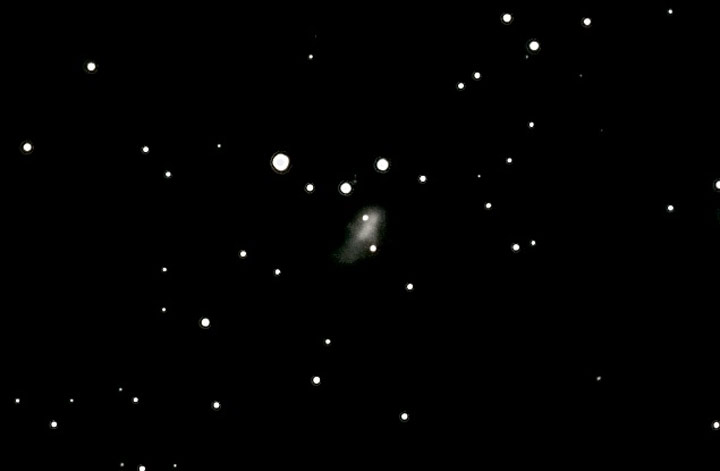
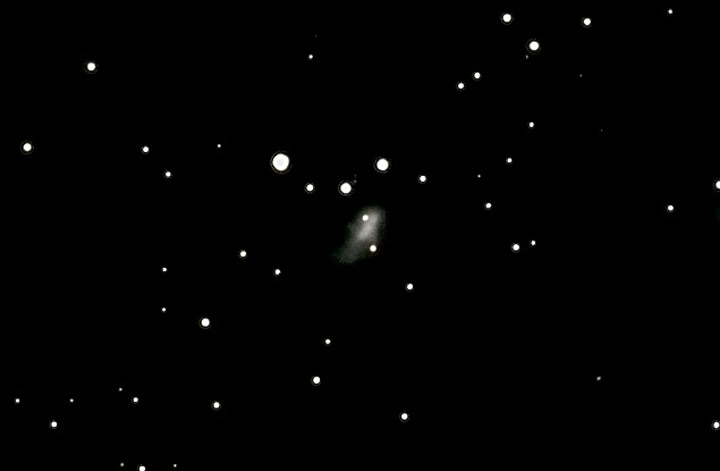
Yet one Portland, Oregon man caught one good shot of it right at the beginning of the new year. Practically from his backyard. Patrick Finney has managed to snap a few interesting stellar objects in recent years. Oregon Coast Beach Connection featured his shots of comet Lemmon and comet KT / Atlas. This one – though a tad blurry – is especially spectacular. You can almost feel the thing whizzing away.
How did Finney capture these? Using a ZWO SeeStar S50.
“This is a smart telescope, meaning it has GPS tracking, and can find the object you want to see,” Finney said. “It also has edit features and filtering, to enhance imagery. All imagery is viewable on your cellphone via SeeStar’s downloadable app.”
He said it’s quite compact and works well with deep space objects.
It wasn’t easy. He only caught it in one photo and
31/Atlas was at its closest approach to Earth back on December 19, at 270 million km or 1.8 AU.
“Comet 3I/ATLAS is the third object in history from outside of our solar system to be discovered within our solar system,” NASA said.
NASA reported the discovery this summer, made via the ATLAS (Asteroid Terrestrial-impact Last Alert System) survey telescope in Rio Hurtado. Then it was about 420 million miles away, named 31/ATLAS, having come from the direction of the constellation Sagittarius.
31/ATLAS was mostly only visible with powerful telescopes – and unfortunately something the Pacific Northwest and areas along the Washington or Oregon coast weren’t able to see with the naked eye.
Yet Finney in Portland, Oregon, caught it on its way into “the black” – as one legendary sci-fi show put it.
Now that the comet is heading back out from the Sun, its velocity is slowing as expected under the Sun’s gravitational influence. By the time it exits the solar system, it will be moving at essentially the same speed it had upon arrival.
NASA scientists say that as the comet approaches the Sun, rising temperatures cause its ices to sublimate and release gas. This outgassing can introduce minor forces that produce very small shifts in its path. It seems to be doing just as they predicted.