
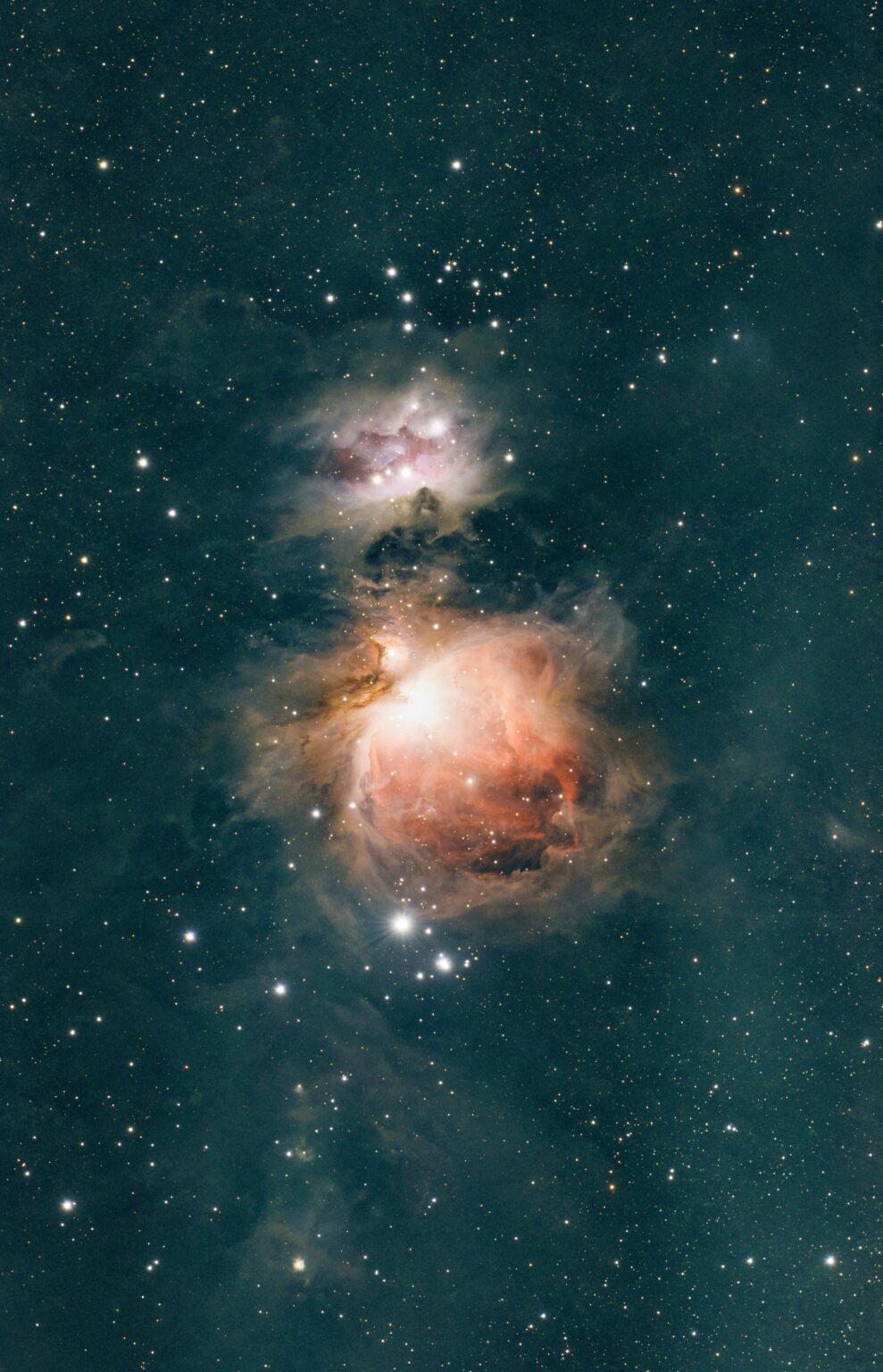

This image of M42 was captured using the soon-to-be-released ZWO Seestar S30 Pro.
3 hours of one-shot-color data, 60 second exposures, processed in Pixinsight/Photoshop.
ZWO sent me a new Seestar S30 Pro at the beginning of December.
30mm quadruplet APO optics.
An 8.4 MP IMX585 sensor.
Fully automated. Off-the-shelf.
Forty years ago, when I started astrophotography, this would have sounded like science fiction. Back then, capturing Orion meant heavy mounts, cold nights, hand-guided exposures, chemistry, guesswork, and patience measured in years. You earned every photon the hard way.
Today, a device like this can sit on a patio, align itself, track the sky, stack hours of data, and reveal one of the most iconic stellar nurseries in the universe – with hardware small enough to fit in a backpack and affordable enough to be within reach of almost anyone curious about the night sky.
That’s what this image really represents to me.
Not just Orion – but a moment in culture where advanced optics, sensors, computation, and automation have converged. Where deep-sky astrophotography is no longer locked behind expertise or privilege, but open to students, families, artists, and first-time observers.
For someone who’s spent four decades chasing faint light across the sky, this feels less like a gadget demo and more like a quiet testimony:
We’re living in a time when the universe is more accessible than ever, and that’s something worth pausing to appreciate.
Clear skies.
by moonbeamdev
2 Comments
Beautiful photo
Would love to see some difficult targets.