
2026 promises to be a watershed year for the entire space industry. Government agencies and private companies are simultaneously challenging traditional boundaries, preparing missions that could rewrite textbooks and change our understanding of life beyond Earth. For the first time in decades, a crew will fly around the Moon, while private startups are developing their own orbital stations. Missions to Mercury, asteroids, and efforts to return samples from other celestial bodies confirm that space technology is becoming ever more real and accessible.
Lunar Horizons
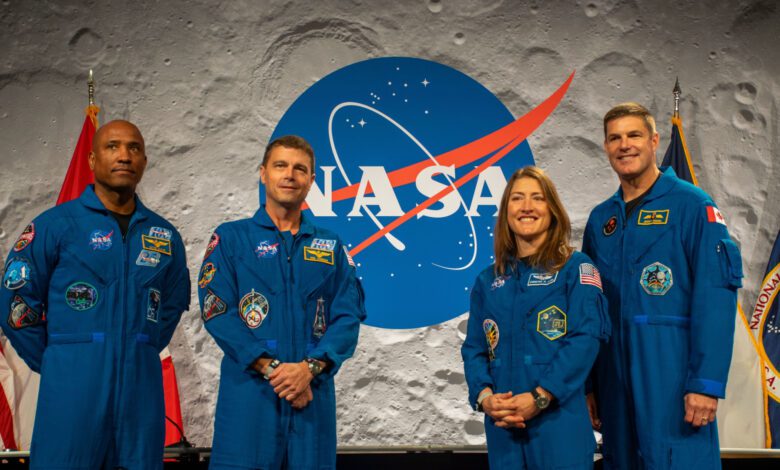
The Artemis 2 mission will send four astronauts, including a Canadian crew member, around the Moon. This is not a repeat of the Apollo feats, but a full-scale test of the technology needed for future landings and long-term human presence on the Moon. The launch is scheduled for February 2026.
Meanwhile, Blue Origin is preparing the Blue Moon Mark 1 cargo module to deliver equipment near the Shackleton Crater. On board is a unique NASA camera to capture how lunar dust interacts with landings, marking the next step toward building infrastructure on the Moon.
Private Stations and New Rockets
Private companies are stepping into leading roles. California-based startup Vast is launching Haven-1— the first fully commercial orbital station for short missions, scientific experiments, and commercial projects.
In 2026, SpaceX plans to launch Starship into orbit and conduct key in-space refueling tests. Rocket Lab is preparing its heavy-lift Neutron rocket for large satellite deployments and crewed missions, ramping up competition with current industry leaders.
Interplanetary ambitions
China’s Tianwen-2 mission is headed to asteroid Kamoʻoalewa to retrieve samples, while Chang’e 7 targets the Moon’s south pole to study regions of lunar ice.
The European Space Agency is launching the Hera spacecraft to the Didymos system to study the aftermath of NASA’s DART impact on Dimorphos—an important test of technology to help protect Earth from potential asteroid threats.
Telescopes and new horizons
Major telescopes are opening new frontiers in astronomy. The Chinese Xuntian will rival Hubble with its mirror size, but offer a much wider field of view. NASA’s Nancy Grace Roman telescope will have a field of view a hundred times larger than Hubble’s, searching for exoplanets and exploring the structure of the universe.
Future technologies
Sierra Space’s Dream Chaser is a spaceplane capable of landing on conventional runways. This spacecraft sets a new standard for delicate cargo deliveries and may soon carry crews as well.
After an eight-year journey, the BepiColombo mission will reach Mercury’s orbit. European and Japanese science modules will study the planet’s surface, internal structure, and magnetic field in extreme conditions.
Expert commentary
SpaceX, founded by Elon Musk, leads the way in reusable rockets and commercial launches. In 2026, the company continues Starship testing and introduces technologies that could make space travel accessible to individuals and businesses worldwide.