
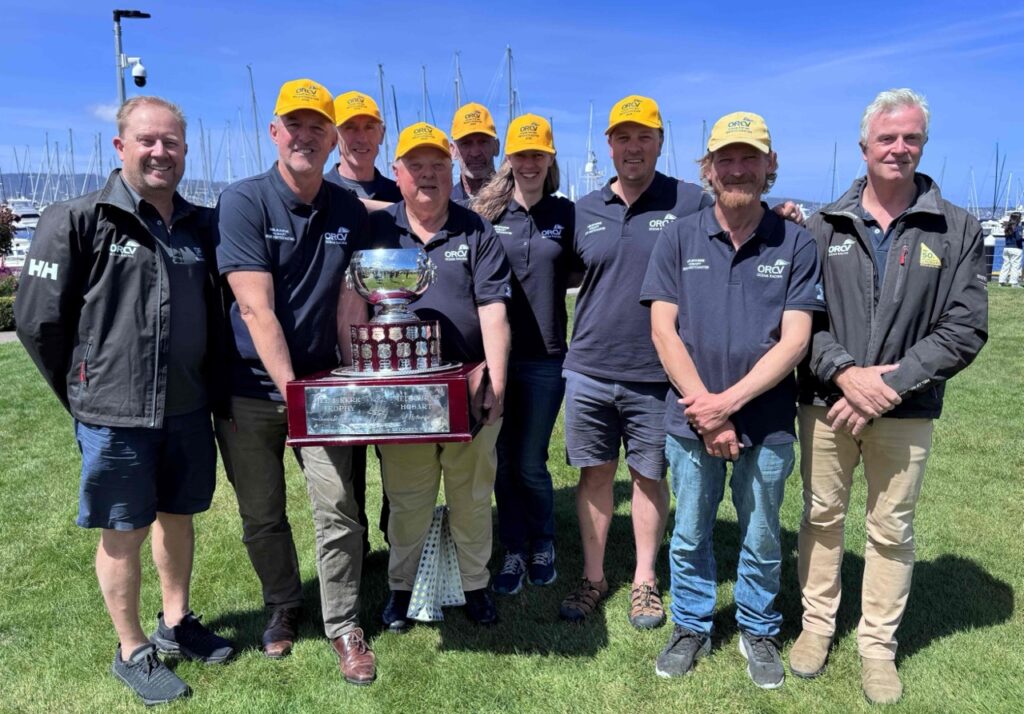
In a closely fought race, The Jackal led all the way from Melbourne to Hobart, clinching the line honours victory despite the determined efforts of Matt Fahey’s Sydney 38, Faster Forward, and a last-ditch effort from Justin Brenan’s Lidgard 36, Alien, in the final few miles of the race.
“It was close racing, The Jackal at one stage was 20 nautical miles in front of us and it ended up four nautical miles in the end, maybe less,” said Brenan.
Setton reflected upon his victory as a first-time skipper and what gave them the edge.
“I’m pretty happy to be here, very relieved, it’s been a big year getting the boat ready, I’m glad we made it.
“I think our downwind speed on the second day gave us a little bit of a break from Faster Forward.
“We knew that they would be pretty good upwind and so for the first 12 hours or so, it wasn’t quite downwind, and there were only a few miles between us, but we thought, once the breeze got behind us, we’d be able to skip away a little bit, and we were able to do that which was good.
“It was a great race, very tactical, probably equally as tactical in some respects as a Sydney to Hobart.
Onboard The Jackal with Setton were Jeff Whiteside, Nigel Fellowes-Freeman, Peter Grant, Stuart Addison, Robert Buchanan, Thor Cembala and Ronald Piang Ng.
In true Westcoaster tradition, Simon Dryden, a race veteran onboard Faster Forward received acknowledgement for completing 30 Melbourne to Hobart Yacht Races.
Faster Forward skipper Matt Fahey acknowledged his crew in this year’s race and made mention of the impression that Dryden has had on this race.
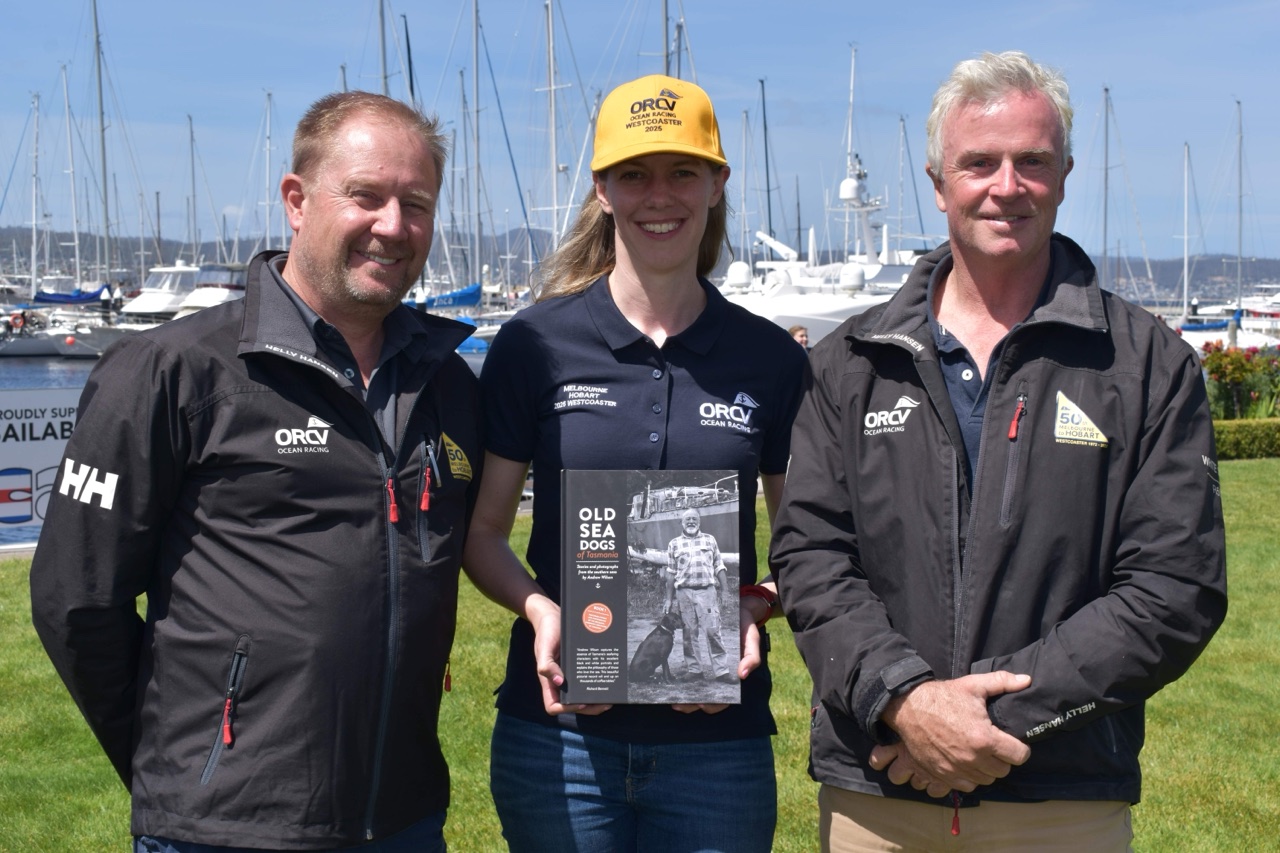
2025 Melbourne to Hobart.Katrina Hartman Photo credit Jane Austin
“I’m delighted, we’ve had the boat seven years, this is our fifth Melbourne to Hobart on our boat, and we just love it.
“We’ve put a new team together this year with a few new people, and they’ve done an incredible job, not only the novices in our team but also the ones with experience that have come to us from other parts of Australia.
“I’m really happy with what we have achieved as a team, I’ve never had a bond like we have already in this group, and I couldn’t do it without Simon.
“I’m thrilled that I’ve had him back with me again this year, and I’m thrilled that I’ve had the opportunity to share his 30th [race] with him, it’s a real privilege to have done four together.
“Hour on hour, there was something new that all of us learnt … that’s the privilege I have in being able to sail with Simon,” said Fahey.
Dryden took a moment to reflect upon his Melbourne to Hobart racing achievements after docking in Hobart for the 30th time.
“It’s a race that I love and that I have done so many times, it’s just part of my nature.
“It’s good fun sailing with a bunch of guys, some of them are new, some are less experienced, so teaching them all the way about ways to do things…it’s always something you look forward to, it’s [Hobart] a great destination.
“It’s about taking people on the journey; I think that all eight people that Matt and I had on this journey will be back.
“The interesting thing about the Melbourne to Hobart Race is that we see such lovely countryside and we see such lovely places, it’s just really nice how this race comes via various stages of Tasmania,” said Dryden.
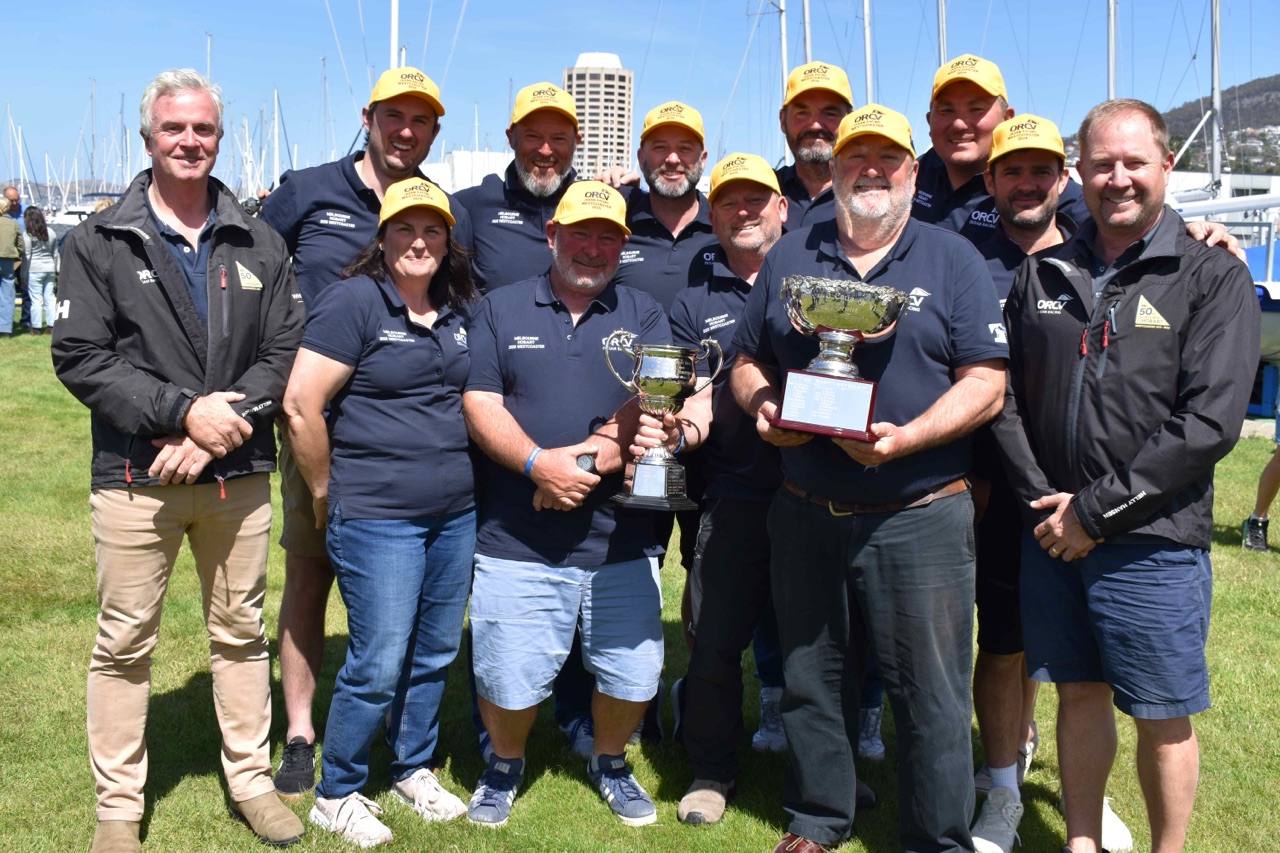
2025 Melbourne to Hobart. Faster Forward Photo credit Jane Austin
The Kevin Behrens Shield for Outstanding Crew Member, awarded to the crew member judged most outstanding in the race, was presented to Robert Brown, affectionately known as Spiderman, by the crew of Joan Lorraine for being so willing and helpful and at aged 70 was the first up the mast twice during this year’s Westcoaster.
The Westcoaster is one of the world’s great ocean races, covering 435 nautical miles from the start in Port Phillip to the finish line in the River Derwent in Hobart.
The race starts with a 125 nautical mile passage across Bass Strait before the fleet sails 200 nautical miles south down the West Coast of Tasmania, past Maatsuyker Island, east to South East Cape then turning northeast through the challenging waters of Storm Bay and then the fickle conditions of the River Derwent.
The monohull race record of 1 day 17 hours 28 minutes 59 seconds was set by Shortwave in 2008.