
instagram: https://www.instagram.com/vhastrophotography?igsh=YzNpcm1wdXd5NmRo&utm_source=qr
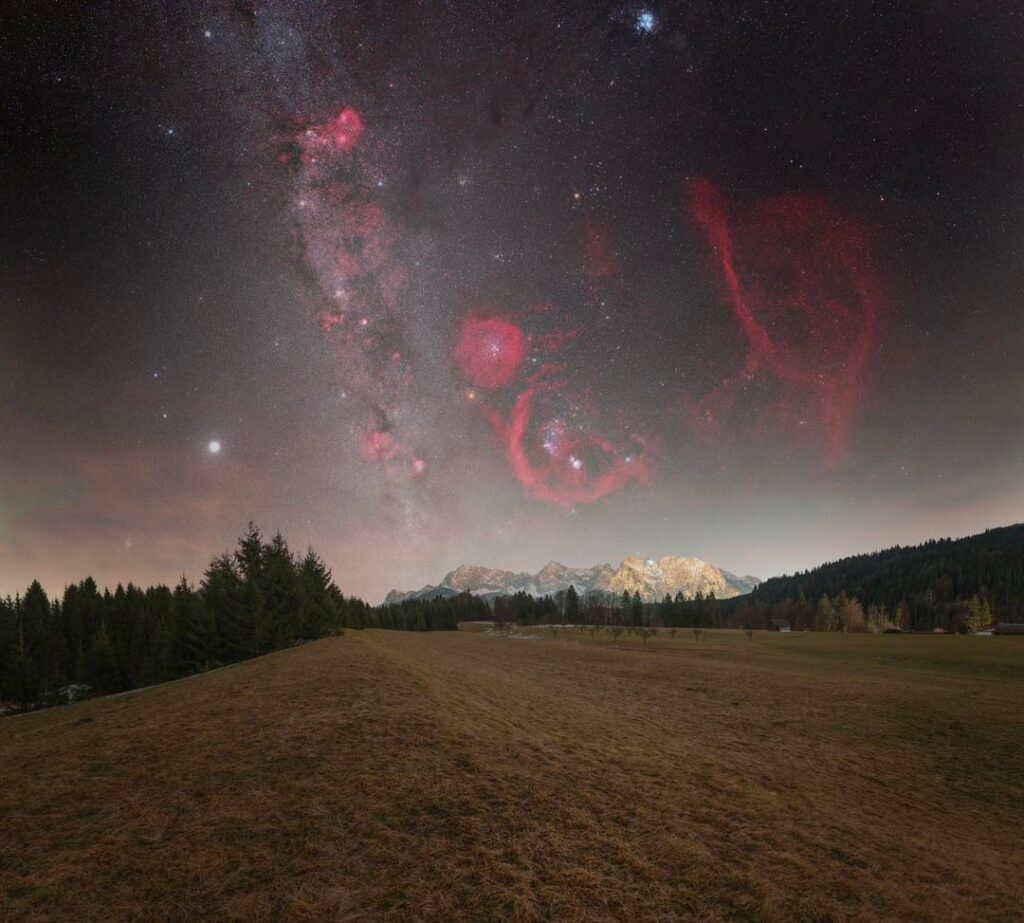
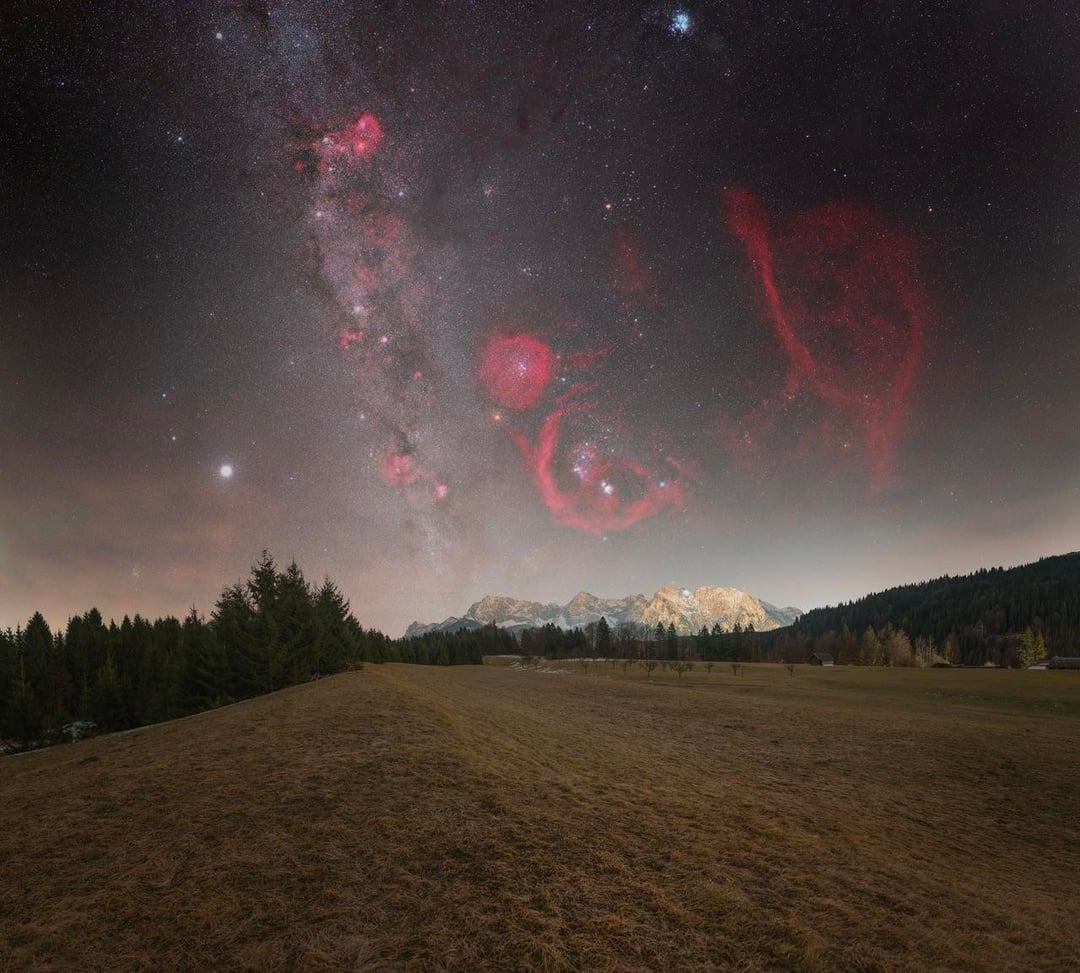
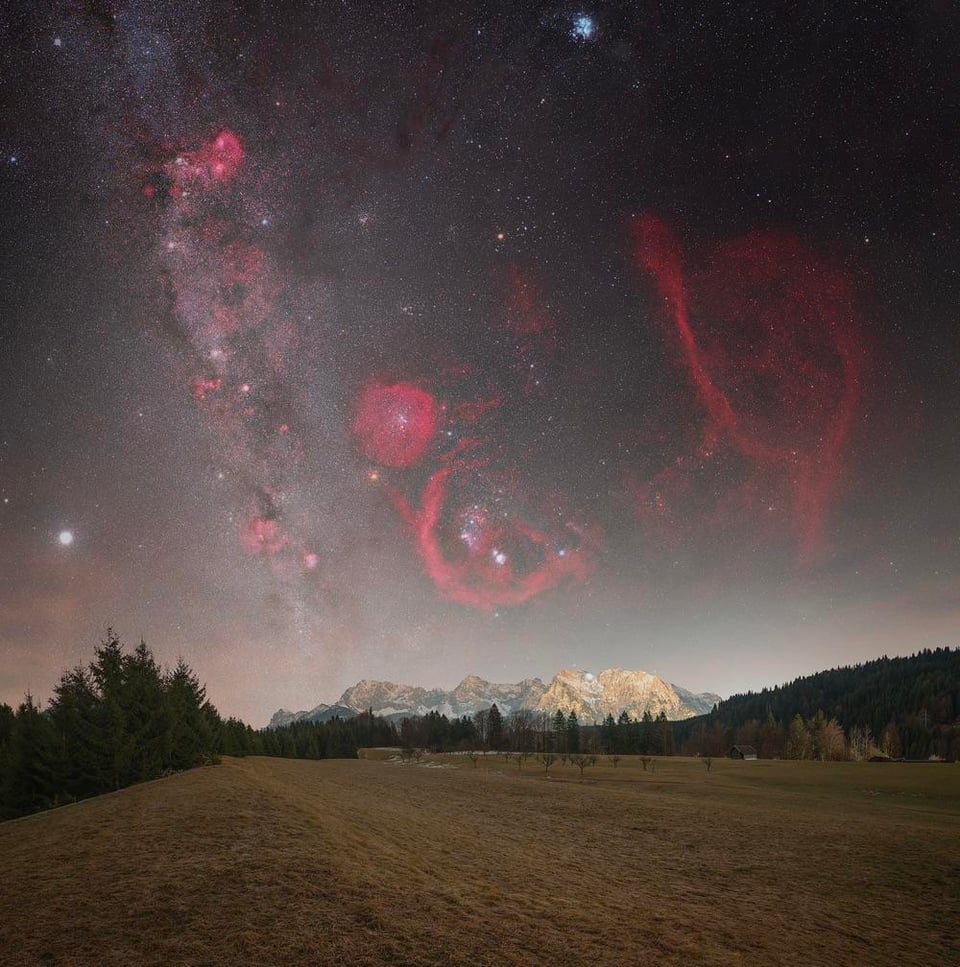
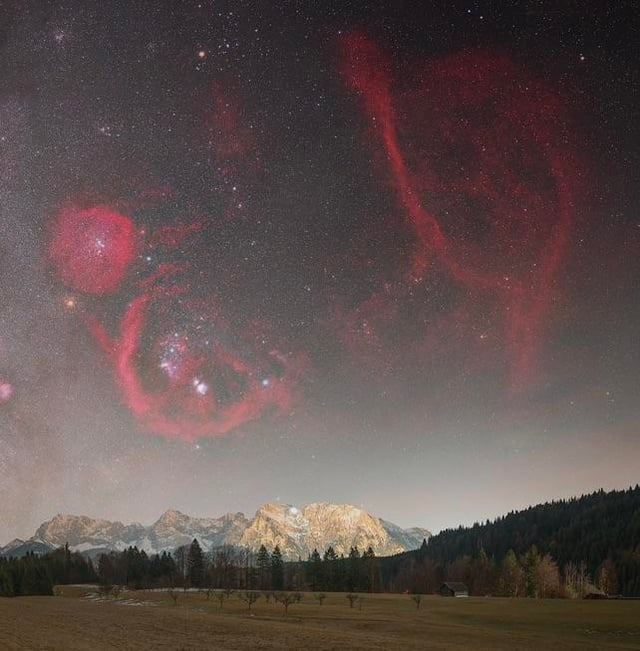
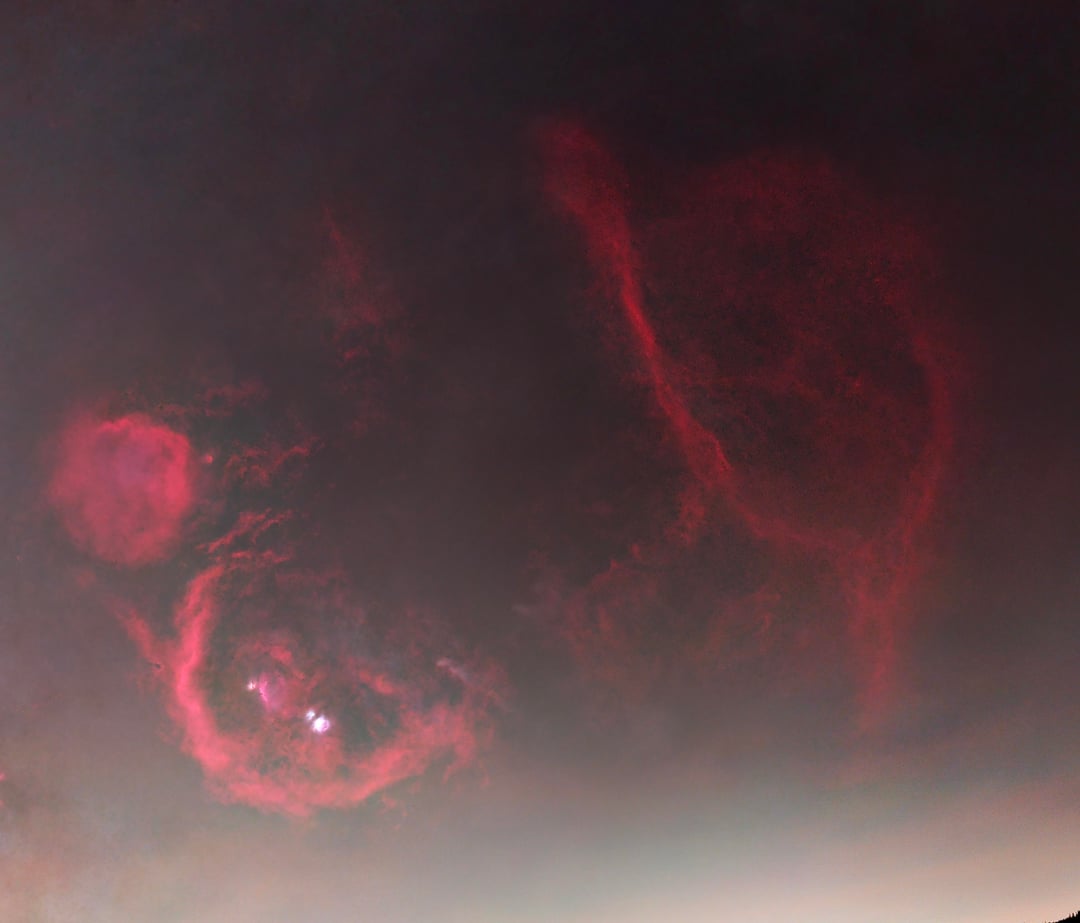
In this image you can see the famous Barnard's Loop around the Orion Region and the Eridanus Loop on the right side of the image. Both were captured last night with one 28mm frame with an exposure time of 10x90s.
Those deep red nebulae are vast clouds of hydrogen gas — the most abundant element in space. When hydrogen atoms are excited by intense radiation from nearby young stars, they emit light at a very specific deep-red wavelength (656,3 nm, "Halpha").
To capture those faint nebulae, astrophotographers use narrowband H-alpha filters, which isolate this faint red light and block most of the light pollution. This allows us to reveal structures that are otherwise invisible to the human eye.
HaRGB | Mosaic | Tracked | Stacked | Composite
Exif:
Sony A7III with Sigma 28-45 f1.8 at 28mm
Skywatcher Star Adventurer 2i
Panorama
ISO 1000 | f1.8 | 5x45s per Panel
3×2 Panel Panorama
Foreground:
ISO 2000 | f1.8 | 60s per Panel
3×2 Panel Panorama
Halpha (28mm):
Barnard's/Eridanus Loop: ISO 4000 | f1.8| 10x90s
Other Halpha regions: ISO 4000 | f1.8 | 4x90s
Location: Geroldsee, Germany
by Senior_Library1001