
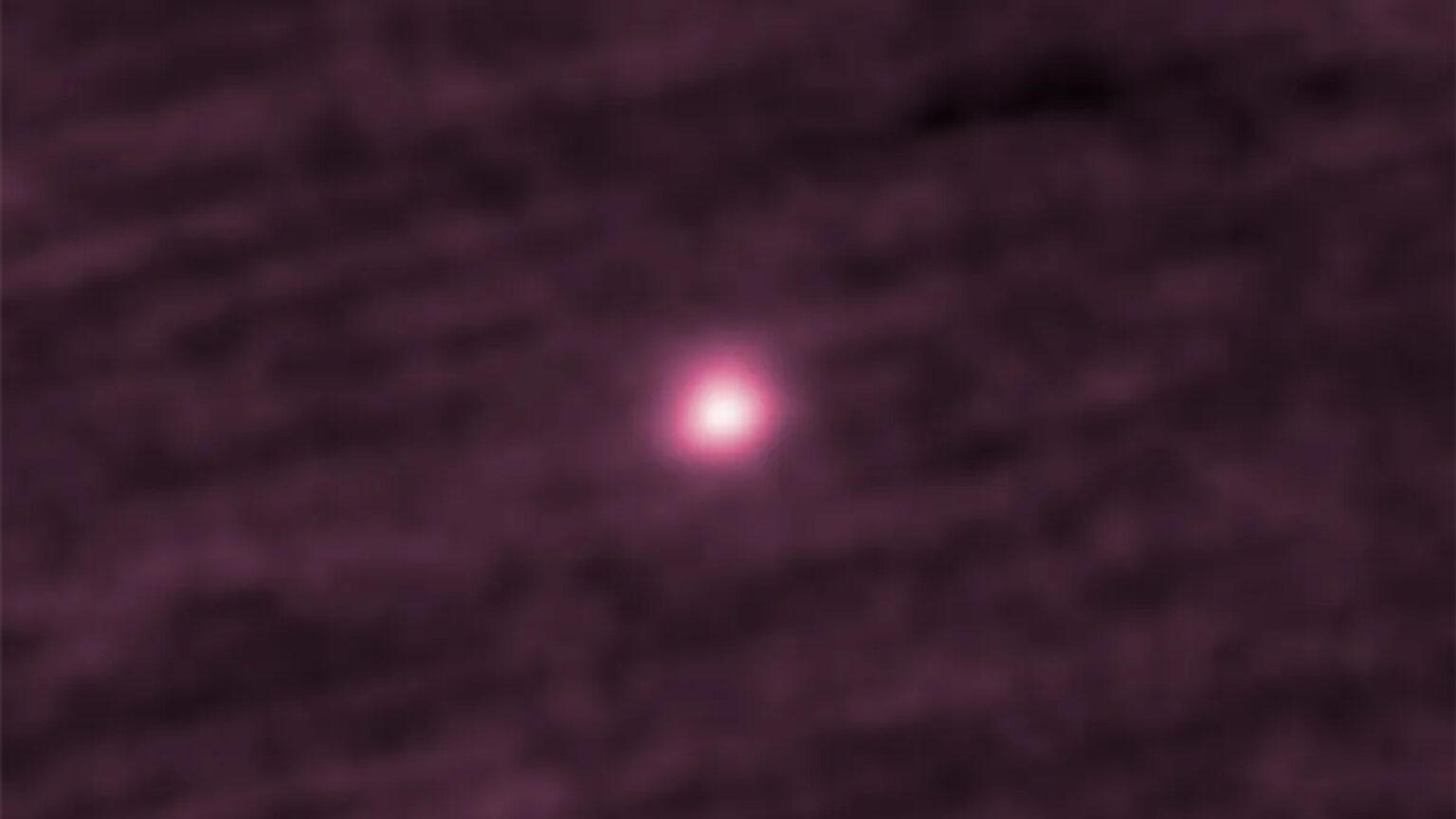
The term cryovolcanism indicates that“cold volcanic” activity is present on this comet. This means that what was discovered on comet 3I/Atlas was a combination of Ice and magma, which is fascinating to scientists as it proves that icy comets can erupt like volcanoes, however, not with magma but jets of frost and vapour.
The third deep space visitor displaying signs similar to volcanic eruptions, which has never been seen before on a comet
Comet 3I/Atlas is the third known interstellar visitor carrying ancient material that is older than the Sun. It was discovered in July 2025 and travelled from deep space into our solar system on its hyperbolic path, meaning that it is only passing through our solar system once. Researchers uncovered an extraordinary characteristic on this comet; instead of the comet only displaying “normal” characteristics like ice, dust, and rock, it has characteristics of both ice and magma.
The composition of the comet is rich in elements such as carbon dioxide, ice, carbon as well and other metal gases. This hints that the star was formed far from its original star and rather in a much colder environment that was chemically rich. The comet stands out as it does not have a protective crust like most comets do, exposing its ancient icy surface, allowing volcanic-like activities to take place when heated up by the Sun. This rare comet is like a time capsule from another solar system.
Understanding the cryovolcanic state in which the comet exists
The Sun’s heat rays caused the carbonated icy layer on the comet to sublimate, building pressure underneath its surface, and rather than melting rock or lava, the comet expelled jets of gas, vaporized metal, and even icy particles. These powerful eruptions were so intense that they caused the comet to give off a bright light, indicating that its whole surface layer might have fractured all at once.
A chemical reaction that took place within the comet was triggered by the heat from the Sun. When a small amount of water is mixed with microscopic particles of iron and nickel elements, it expels heat and releases hydrogen gas. This caused the chemicals beneath the surface to build up until the surface couldn’t withstand the force, combusting through cracks, which formed explosive jets. Scientists state that this explains the abnormally high outflow of carbon dioxide the comet has.
A strange characteristic of 3I/Atlas and why it is considered unusual
Another strange characteristic this comet has is an “anti-tail” streak that points towards the direction it is going instead of a tail in the direction it came from. Sometimes this is just an effect of an illusion from a viewing perspective; however, this comet showed it much earlier and more vividly.
Researchers have theorized that the comets’ cryovolcanic jets shot gigantic icy materials towards the sun, which created a bright beam, illustrating that the carbon dioxide-powered jets are so powerful that even the sun can not immediately push them backward. The materials were boosted by the jets in the Sun’s direction and evaporated as it drew nearer. This is a unique body in space that has powerful jets boosted by the carbon chemical reaction.
The cryovolcanism was observed on the comet, and what it entails for the development of future science
Discovering this reveals that this state is not limited to icy moons and that it can happen on small, ancient interstellar bodies. During its passing through our solar system, scientists were able to gain information on how different planetary systems form and expel their icy debris across the galaxy. Even though he comet never made its way near Earth to observe better, the insight that was gained through merely observing it from a distance changes the original idea we once had about comets.