
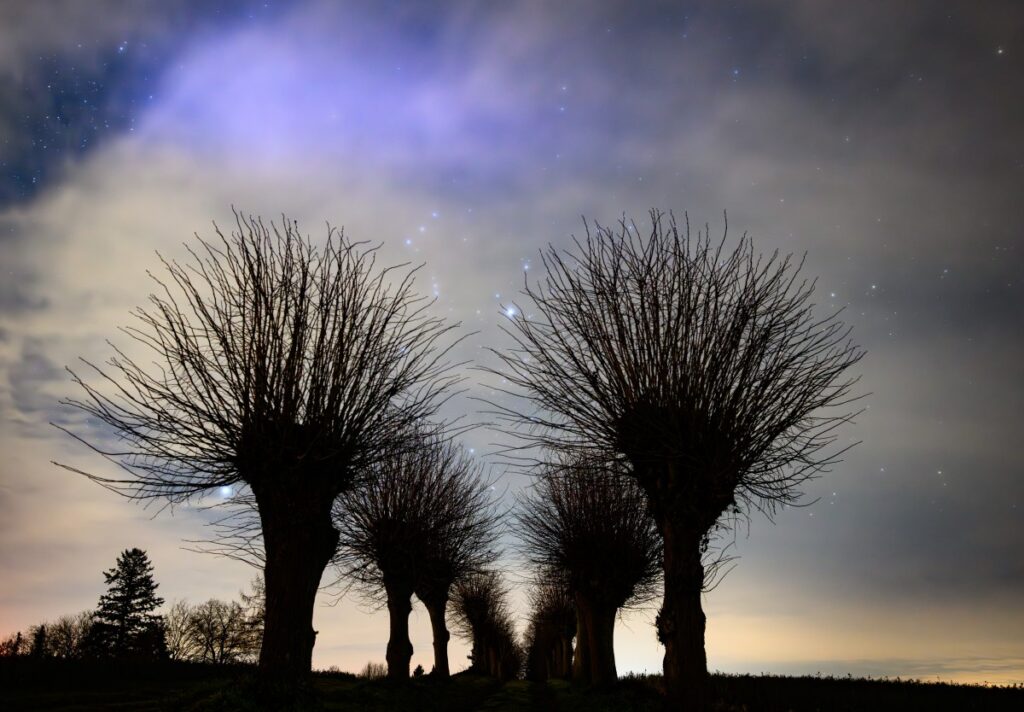
For those planning to view the event, experts advise heading to a dark location away from city lights and allowing at least 20 to 30 minutes for eyes to adjust to the darkness. No special equipment is needed, though a reclining chair and warm clothing are recommended considering the late and wintery conditions!
“The great thing about a meteor shower, including the Geminids, is that the naked eye is the best way to see them,” Dr. Robert Massey, Deputy Executive Director at the Royal Astronomical Society, said in a video guide for hopeful viewers.
“If you get a telescope or a pair of binoculars, you’re automatically restricting your view of the sky, and with a meteor shower what you want is the widest possible view.
“You want to be lying down, looking up at the broad panoply of stars, and watching for meteors.”
This year’s Geminid display is expected to extend beyond the peak night. While the highest rates will occur overnight from Wednesday to Thursday and skywatchers are advised to keep an eye out then, meteors will remain visible until December 20, with the evenings immediately before and after the peak still offering a glittering show.
The evening of December 14 in particular may prove favorable for those unable to observe the peak night.
With favorable conditions expected, this week’s Geminid meteor shower offers one of the best opportunities in 2025 to witness a natural light show from space. The Moon is expected to not be visible to the naked eye the time and will not obstruct plans for new and seasoned skywatchers.