

The X-ray astronomy satellite XRISM observed the comet 3I/ATLAS and targeted its X-ray emissions to discern the object’s cometary nature.
Every energetic element of the universe, be it hot stars, supermassive black holes, or otherwise, they exuded X-ray emissions. It was Comet Hyakutake in 1996 that revealed comets to be capable of emitting X-rays. However, no previous interstellar objects revealed any such signature, that is, until the new visitor comet 3I/ATLAS, according to XRISM. Observations from the X-Ray Imaging and Spectroscopy Mission (XRISM) revealed that this was the first interstellar object with an X-ray signature. It was a mystery whether interstellar comets behaved like ordinary solar system comets, and the highly active comet 3I/ATLAS was an ideal target for X-ray observation.
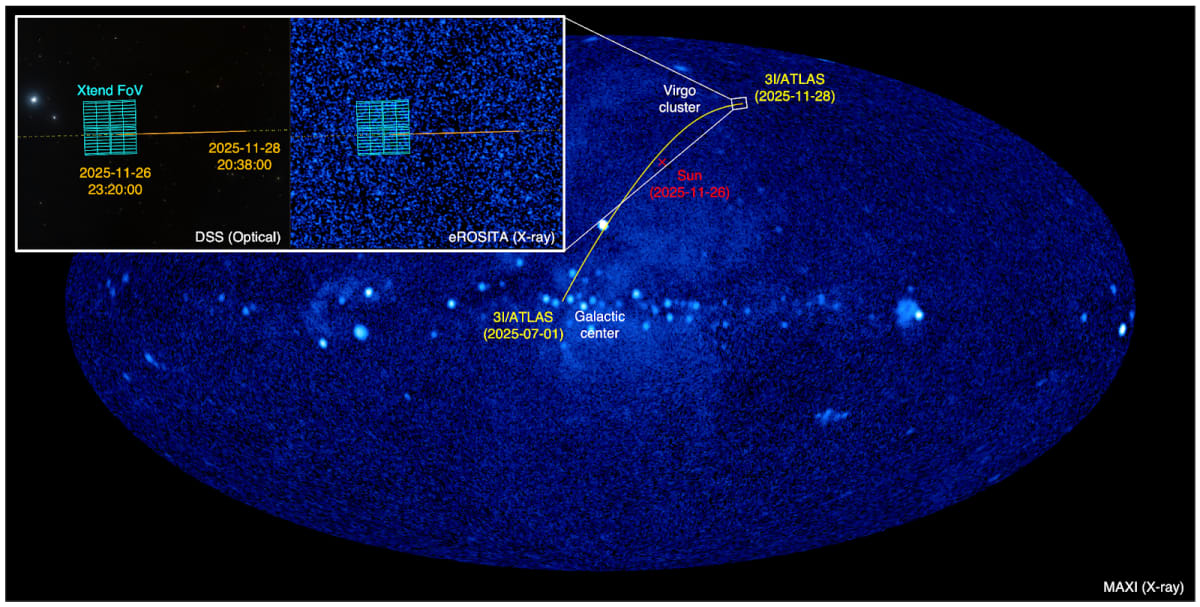
The comet’s trajectory projected in Galactic coordinates and the all-sky X-ray map obtained with MAXI. The inset shows optical (DSS) and X-ray (eROSITA) images with the XRISM field of view overlaid. (Image Source: JAXA/DSS/eROSITA/MAXI)
New X-Ray Observations of the Interstellar Comet
A Target of Opportunity observation of 3I/ATLAS was carried out as XRISM’s instruments could not point close to the Sun. The comet was brightest and highly active at perihelion, but the instrument had to keep a separation of at least 60 degrees from the Sun. The XRISM’s allowable pointing window observed it from 23:20 on November 26, 2025, to 20:38 on November 28, 2025. The observation with an effective exposure of 17 hours saw the comet drifting across the constellation Virgo. The satellite was hence adjusted every three hours, fourteen times total, to place the comet near the center of the field of view of the soft X-ray imaging telescope Xtend1.
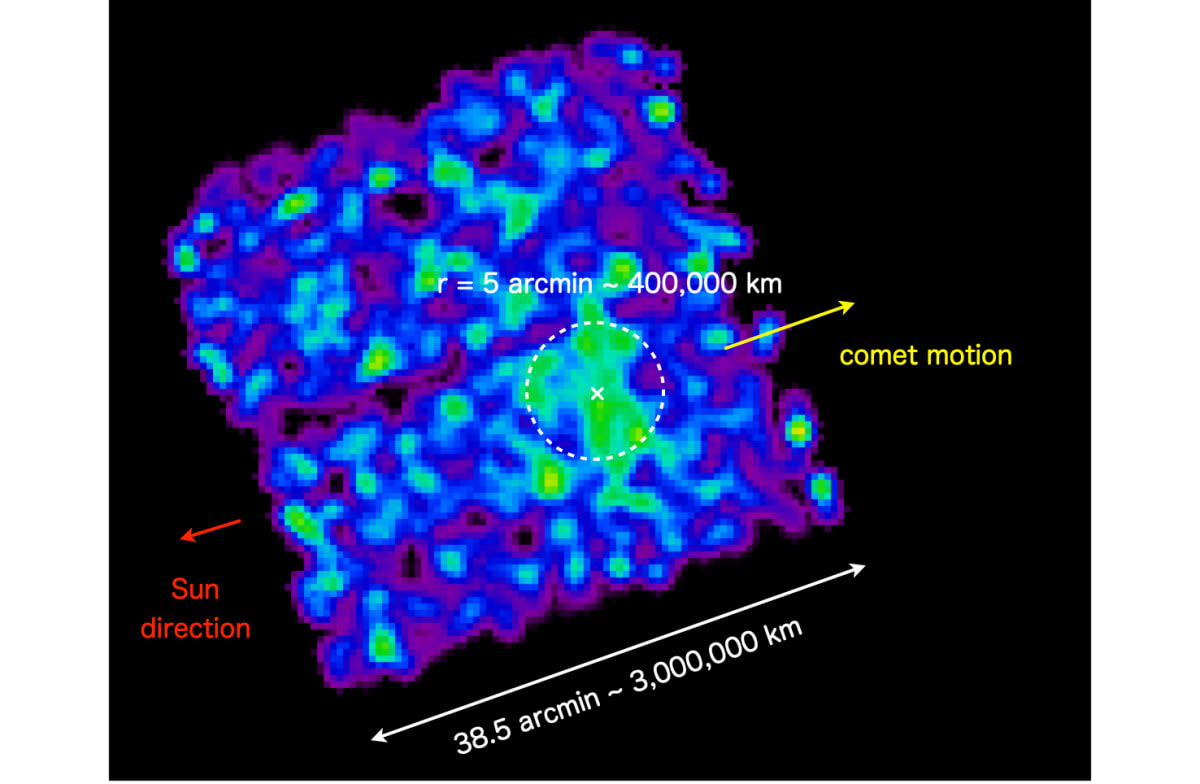
X-ray image of the comet captured by the soft X-ray imaging telescope Xtend. The image is created from quick-look processed data. The Xtend field of view covers a region of about 3 million km2, revealing a faint emission structure extending about 400,000 km around the comet. (Image Source: JAXA)
Preliminary Analysis of the Comet’s Faint Glow
Knewz.com noted that preliminary analysis after reconstructing the images had a faint X-ray glow that extended around 250,000 miles around the cometary nucleus. The extent of the glow was difficult to discern from the blur in XRISM’s imaging performance. It could indicate a diffuse cloud of gas glowing faintly in X-rays over several hundred thousand miles. These structures could also arise from instrumental effects such as vignetting or detector noise. More analysis and research would be needed before confirming the emission’s nature to be cometary. It could be proof that X-ray emissions rose from charge exchange in the space environment.
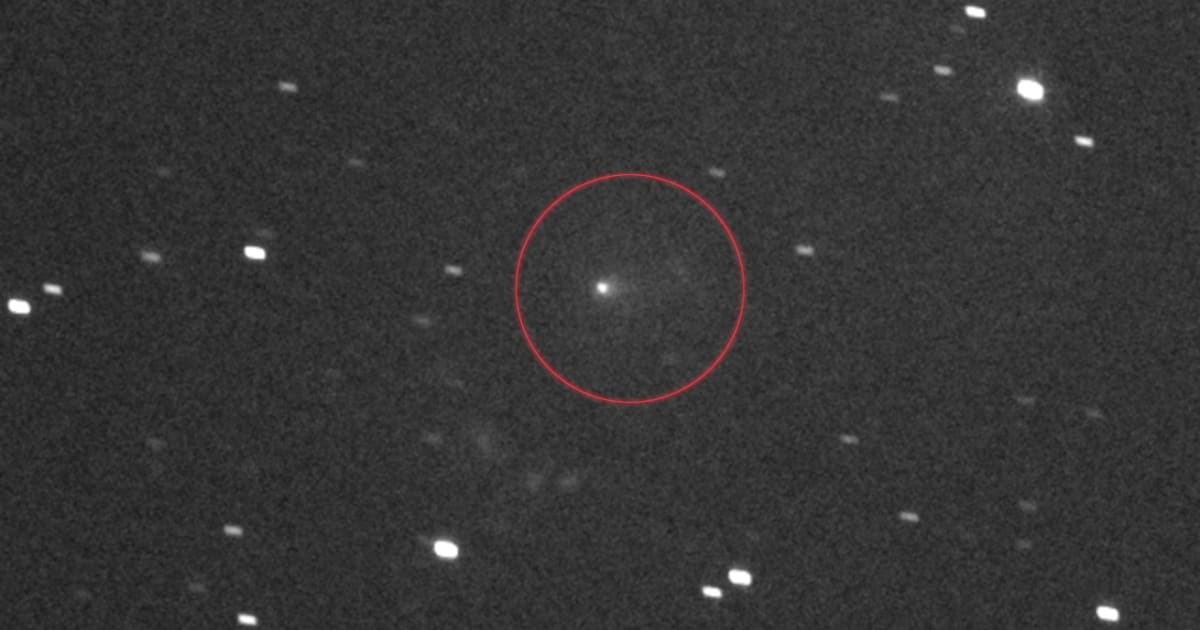
The interstellar comet 3I/ATLAS, circled in the center as seen by NASA’s Lucy spacecraft. (Representative Image Source: NASA | Photo by NASA / Goddard / SwRI / JHU-APL)
Heated Interactions Between the Comet and Sun
Clouds of gas were produced by comets as sunlight heated and vaporized the icy surface. The gas interacted with an energetic stream of charged particles from the Sun, or solar wind, which produced characteristic X-ray emission. The plasma hit the gas of the coma and could rip electrons from the gas’s atoms, according to IFLScience. The energy with which the comets were pushed away could begin to emit X-rays. Despite comets being the coldest objects in the universe, this plasma interaction produced electrons with million-degree temperatures. The team had other evidence with X-ray signatures of carbon, nitrogen, and oxygen in the data.
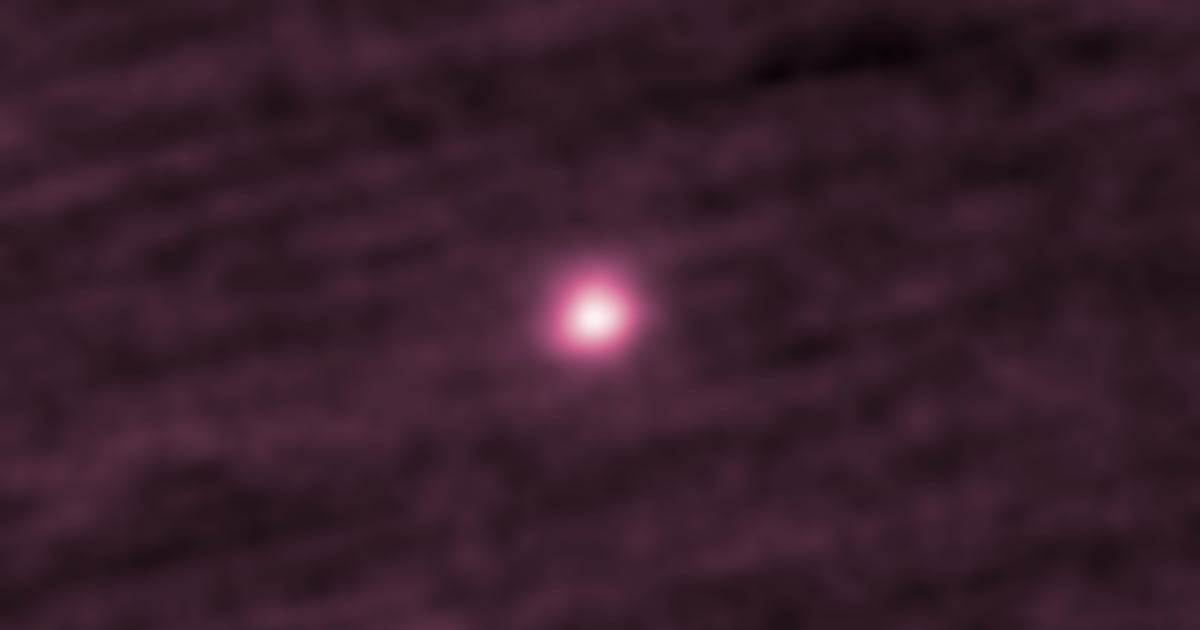
Stacked images of 3I/ATLAS from STEREO-A (Representative Image Source: NASA | Photo by NASA / Lowell Observatory / Qicheng Zhang)
More Observations Could Yield Further Details
Though more work is needed, the way the elements appeared in the data could not have been possible with a different source. Astronomers might get their hands on more observations, as many other observatories were keeping an eye on the comet. Further X-ray insight in the weeks ahead could focus on the comet at its closest distance to Earth. The third interstellar comet was observed on July 1, 2025, for the first time, and its position in the sky is a bit challenging to observe. It was too close to the Sun in the sky for several months for X-ray observations to be possible. This important emission detail, hence, had to wait for the right moment.