
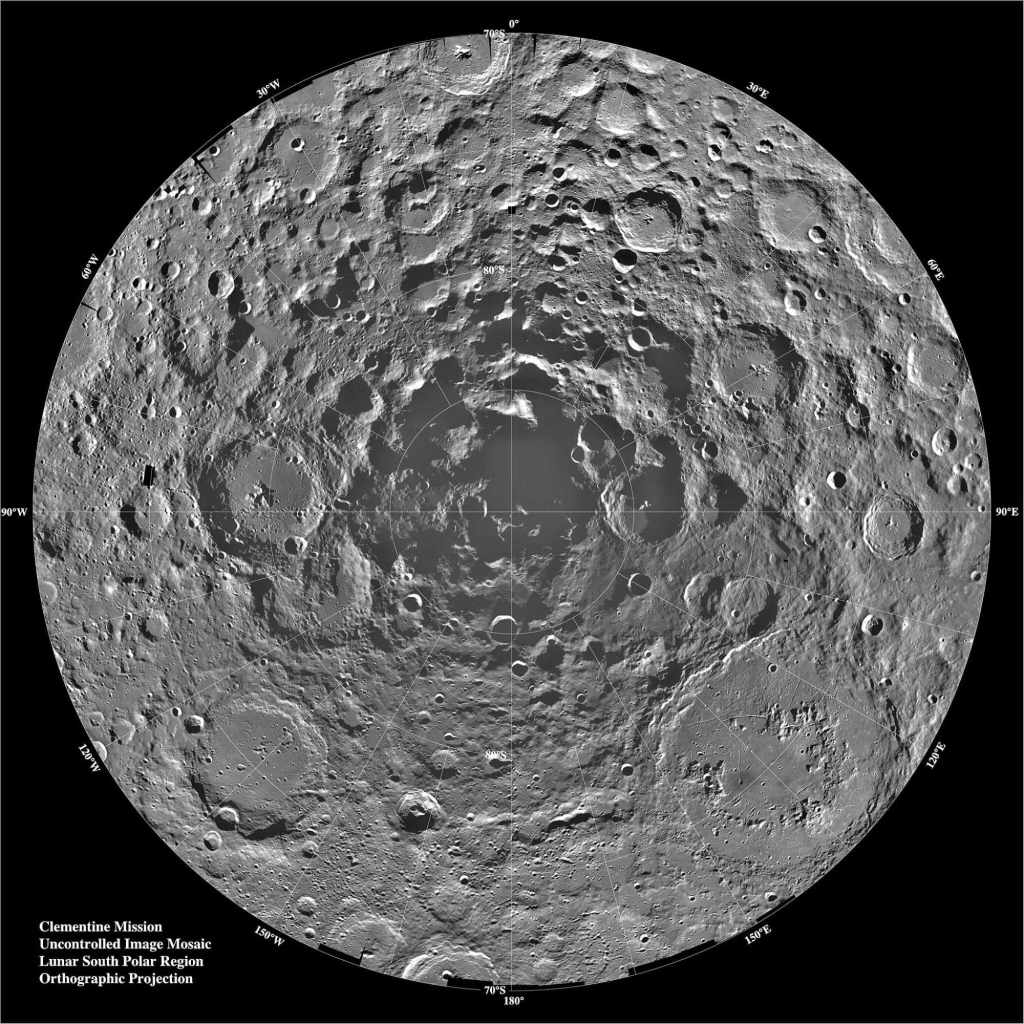
NASA will award the University of Colorado Boulder $24.8 million to build two space instruments that the agency has selected to fly on the Artemis IV mission to the south pole of the moon in 2028.
The instruments, which will be built for the mission by researchers at the Laboratory for Atmospheric and Space Physics, will aim to improve scientists’ understanding of the moon’s environment and support further space exploration.
CU Boulder’s proposal, which consists of two instruments mounted on a small rover, is called the DUst and plaSma environmenT survEyoR, or DUSTER. It will study the moon’s plasma environment and the moon’s dust, which sticks to everything it touches and is abrasive. Plasma is a state of matter that’s similar to gas, but contains charged particles. The knowledge gained from the DUSTER investigation is focused on helping mitigate hazards to human health and exploration in space, according to NASA.
“We need to develop a complete picture of the dust and plasma environment at the lunar south pole and how it varies over time and location to ensure astronaut safety and the operation of exploration equipment,” Xu Wang, senior researcher at LASP and principal investigator of DUSTER, said in a release. “By studying this environment, we gain crucial insights that will guide mitigation strategies and methods to enable long-term, sustained human exploration on the moon.”
DUSTER is made up of two instruments. The first is the Electrostatic Dust Analyzer, which will collect data on dust particles floating up from the moon’s surface, and the RElaxation SOunder and differentiaL VoltagE instrument, which will examine the average electron density above the moon’s surface.
NASA’s Artemis missions are exploring the moon for scientific discovery and technology advancement, and to learn how people can live and work on the moon as NASA prepares for human missions to Mars. NASA is planning Artemis IV to debut humanity’s first lunar space station, according to NASA’s website.