
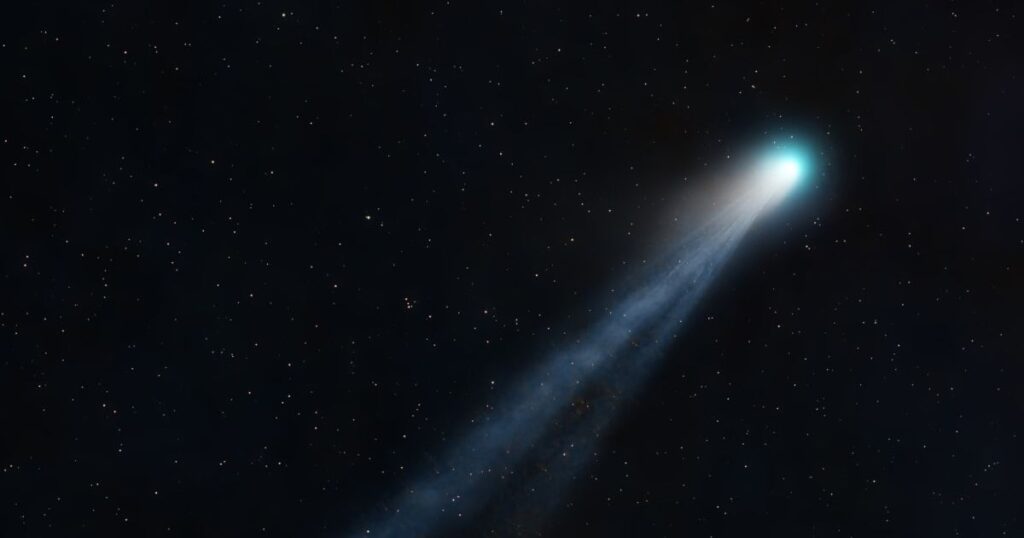
Citizens of Earth, be prepared, as the third-ever interstellar object, comet 3I/ATLAS, was on its way to make the closest approach to us this month.
Enthusiasts equipped with a small telescope would be able to witness the third interstellar object to enter our system. Interstellar comet 3I/ATLAS would be making its closest approach to Earth on December 19, 2025, according to NASA. The comet would zoom past Earth at around 170 million miles away, posing no threat to the planet. Compared to when it was first detected, the recent brush with the Sun increased the comet’s speed. The object had a close encounter with Mars when it passed within 18 million miles of the red planet. Now, it was headed our way, post which the interstellar object would be making its way out of our system.
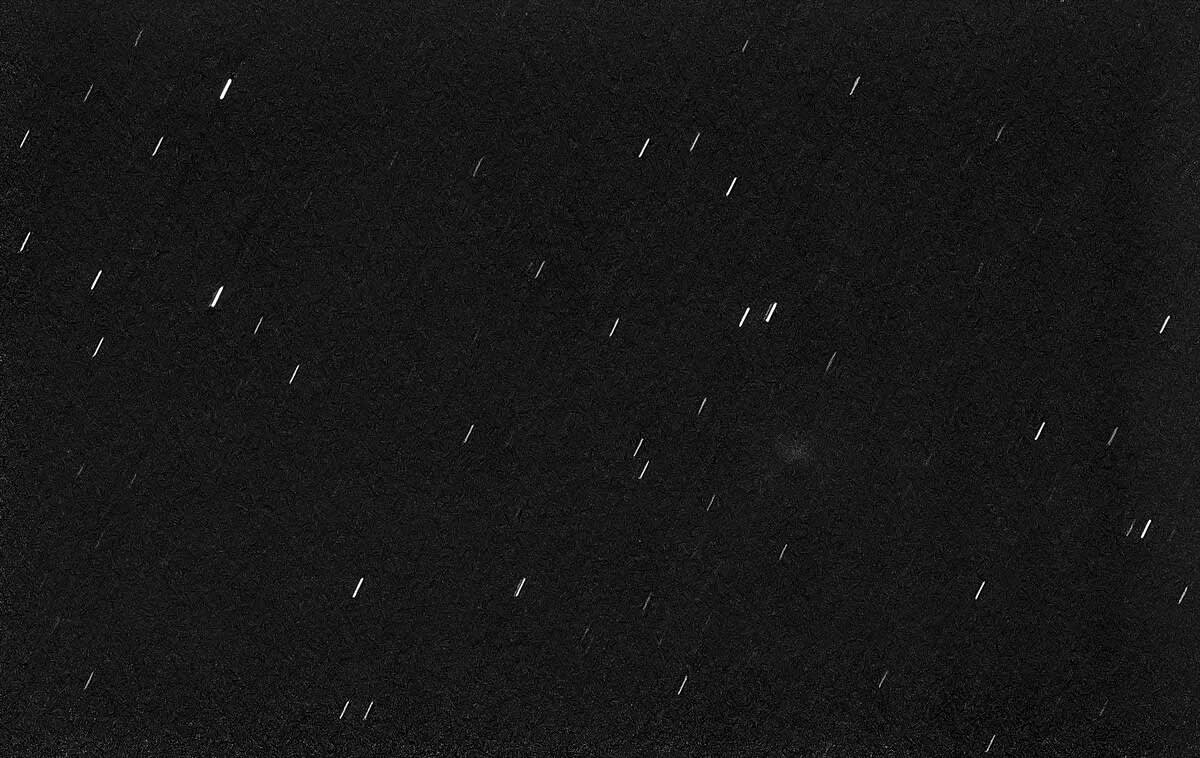
On October 4th (Sol 1643), NASA’s Perseverance captured interstellar comet 3I/Atlas during its close encounter with Mars. (Representative Image Source: Wikimedia Commons | Photo by semeion.photo)
Interstellar Comet Closes in on Earth Soon
“During its closest approach to the Earth, it will be on the other side of the Sun. It poses no danger to our planet or any other planets in the Solar System,” the European Space Agency (ESA) stated. Despite the distance, the comet could be seen when looking east to northeast in the early pre-dawn morning. It would be just below Regulus, a star at the heart of the constellation Leo. The object was set to have another course-altering encounter with our Solar System’s largest planet, Jupiter, according to IFLScience. The planet would only affect the comet’s course on March 16, 2026, depending on the outgassing and cryovolcanism (icy jets shooting out) from the interstellar object itself.
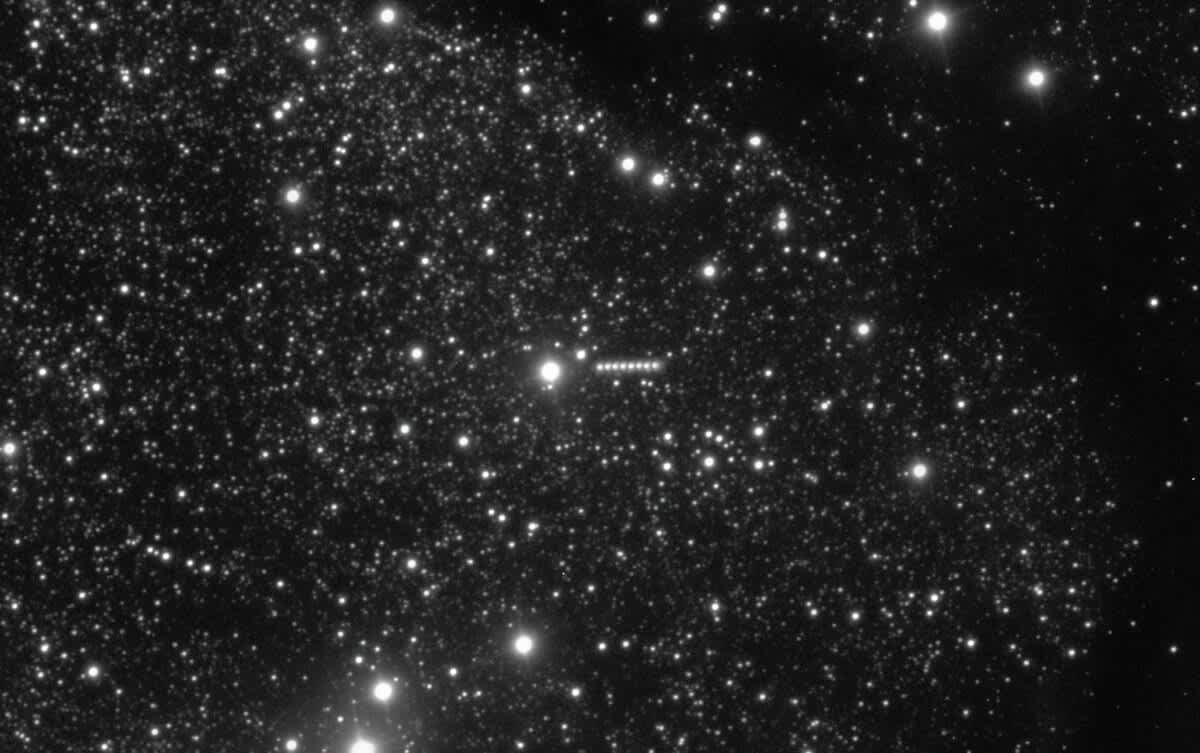
ESO’s Very Large Telescope (VLT) has obtained new images of 3I/ATLAS. (Representative Image Source: Wikimedia Commons | Photo by ESO/O. Hainaut)
Predicting the Comet’s Journey Accurately and How to Watch it
Knewz.com noted that the latest observed magnitude of 3I/ATLAS was 10.3, which called for the use of certain settings. One must look through a telescope with an aperture of at least 30 centimeters to catch a glimpse of the object. ESA’s Planetary Defence Office used data from the ExoMars Trace Gas Orbiter (TGO) to predict its trajectory and location with tenfold accuracy. The path of the comet was predicted by combining the TGO data with Earth-based telescope data. The comet was also observed by ESA’s Jupiter Icy Moons Explorer (JUICE) after its approach to perihelion. However, the data was not expected before February 2026, according to the ESA.
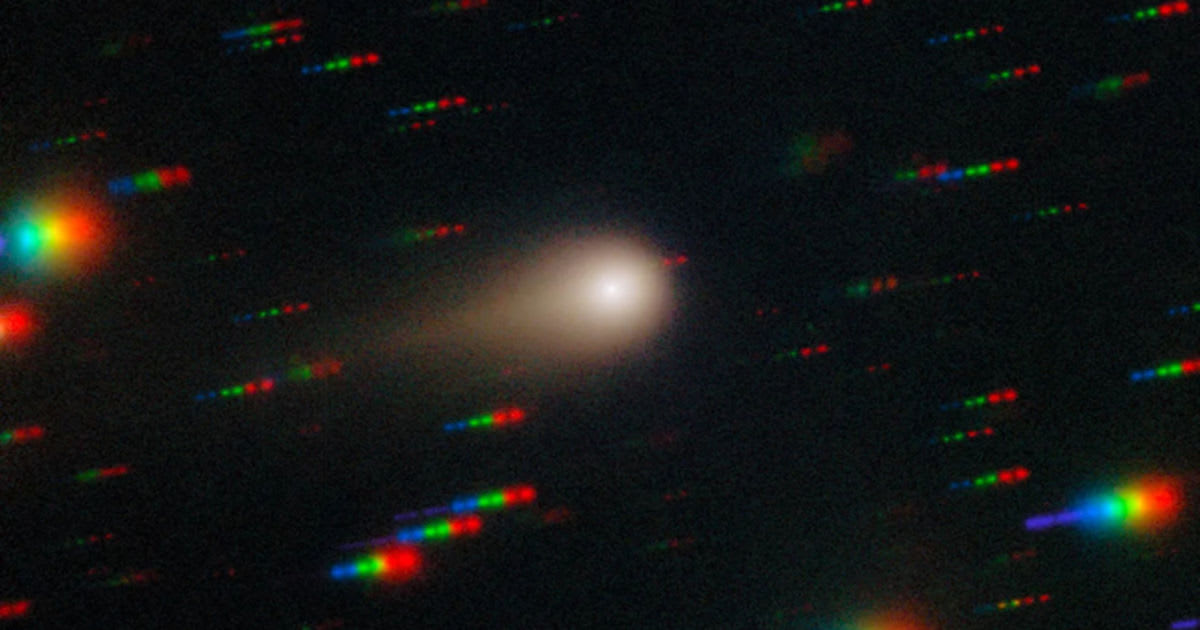
Comet 3I/ATLAS captured by the Gemini Multi-Object Spectrograph (GMOS) on Gemini South (Representative Image Source: University of Alaska Anchorage/NSF NOIRLab | Photo by Gemini South)
Visuals From Various Observatories are Released
NASA released various visuals of the interstellar comet, images taken by the agency’s missions and telescopes, including the James Webb Space Telescope (JWST), the Perseverance Mars rover, the Mars Reconnaissance Orbiter, along with the Lucy and Psyche asteroid probes. With every new feature being studied on the comet, the one that was related to the close approach was its speed. During the perihelion approach, the comet experienced an increased speed, fueled by the sublimation of cometary materials. The heat from the Sun changed the dust and ice into gas, which also extended into a tail for the comet as it headed towards the Sun.
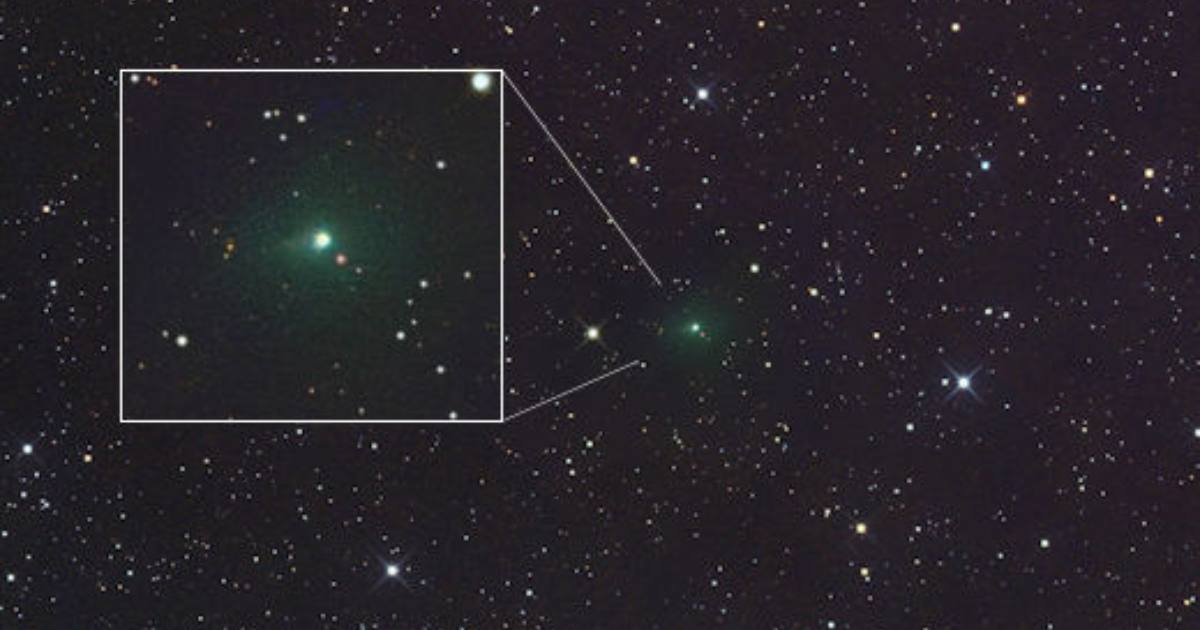
The interstellar comet 3I/ATLAS has been displaying a blue-green gas coma measuring 2.5 arcminutes across. (Representative Image Source: Gerald Rhemann | Photo by Michael Jäger.)
December Ends the Year With a Range of Sights
“It’s a rare opportunity to compare ancient dust from a distant solar system to that from our own,” said the acting director of NASA’s Astrophysics Division, Shawn Domagal-Goldman. The close approach of the interstellar comet was not the only interesting celestial event in December. The full moon of the month, Cold Moon, was to be a Supermoon, and a conjunction of the Moon and Jupiter was expected in the first week, according to NASA. The brightest and most well-known meteor showers of the year, the Geminids, will also occur in December. Peaking on December 13 and 14, there was an expected 120 Geminid meteors per hour during the event.