
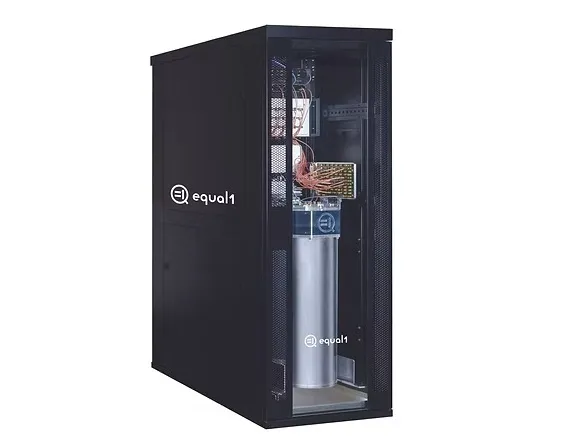

The novel computer, to support Hybrid Quantum Computing (HQC), will work at ESA’s Φ-lab in Frascati, Italy. It will be as part of its Quantum Computing for Earth Observation (QC4EO) initiative.
Bell-1 Quantum Computer
Specifically, it will be integrating quantum processors into ESA’s High Performance Compute (HPC) infrastructure to handle complex Earth Observation data. The company says the partnership marks a key step toward practical hybrid quantum-classical computing.
“We are incredibly excited to partner with the European Space Agency on this transformative project,” said Jason Lynch, CEO of Equal1.
“Our Bell-1 Quantum Computer, designed for seamless integration into existing HPC environments, is perfectly suited to augment ESA’s capabilities. This collaboration underscores our shared vision of making quantum computing a powerful tool for accelerating complex data centre workloads, especially in vital areas like Earth Observation.”
Earth Observation generates vast amounts of data for for climate modelling, weather forecasting, disaster monitoring, and image analysis.
6-qubit
The Bell-1 Quantum Computer is a 6-qubit system and will serve as the core quantum processing unit. And it features a rack-mounted design, integrated closed-cycle cryocooler, and power consumption of 1600W.
This integration will enable ESA scientists to explore quantum algorithms for a range of applications, says ESA. For example, Synthetic Aperture Radar (SAR) raw data processing and mission planning for satellite constellations.
The goal is to demonstrate both the theoretical and practical advantages of applying quantum technologies to critical space applications.
“This is an exciting and significant moment for us at ESA’s Earth Observation Programmes, marking a major advancement in our mission to monitor our planet,” said Simonetta Cheli, Director of ESA’s Earth Observation Programmes and Head of ESRIN.
“The complexities of Earth Observation data, from environmental monitoring to disaster response, require unprecedented processing power, and we are thrilled that this collaboration between Equal1 and ESA could pave the way for hosting the first quantum computer at ESA.”
Last year Equal1 signed a MoU with Nvidia to collaborate on quantum computing technology use cases, business models and proof of concepts. The company said it would be focusing on integrating and validating the quantum-classical infrastructure for cloud and data centre deployment.
According to the company, Equal1 is the first to develop qubits using standard CMOS processes. It has developed three generations of quantum SoC hardware. These include a server-sized quantum computer which is 1% the size of any others available, it said.
Image: Equal1
See also: Irish government funds NSSPI consortium for optical space comms