
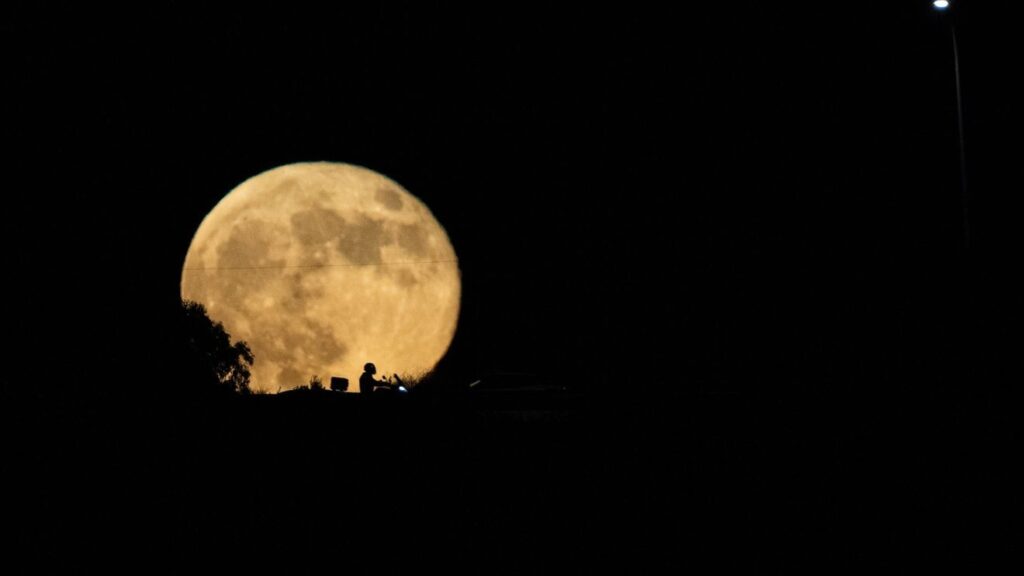
WASHINGTON (TNND) — An asteroid named YR4 is on a potential collision course with the moon, with NASA estimating a 4% chance of impact in 2032. While the scenario may sound like a Hollywood plot, scientists are seriously considering strategies to avert a lunar collision.
A recent paper by scientists, including NASA researchers, suggests the possibility of using a nuclear explosion to alter the asteroid’s trajectory or destroy it if necessary. The asteroid itself is big enough to be dubbed a “city killer” if it were to crash into Earth, but that possibility has mostly been ruled out.
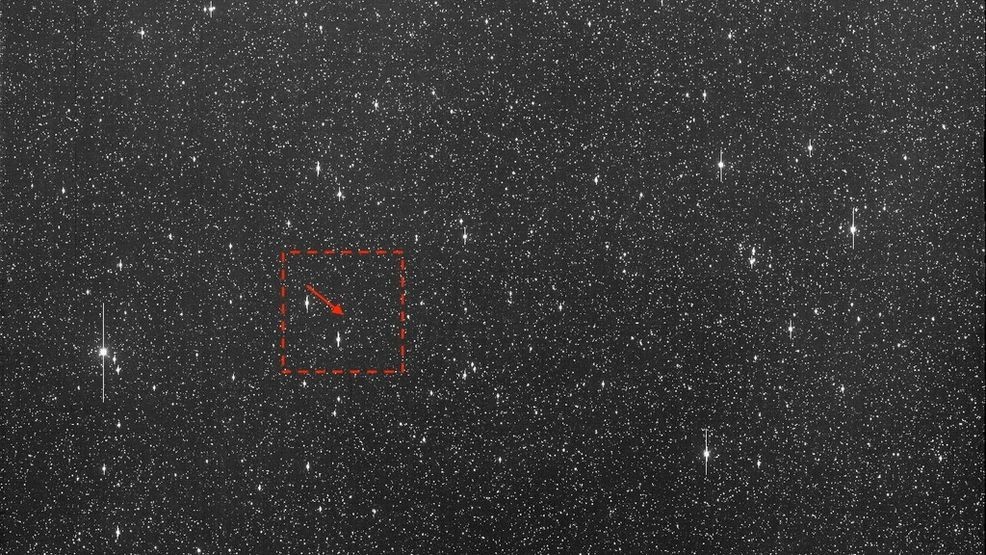
This image made available by University of Hawaii’s asteroid impact alert system, shows an arrow where asteroid 2024 YR4 would be, Dec. 27, 2024. (ATLAS / University of Hawaii / NASA via AP)
Cristina Thomas, an associate professor of Astronomy and Planetary Science at Northern Arizona University and a member of NASA’s Double Asteroid Redirection Test (DART) team, emphasized the importance of monitoring such celestial objects. “
I think that we are concerned, because it is our responsibility to keep track of these objects and to understand what’s going to happen,” she said.
NASA’s DART team is on the front lines of planetary defense and has already been a part of a mission that successfully altered the track of an asteroid as part of a test. YR4 provides yet another real-world experience with a near-Earth object that encompasses everything from observation, to planning, to potentially striking the target.
If you know about something far enough in advance, so years, potentially even decades, you just need to give it a very small nudge, relatively speaking, to make a really big change over a period of time,” Thomas explained. “And so, if you’re able to do that, then that object would miss the Earth entirely.”
Thomas noted that if the asteroid were to hit the moon, everything would mostly be fine. There’s some concern for satellites and the International Space Station, which is why observation and prediction remain important. Other scientists have said that an impact on the moon could also produce a visually stunning meteor shower.
Comment with Bubbles
JOIN THE CONVERSATION (1)
Currently out of view, YR4 is expected to be observable again in February with the James Webb Telescope. The observations could either reduce or increase the likelihood of a lunar impact, providing crucial data for scientists to refine their response strategies.