
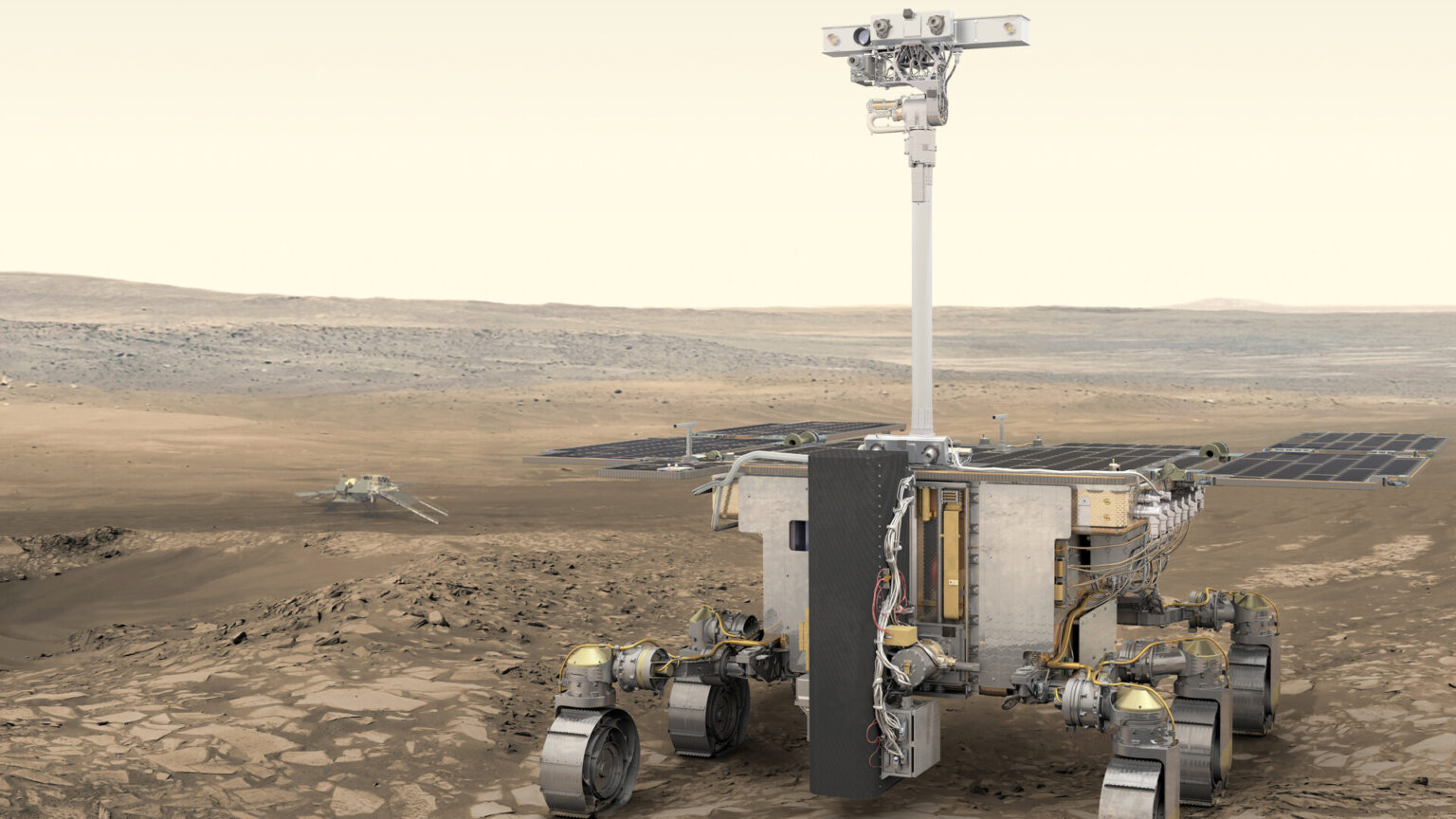
NASA has confirmed that it will assist ESA with the ExoMars mission. Its goal is to deliver the Rosalind Franklin rover to the surface of the Red Planet, where it will search for signs of life.
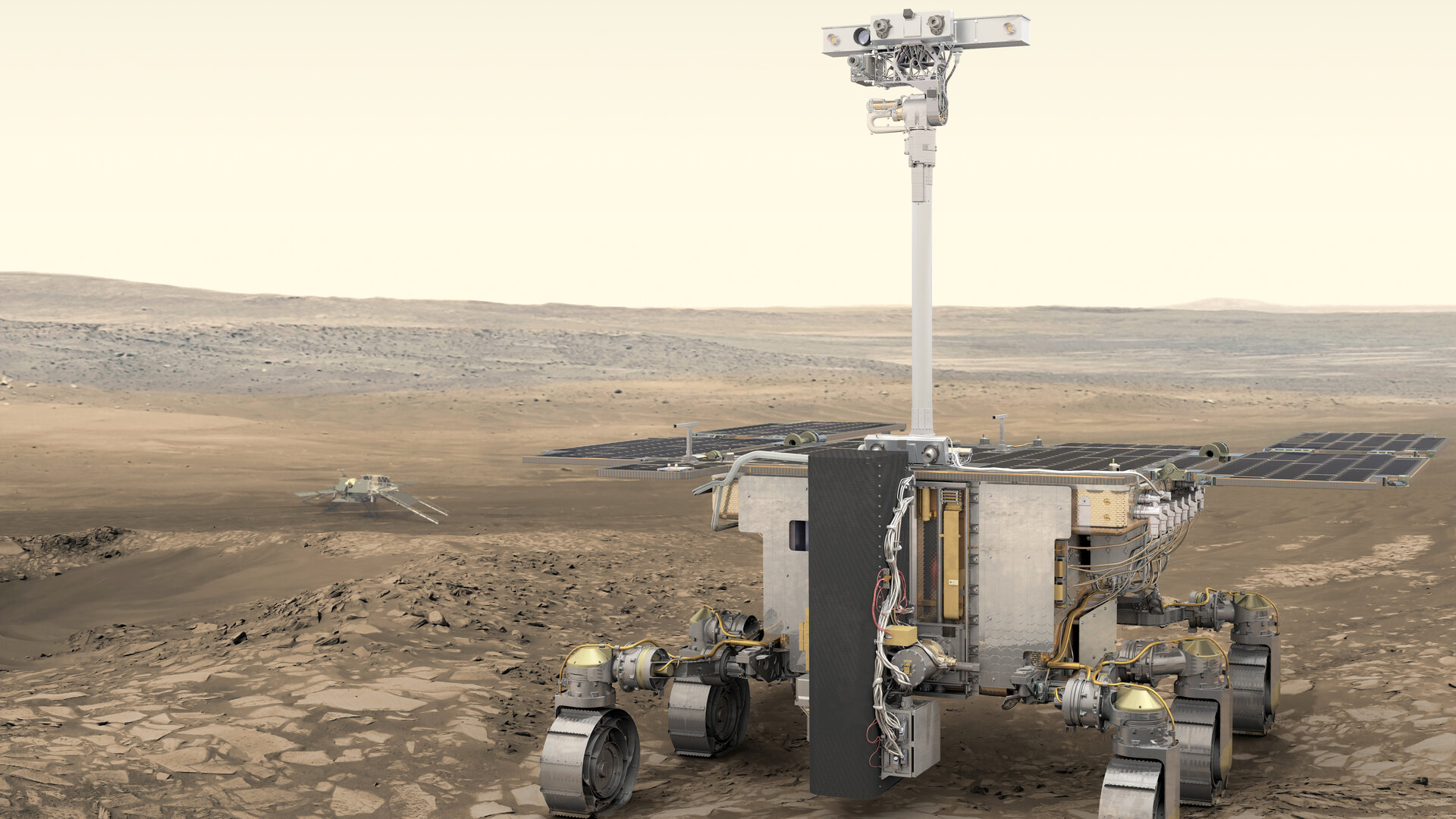 Rosalind Franklin rover (concept). Source: ESA
The ExoMars mission was scheduled to depart for the Red Planet in September 2022. The goal of the project was to deliver the Russian Kazachok landing platform and the European Rosalind Franklin rover to Mars. The latter was to search for biomarkers — compounds that could indicate the possibility of life on Mars in the past or even in the present.
To accomplish this task, the rover was equipped with a unique drill capable of penetrating to a depth of two meters. This is very important, as it allows samples to be collected from beneath a layer of soil that has been sterilized by surface radiation. Thus, Rosalind Franklin will have a chance to find organic material that indicates the existence of past life on the Red Planet.
Russia’s full-scale invasion of Ukraine put these plans on hold. In protest, ESA completely severed ties with the aggressor country. As a result, all Russian-supplied components—some instruments, the rocket, and the landing platform—were removed from ExoMars.
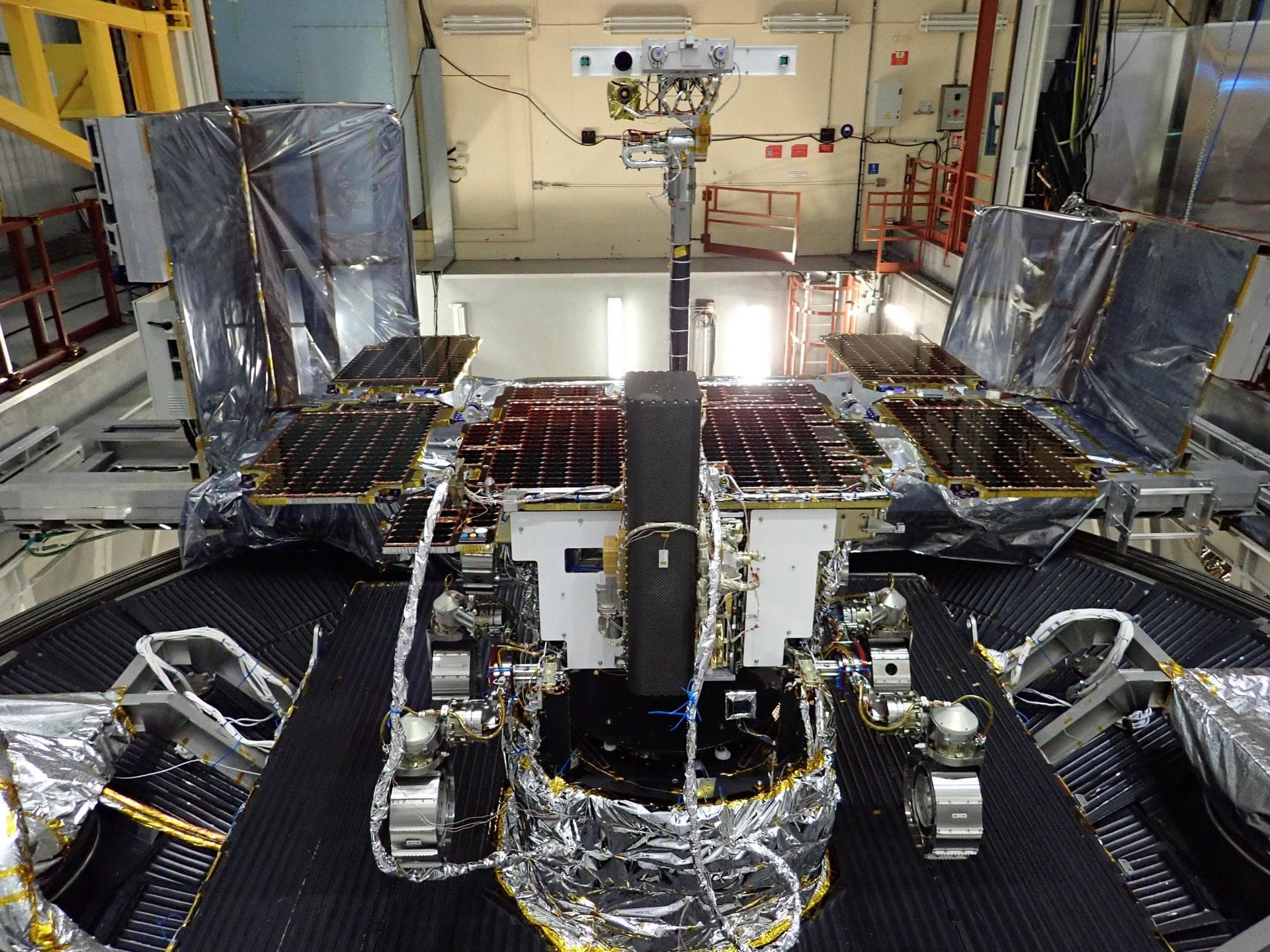 Thermal tests of the Rosalind Franklin rover. Source: Airbus
This put the mission in a difficult position. ESA replaced most of the components, but in some respects it was unable to cope on its own. These included the launch vehicle, landing engines, and radioisotope heaters. The latter are necessary to prevent Rosalind Franklin from freezing during the cold Martian nights.
NASA came to the rescue. In 2024, ESA agreed with the US aerospace administration that the latter would provide all the components necessary for implementation.
However, in 2025, these plans were called into question after NASA’s budget was drastically cut. Fortunately, the aerospace organization will continue to assist ESA. According to ESA Director General Josef Aschbacher, he received a letter from NASA confirming its contribution to the mission. The organization is also providing a device to analyze traces of possible life on Mars.
At present, the launch of ExoMars is scheduled for the end of 2028. If all goes well, Rosalind Franklin will begin work on the Martian surface in 2030.
According to Phys.org