
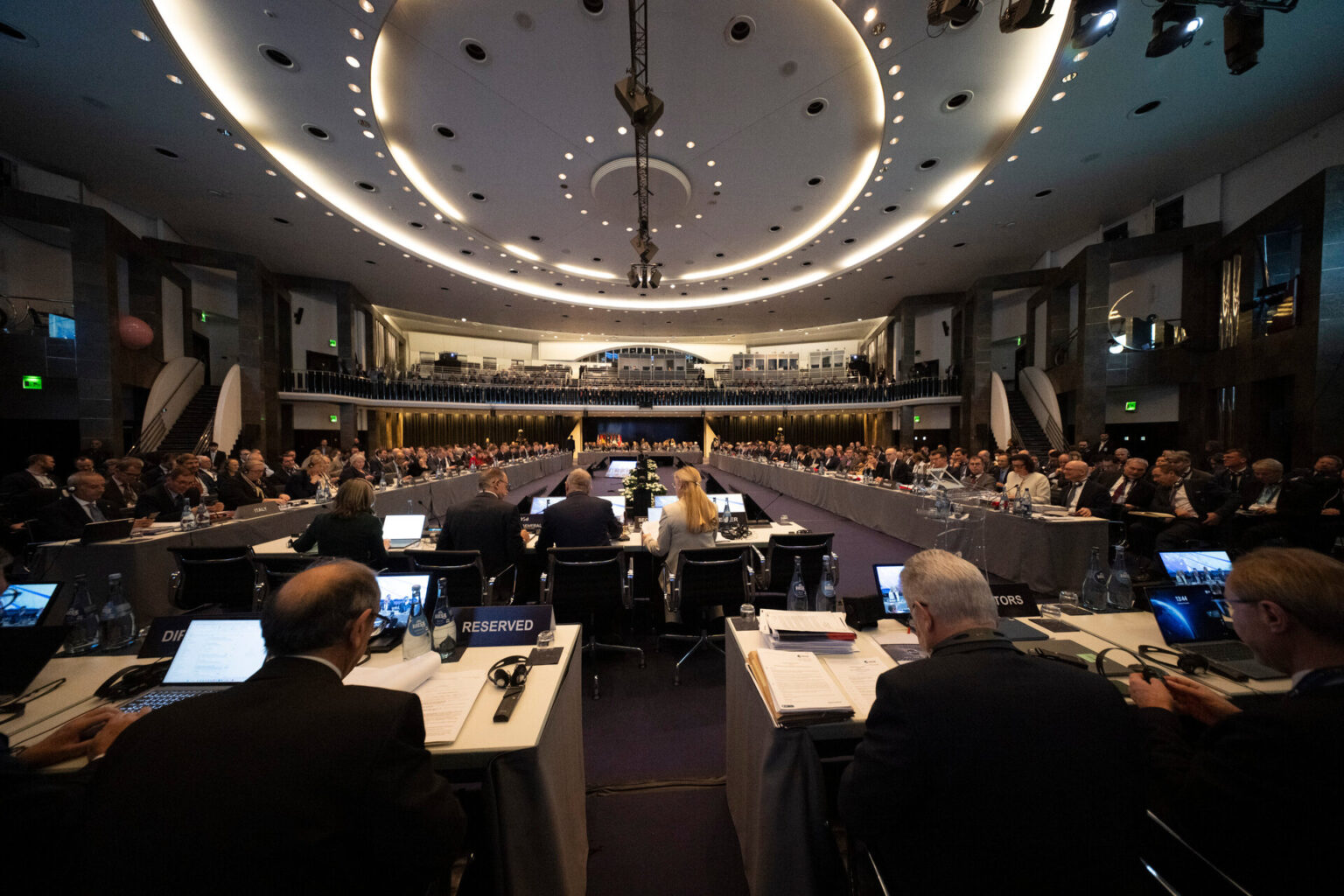
The European Space Agency’s latest Ministerial Council has opened in Bremen, Germany, bringing together ministers and senior officials from across Europe to agree on ESA’s priorities for the coming three years. Italy’s Minister of Business and Made in Italy, Adolfo Urso, has been chosen to chair the CM25 meeting, sitting alongside ESA Director General Josef Aschbacher as negotiations begin.
Adolfo Urso Elected Chair Of CM25
According to ESA, Adolfo Urso was elected Chair of CM25, the Council meeting at ministerial level that sets the agency’s direction and confirms national commitments to ESA programmes. In the opening session in Bremen, he took his seat next to Josef Aschbacher, representing Italy, in a room filled with ministers and high-level representatives from ESA Member States and partner countries.
The chair’s role is to guide the formal proceedings, oversee adoption of the agenda and help steer high-level discussions as delegations work toward a common funding and programme package for ESA.
Key Decisions On ESA’s Agenda In Bremen
The two-day CM25 meeting in Bremen on 26 and 27 November focuses on implementing ESA’s long-term Strategy 2040, published earlier this year. Ministers are expected to take “vital decisions on funding” that will determine how the strategy is put into practice and how far Europe can capitalise on its space industry over the next decade.
ESA’s Director General is presenting a package titled “Elevating the Future of Europe through Space”, which sets out proposed programmes across areas such as climate monitoring, scientific exploration, commercial space, autonomy and resilience. After this presentation, Member States negotiate their subscriptions, deciding how much each country will invest in different lines of activity.
Behind the numbers are broader strategic aims. ESA highlights the need to keep Europe competitive in a rapidly growing commercial space sector, to protect critical satellite infrastructure, and to support defence-related resilience within the limits of the agency’s mandate. The outcome in Bremen will influence how Europe responds to new technologies, from artificial intelligence to advanced navigation and connectivity systems.