
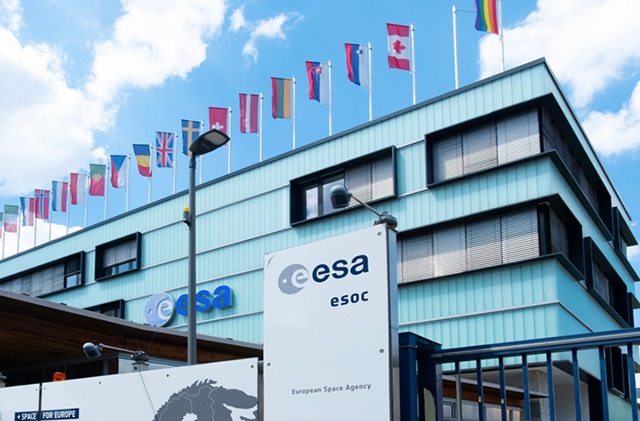
The European Space Agency (ESA) is requesting €22 billion ($25.5 billion) from its member states over the next three years, a 36% increase from its previous budget, as it moves to strengthen the continent’s defense capabilities in space, Bloomberg reports.
At a triannual conference beginning Wednesday in Bremen, Germany, ESA Director General Josef Aschbacher presented a €1.35 billion proposal for a new initiative, European Resilience from Space (ERS), designed to synchronize national space assets for military, police, and civil protection use. The proposal marks the first time the civilian agency, founded in 1975, has formally entered the defense sector.
“What’s changing is the funding source,” Aschbacher said in a Bloomberg interview. “The funding of space activities will, in the future, increasingly also come from the defense ministries while in the past, in Europe at least, it was mostly from civilian ministries.”
ERS is expected to leverage projects such as Iris2, the European Union’s low-Earth orbit satellite communications network designed as an alternative to Elon Musk’s Starlink, and Galileo, Europe’s GPS-style navigation system. The goal is to allow member states to share strategic space capabilities, enhancing Europe’s independence and resilience amid growing geopolitical tensions.
Aschbacher acknowledged that persuading larger nations to share sovereign space assets would be challenging, requiring agreements on “rules of engagement” and clarifying benefits for all participants. The program will be voted on by space ministers from the UK, France, Italy, and other member states during the ESA ministerial council.
The push comes as NATO allies plan to increase defense spending to 5% of GDP by 2035, spurred by Russia’s war in Ukraine and broader security concerns. Bloomberg notes that the ERS initiative represents a significant shift in Europe’s space policy, blending traditional civilian exploration with emerging military and security applications.
“The initiative is about strengthening Europe’s autonomy,” Aschbacher said. “This is certainly at the core of my proposal to the ministers.”
The outcome of the funding vote will set a precedent for ESA’s role in Europe’s growing space defense strategy and could redefine how the continent approaches security in orbit.