
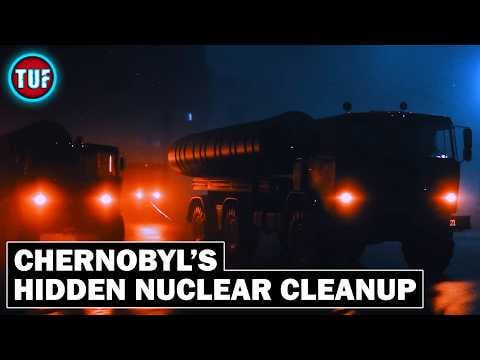
During the Chernobyl disaster, the Soviet Union carried out an operation that remained unacknowledged for decades: a midnight convoy transporting three tactical nuclear warheads out of the contaminated zone. The mission was led by Lt. Col. Viktor Chev, whose unit drove 30 irradiated missile trucks directly through the sleeping streets of Kyiv. His testimony only surfaced years later.
This convoy is barely mentioned in mainstream histories of Chernobyl, yet it connects directly to a larger network of Cold War assets, including the S-75 Dvina air-defense system and the Duga over-the-horizon radar. Both were considered strategic enough to retrieve even while the reactor was still burning.
What’s rarely discussed in official narratives is how this event intersects with the longstanding debate around the initial explosion. Multiple eyewitnesses reported a vivid blue flash between two blasts. Some nuclear physicists, including Lars-Erik De Geer, have proposed that this could indicate a localized nuclear event, supported by xenon-133 detected far outside the known fallout zone.
Whether one accepts or rejects that interpretation, these details raise legitimate questions about how the early hours of the disaster were recorded, classified, and later reconstructed in historical accounts.
My interest is in the historiography of the event — how much of the early narrative was shaped by Soviet secrecy, and how much new material from the 1990s–2020s has still not been integrated into mainstream retellings.
Which of these lesser-known elements do you think deserves closer historical scrutiny —
the nuclear convoy itself, the eyewitness accounts of the flash, or the early Soviet reporting?
Looking forward to discussion.
by No_Money_9404