
The UK Space Agency has committed £6.9 million to five satellite communications projects that aim to improve connectivity on Earth and around the Moon while strengthening the UK’s role in Europe’s space sector.
Announced on 21st November, the funding is channelled through the European Space Agency’s ARTES telecommunications programme, which supports new technologies in areas such as in-orbit servicing, navigation and secure communications.
Five UK-Led Projects Backed Through ESA Programme
Orbit Fab will lead the Advancing Satcom Technology with Refuelling and Logistics (ASTRAL) mission, backed with up to £2.9 million, including a first-stage ESA contract, to demonstrate refuelling for electric propulsion satellites so they can stay in service longer and manoeuvre out of harm’s way.
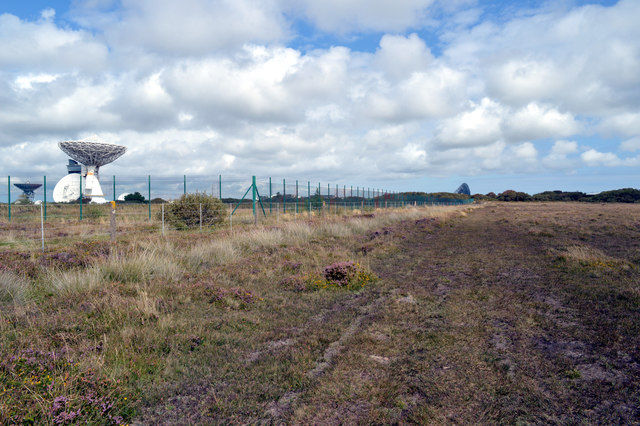
Goonhilly Earth Station in Cornwall receives £1.6 million for AGILE, which will develop a LunaNet-compatible interface that can be fitted to antennas worldwide, making it easier for lunar missions to plug into ground networks.
Vicinity Technologies has been awarded £1.19 million for a 5G Non-Terrestrial Network-based Satellite Access Networks project, to design a regenerative 5G payload, user terminals, and software to support continuous internet access from remote communities to dense urban areas. Archangel Lightworks, working with Eutelsat, will carry out the £356,000 SOLIS study under ESA’s Sunrise programme to explore how free space optical communications could be integrated into Eutelsat’s OneWeb low Earth orbit constellation.
Inmarsat Navigation Ventures Ltd, part of Viasat UK, receives £881,000 for the second phase of the International Virtual Satellite Operators Network, a service to help governments plan, procure and monitor secure satellite communications from Viasat and other providers.
Economic Impact And ESA Funding
Officials say the package aligns with the UK’s priority capabilities in satellite communications, position, navigation and timing, in-orbit servicing, space domain awareness and space data for Earth applications. Government evaluation suggests that every £1 invested in ESA programmes returns about £7.49 in direct benefits to the UK economy, supporting the case as ministers head to the ESA Ministerial Council in Bremen later in November to agree future subscriptions.
The UK Space Agency’s ESA commitments sit alongside a wider £2.8 billion budget for national programmes through to 2029/30. By helping companies, universities and research organisations commercialise new technologies, policymakers hope to grow the UK’s £18.9 billion space sector and secure a larger slice of the global satellite communications market.