
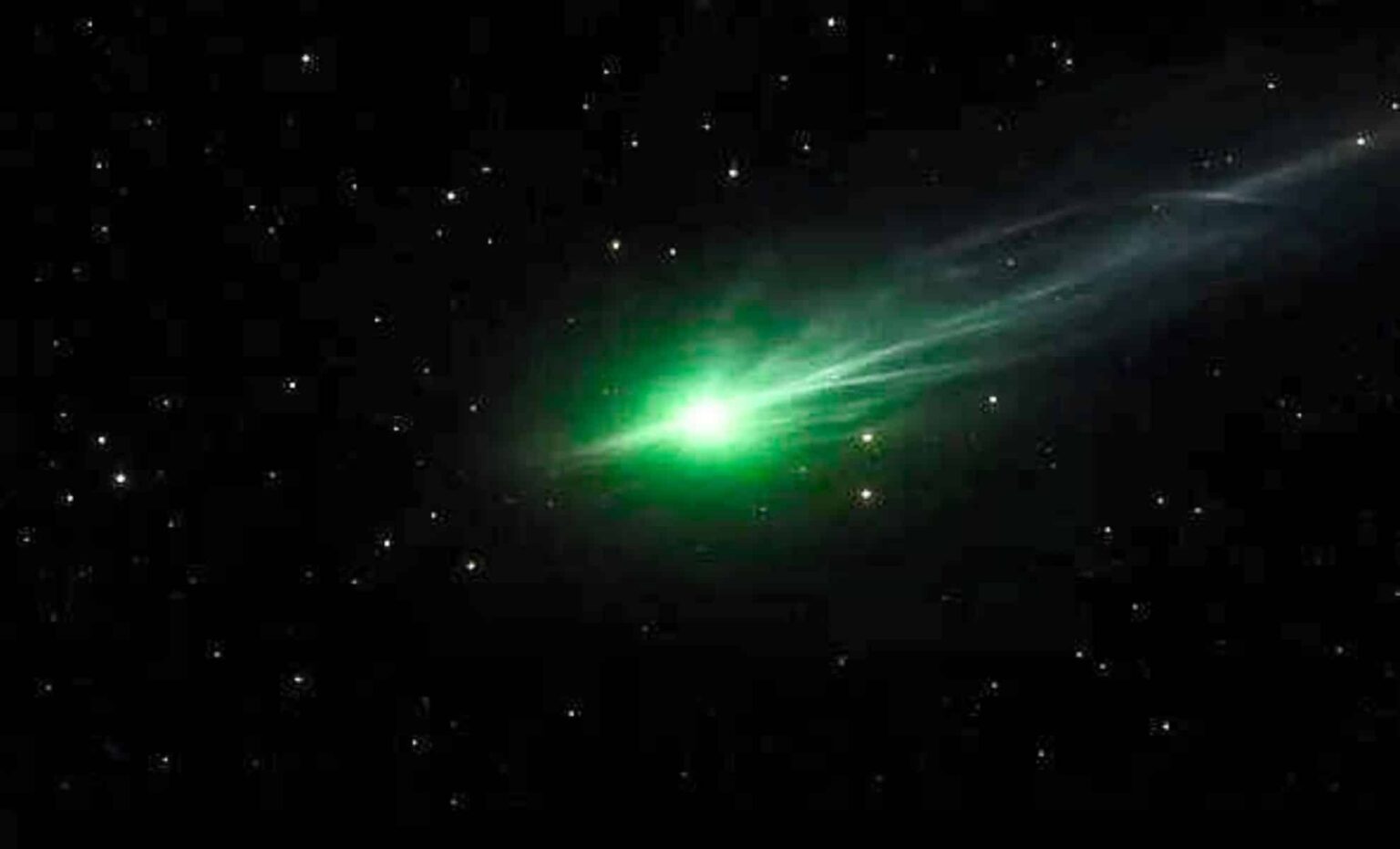
In late October, deep in the South African Karoo, the MeerKAT radio telescope recorded a signal from deep space—a whisper in the 1665 and 1667 MHz bands. The source: 3I/ATLAS, the third-known interstellar object to pass through our solar system.
What followed was predictable. Alien speculation surged online. High-profile astrophysicist Avi Loeb—no stranger to such theories—referenced the mysterious “Wow! Signal” from 1977, suggesting the comet’s trajectory was too coincidental to ignore. Some observers, fueled by podcast speculation and click-driven headlines, imagined a probe from another world.
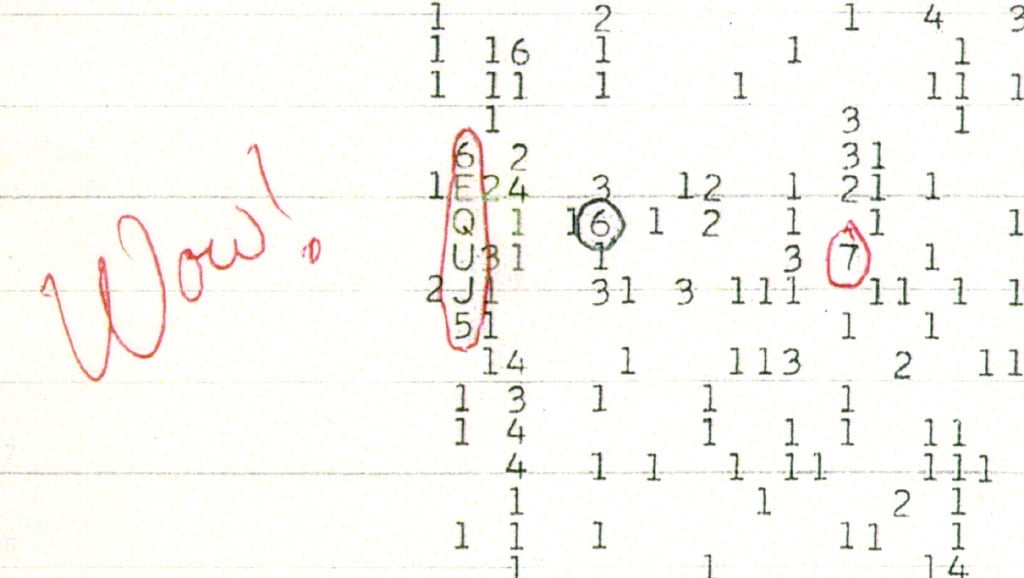 The Wow! signal represented as “6EQUJ5”. The original printout with Ehman’s handwritten exclamation is preserved by Ohio History Connection. Credits: Big Ear Radio Observatory and North American AstroPhysical Observatory (NAAPO)
But science delivered a different, verifiable story. The signal was real—but its source was unambiguously natural. What astronomers found wasn’t a message from extraterrestrials. It was evidence of water—broken apart by solar radiation—echoing in the form of hydroxyl absorption lines, a common chemical footprint of comets reacting to sunlight.
The detection was historic, but not for the reasons some hoped. It provided the first confirmed radio signal from an interstellar comet, a critical datapoint that could redefine how researchers study ancient visitors from beyond our solar system.
First Radio Detection Confirms Cometary Nature
On October 24, 2025, scientists using MeerKAT observed 3I/ATLAS for over three hours. The team, led by D.J. Pisano (University of Cape Town) and Oleg Smirnov (Rhodes University & SARAO), detected absorption of hydroxyl (OH) molecules at 1665 and 1667 MHz—a pattern previously seen in other comets within our own solar system. The measured peaks were −8.4 mJy and −14.2 mJy, with line widths of ~1 km/s.
The signal’s characteristics were consistent with solar-driven photodissociation—a process where water molecules ejected from the comet’s surface break apart under sunlight. This generates OH molecules that absorb specific radio frequencies. These findings were formally reported in the Astronomer’s Telegram.
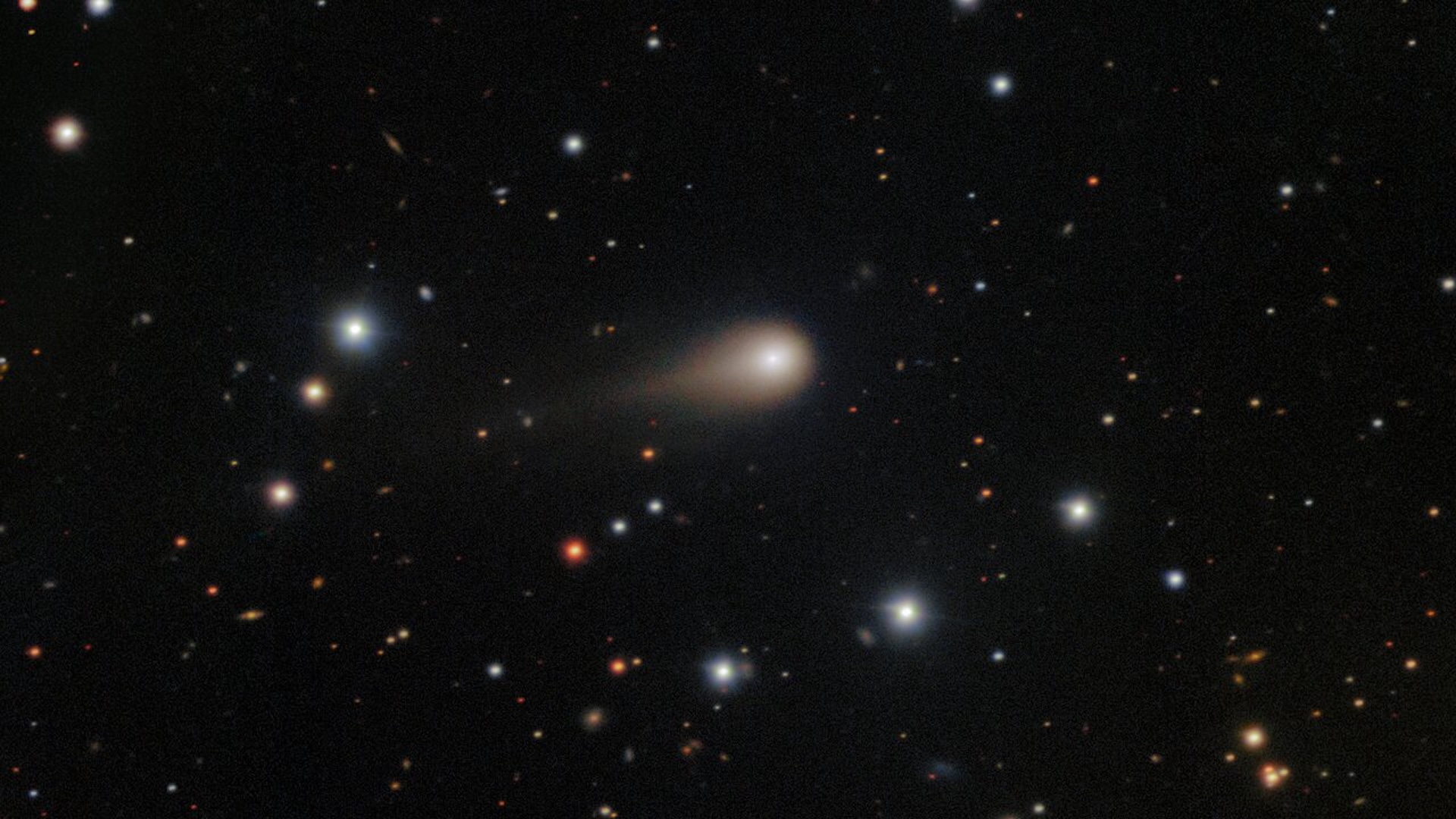 3I/ATLAS has displayed multiple classic signs of cometary activity, including a striking tail that emerged in the build up to its perihelion. Credits: International Gemini Observatory/NOIRLab/NSF/AURA/Shadow the ScientistImage Processing: J. Miller & M. Rodriguez (International Gemini Observatory/NSF NOIRLab)
Importantly, no artificial signal or modulation was detected. The data was cross-checked against earlier observations on September 20 and 28, when no such absorption was present—likely due to lower solar excitation and less outgassing.
“This is a textbook case of a comet interacting with the Sun,” said Dr. Sarah Buchner of SARAO, co-author of the study. “It confirms that 3I/ATLAS is not only natural but behaving in a manner we would expect based on previous comet science.”
Loeb’s Alien Hypothesis Meets A Natural Explanation
The detection directly challenges the speculative framework proposed by Avi Loeb, a Harvard astrophysicist known for his controversial interpretation of ‘Oumuamua, the first interstellar object discovered in 2017. Loeb suggested that 3I/ATLAS might be technological in origin, noting its trajectory aligned within 9 degrees of the Wow! Signal’s source direction.
In a Medium blog post, Loeb acknowledged the MeerKAT findings but maintained that further investigation is warranted. He proposed that the Juno spacecraft, during a 2026 flyby when 3I/ATLAS will pass 53 million kilometers from Jupiter, could search for low-frequency emissions between 50 Hz and 40 MHz.
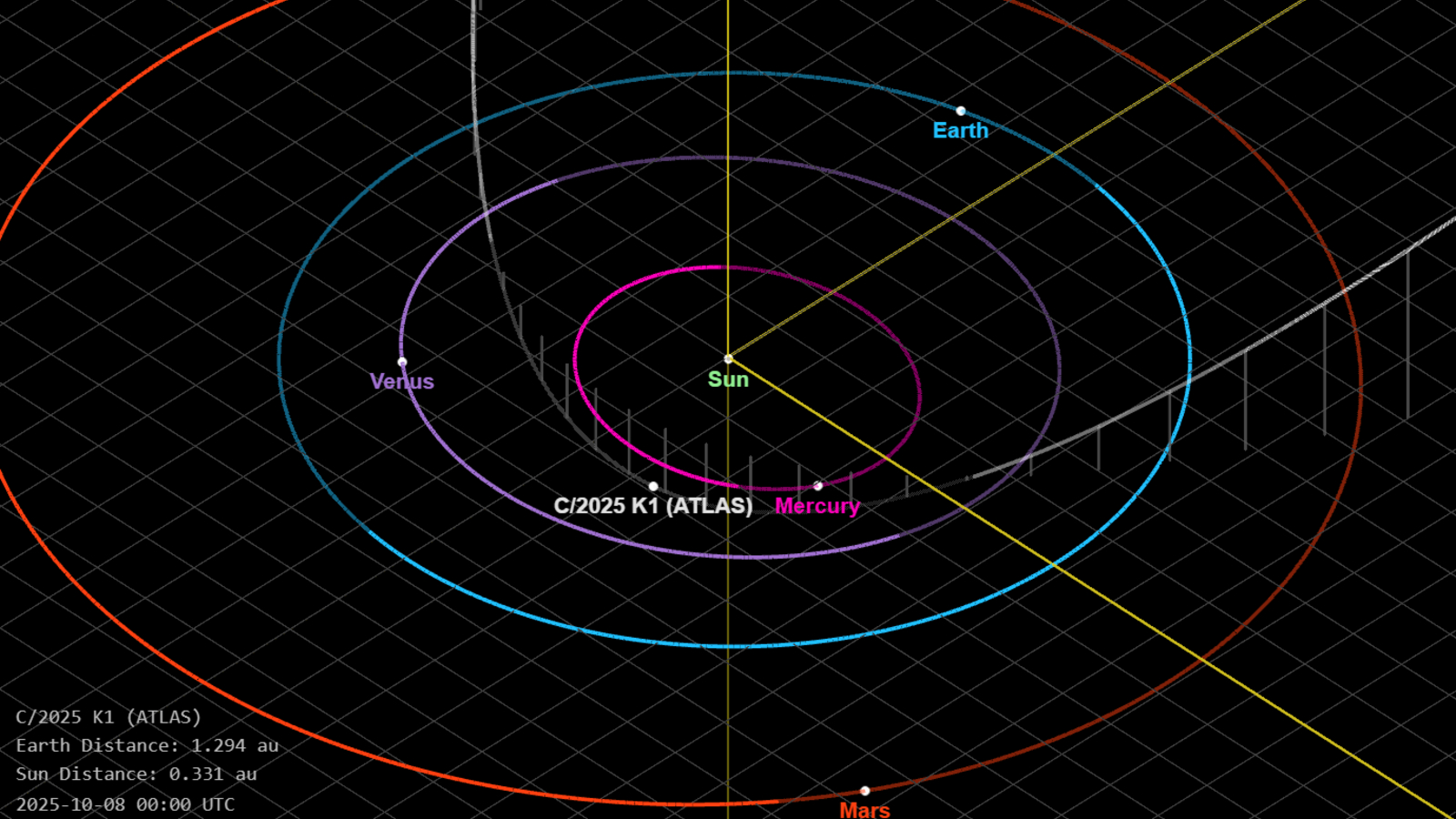 A newly discovered comet, dubbed C/2025 V1 (Borisov), was wrongly linked with 3I/ATLAS, despite having nothing to do with the ISO. It made it reached its closest point to Earth on Tuesday (Nov. 11). CeditS: NASA/JPL
For many researchers, however, the current data is conclusive. “Every observed feature—outgassing, tail formation, spectral signatures—fits well within the physical model of a comet,” said Lorenz Roth, astrophysicist at the Royal Institute of Technology in Stockholm. “Extraordinary claims require extraordinary evidence. So far, there’s none.”
A Rare Visitor With Familiar Behavior
3I/ATLAS is only the third known interstellar object (ISO) after ‘Oumuamua and 2I/Borisov. First identified in July 2025, it entered the solar system at over 210,000 km/h and reached perihelion on October 29.
Prior to the radio detection, NASA had already spotted active water outgassing in early October, describing it as “a firehose at full blast.” Its behavior has included a prominent tail, a color shift near the Sun, and even a brief brightening event—all of which are consistent with a volatile-rich body undergoing solar heating.
Yet, some features led to confusion. Observers initially believed the comet had lost its tail post-perihelion. It hadn’t. The apparent loss was an optical illusion caused by Earth’s shifting vantage point. Others mislinked a separate comet, C/2025 V1 (Borisov), to 3I/ATLAS—despite having no connection.
Adding to the noise, Loeb and others pointed to non-gravitational acceleration as further evidence of potential propulsion. But this too has precedent in cometary dynamics, where jets of gas and dust can subtly alter a body’s path without invoking any exotic physics.
A Gateway to the Galactic Past
The broader significance of the detection isn’t limited to debunking fringe theories. It lies in what 3I/ATLAS might teach us about the early galactic environment. The comet is believed to have been ejected from a distant star system as long as 7 billion years ago, possibly from the outer frontier of the Milky Way.
Its chemical fingerprint, particularly the abundance of water and carbon compounds, provides a rare glimpse into the molecular building blocks present in other stellar nurseries. Unlike solar system comets, interstellar objects offer uncontaminated samples from beyond the Sun’s influence—free from billions of years of planetary radiation and orbital evolution.
Future missions, such as ESA’s Comet Interceptor, may one day allow for direct sampling of ISOs. But for now, telescopic detections like MeerKAT’s remain the best tool for studying these elusive objects in real time.