
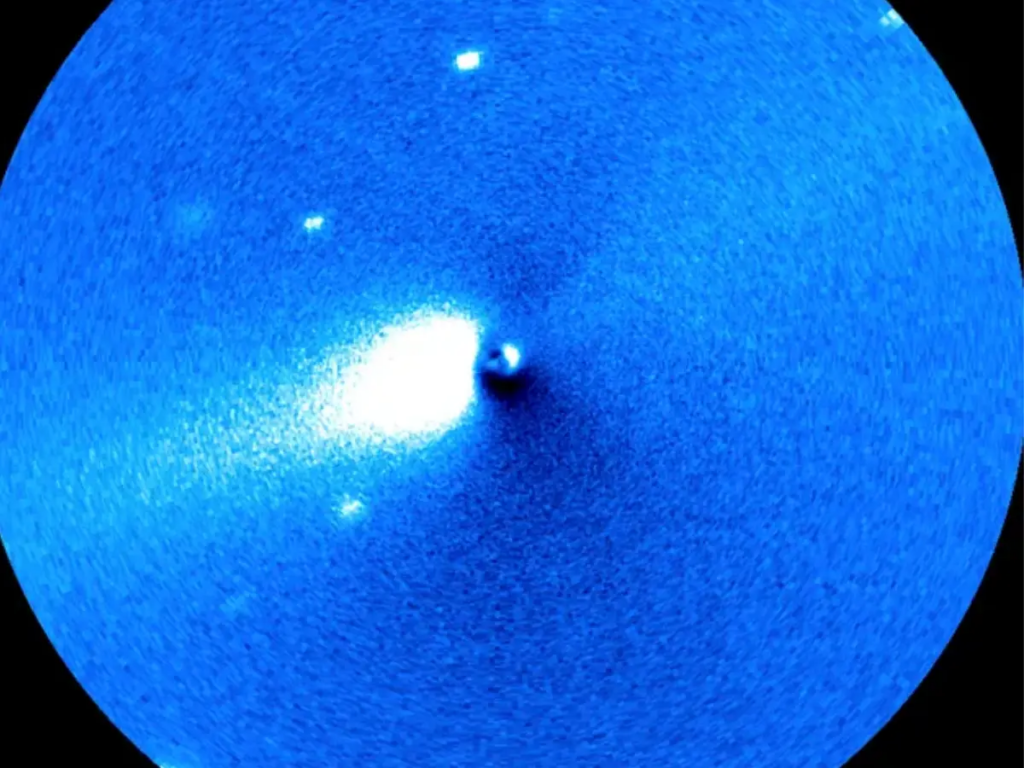
According to David Jewitt and Jane Luu of the Department of Earth, Planetary and Space Sciences, UCLA, one reason for this occurrence could be the release of giant dust particles with an effective radius of approximately 100 micrometres. In normal comets, the dust grains are tiny with a high surface-area-to-mass ratio. In 3I/ATLAS, the anti-tail might come from much larger dust grains, which could be around 100 µm in radius.
Add A Comment