
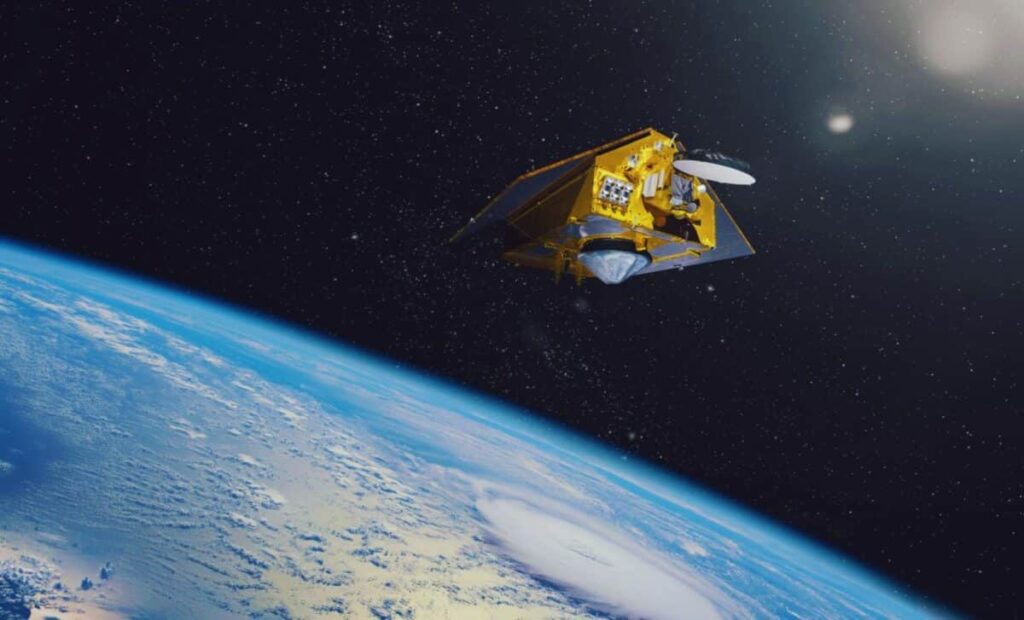
NASA is preparing to launch Sentinel-6B, a next-generation ocean-monitoring satellite developed in partnership with SpaceX and international agencies. The mission will continue decades of high-precision sea level tracking and ocean observation. According to a NASA press release published on November 14, the launch marks a critical expansion of the Copernicus Sentinel-6/Jason-CS program and will provide real-time insights into Earth’s changing oceans.
Launch Scheduled from California on November 17
The Sentinel-6B satellite is set to launch aboard a SpaceX Falcon 9 rocket from Space Launch Complex 4 East at Vandenberg Space Force Base in California. The launch is targeted for 12:21 a.m. EST on Monday, November 17 (9:21 p.m. PST on Sunday, November 16). Viewers can watch live coverage beginning at 11:30 p.m. EST on platforms like NASA+, Amazon Prime, and more.
NASA will also offer coverage through its website, providing real-time blog updates and countdown milestones beginning no earlier than 11 p.m. EST. Streaming video and photos of the launch will be made available shortly after liftoff. For those following by phone, NASA’s V circuits will carry audio-only launch coverage and real-time mission audio without commentary.
 Sentinel-6B satellite. Credit: NASA
Sentinel-6B Will Monitor Earth’s Oceans With Pinpoint Accuracy
The Sentinel-6B satellite is part of the Copernicus Sentinel-6/Jason-CS (Continuity of Service) mission, an international collaboration that includes NASA, ESA, EUMETSAT, NOAA, and CNES, with support from the European Commission. It follows the launch of its twin satellite, Sentinel-6 Michael Freilich, which entered orbit in November 2020.
According to the NASA’s report, Sentinel-6B will extend the current global sea level dataset to “nearly four decades.” Its radar instruments will deliver high-resolution measurements of ocean surface height. These observations are vital for understanding sea level trends, improving weather and storm forecasts, and supporting commercial maritime operations. Since the 1990s, satellites from NASA and its international partners have been collecting increasingly accurate data that now forms the backbone of global climate research.
This mission is also notable as the first involving international participation in the European Union’s Copernicus Earth Observation Program, which has been led primarily by European institutions until now.
Mission Leaders to Hold Prelaunch Briefing
A prelaunch teleconference is scheduled for Saturday, November 15 at 4 p.m. EST, featuring key voices from the mission teams. Participants include Karen St. Germain, director of NASA’s Earth Science Division; Pierrik Veuilleumier, Sentinel-6B project manager at ESA; and Parag Vaze, project manager at NASA’s Jet Propulsion Laboratory in Pasadena, California.
Also attending will be Tim Dunn, senior launch director for NASA’s Launch Services Program; Julianna Scheiman, director of NASA Science Missions at SpaceX; and 1st Lt. William Harbin, launch weather officer from the U.S. Air Force. The audio will stream live on the NASA Video YouTube channel, and media participants are required to RSVP in advance.
This new satellite will measure sea levels for almost all of Earth’s ocean 🌊
Sentinel-6B adds to a sea level data record spanning over 30 years—information that helps improve weather forecasts, keep ships safe, and ensure astronauts splash down safely. https://t.co/kGBBCQoKeM pic.twitter.com/Nqq0KsZ7tu
— NASA (@NASA) November 14, 2025
Public Invited to Attend Virtually and Engage Online
NASA is also opening the launch to virtual guests. By registering online, the public can access curated resources, receive updates on launch-related events, and earn a digital stamp for the NASA Virtual Guest Passport. Those interested can follow the event and share their experience on social media by tagging NASA accounts on platforms like X, Facebook, and Instagram.
For questions related to launch coverage or virtual attendance, NASA has provided media contact points at its Headquarters, Kennedy Space Center, and Jet Propulsion Laboratory. This mission represents a major step forward in global ocean monitoring, offering real-time insights into one of Earth’s most sensitive and rapidly changing systems.