
Our cosmos is growing, and that expansion rate is accelerating.
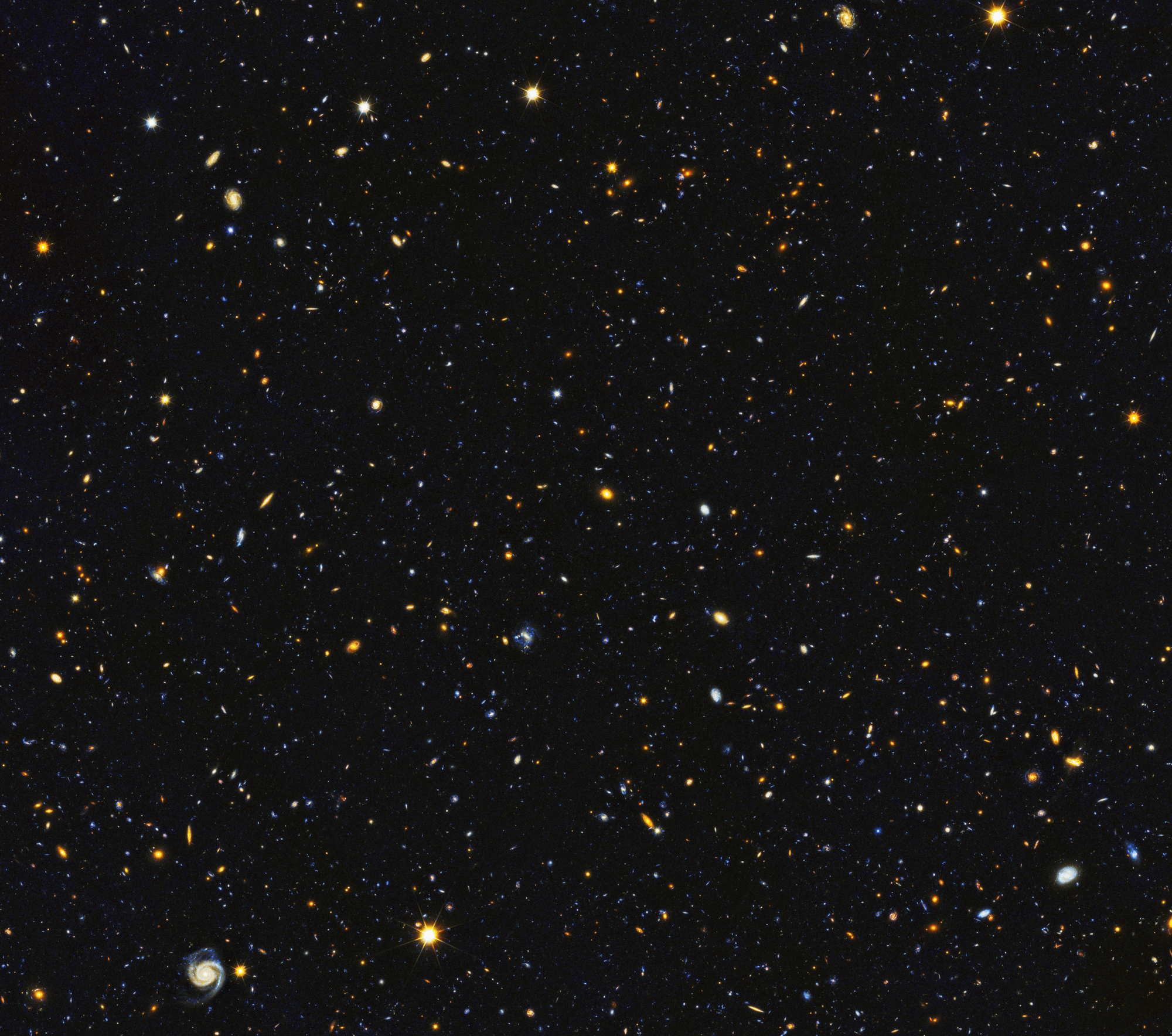
Nearly a century after astronomer Edwin Hubble discovered that the universe is expanding, the telescope named in his honor refined his distance measurements. Astronomers use the Hubble telescope to measure distances by comparing the brightness of a known object in our galaxy (like a star or a supernova) to that of similar objects in a distant galaxy. They then couple those distances with the best galaxy-velocity measurements obtained from other telescopes. After more than three decades of observations, teams using Hubble’s extraordinary capabilities have measured the expansion rate to a precision of just over 1%, about eight times more precise than they originally anticipated! This value for the Hubble Constant puts the age of the universe at about 13.8 billion years old. However, there is a twist… Our universe is not only growing, but that expansion rate is accelerating.
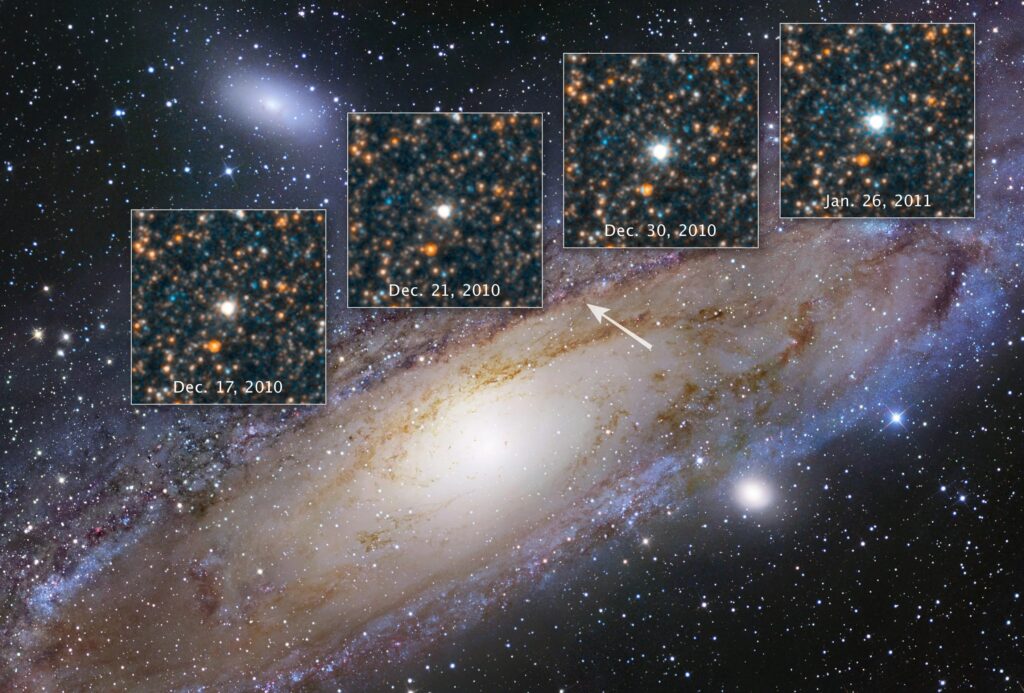
Hubble observations, along with those of ground-based observatories, surprised astronomers by revealing that the universe is not just expanding but accelerating – a discovery that won the 2011 Nobel Prize in Physics. Astronomers use stars like Type Ia supernovae and Cepheid variables to determine astronomical distances because these types of stars have well-known brightness curves. Once they know the galaxy’s distance and how fast it is moving away from us, they can calculate the Hubble Constant.
When the Hubble Space Telescope launched in 1990, one of its main goals was to measure the rate at which our universe is expanding.
NASA; Producer & Director: James Leigh
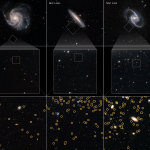
To improve the precision of the Hubble constant, astronomers analyzed Hubble data from 19 galaxies, including NGC 1015. This color-composite of NGC 1015 holds yellow circles that represent the location of Cepheid variable stars. Cepheids are excellent beacons for measuring accurate distances to nearby galaxies because their pulsation rate closely matches their intrinsic brightness.
Type Ia supernovae are also good indicators because they all peak at the same brightness. Astronomers use the difference between its intrinsic peak brightness and how bright it appears to calculate how far away the supernova must be. The small cross-shape near the top of the galaxy denotes the location of a Type Ia supernova.
Comparing both Cepheids and Type Ia supernovae in nearby galaxies allows astronomers to calibrate the brightness of Type Ia supernovae in more distant galaxies, which helps refine their overall measurements of the Hubble Constant.
Hubble (WFC3) & Webb (NIRCam) Image of NGC 5468
In 2023, to try to eliminate the possibility of measurement errors, researchers used NASA’s James Webb Space Telescope to test their Hubble results. Those observations confirmed Hubble’s results, leading some scientists to suggest that something else – not measurement errors – is influencing the expansion rate.
Many scientists believe an invisible force, called “dark energy,” causes this acceleration. We can think of dark energy as an “antigravity” or repelling force that pushes galaxies apart by stretching space at an increasing pace. Although current technology does not allow us to directly measure dark energy, we can characterize it by observing its effect on normal matter in the visible universe. From these observations, scientists estimate that dark energy is about 68%, dark matter is about 27%, while normal matter and energy are only about 5% of the entire universe. By studying how dark energy behaves over time, astronomers hope to gain a better understanding of what it is and how it might affect the future of the cosmos.
NASA’s Webb, Hubble Telescopes Affirm Universe’s Expansion Rate, Puzzle Persists
Dark energy is just one of the mysteries Hubble is trying to uncover.
NASA; Producer & Director: James Leigh
Learn More
Hubble Finds Universe Expanding Faster Than Expected
Astronomers using NASA’s Hubble Space Telescope have discovered that the universe is expanding 5 percent to 9 percent faster than expected.
New Milestone in Mystery of Universe’s Expansion Rate
Completing a nearly 30-year marathon, NASA’s Hubble Space Telescope has calibrated more than 40 “milepost markers” of space and time to help scientists precisely measure the expansion rate of the universe – a quest with a plot twist.
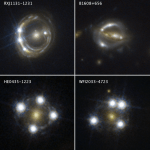
Cosmic Magnifying Glasses Yield Independent Measure of Universe’s Expansion
A team of astronomers using NASA’s Hubble Space Telescope has measured the universe’s expansion rate using a technique that is completely independent of any previous method.
New Measure of Hubble Constant Adds to Mystery of Universe’s Expansion Rate
Astronomers have made a new measurement of how fast the universe is expanding, using an entirely different kind of star than previous endeavors. The revised measurement, falls in the center of a hotly debated question in astrophysics that may lead to a new interpretation of the universe’s fundamental properties.
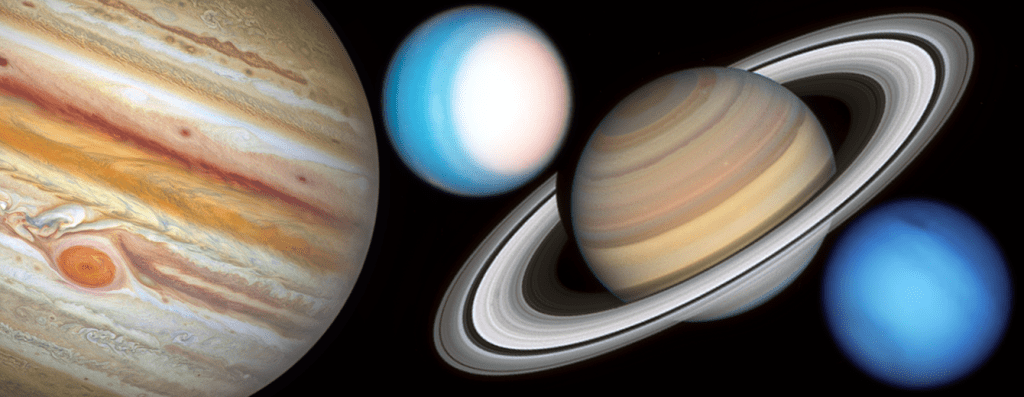
Studying the Planets and Moons
Hubble’s systematic observations chart the ever-changing environments of our solar system’s planets and their moons.

Tracking Evolution in the Asteroid Belt
These conglomerates of rock and ice may hold clues to the early solar system.
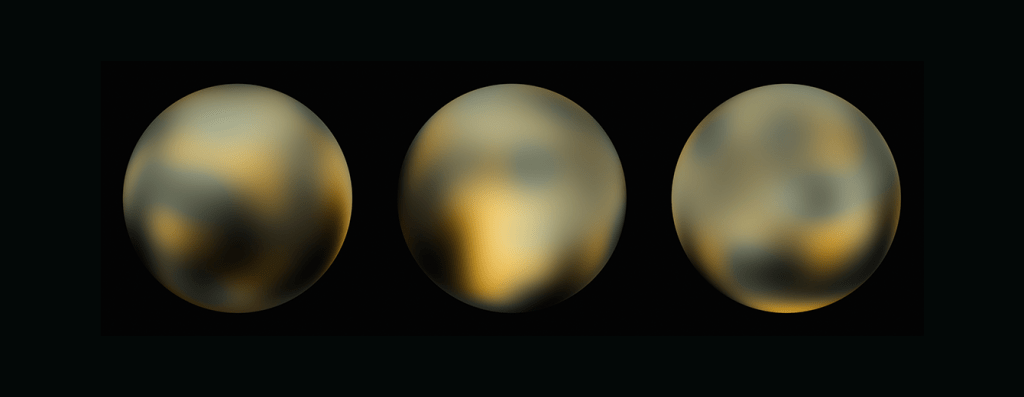
Uncovering Icy Objects in the Kuiper Belt
Hubble’s discoveries helped NASA plan the New Horizon spacecraft’s flyby of Pluto and beyond.
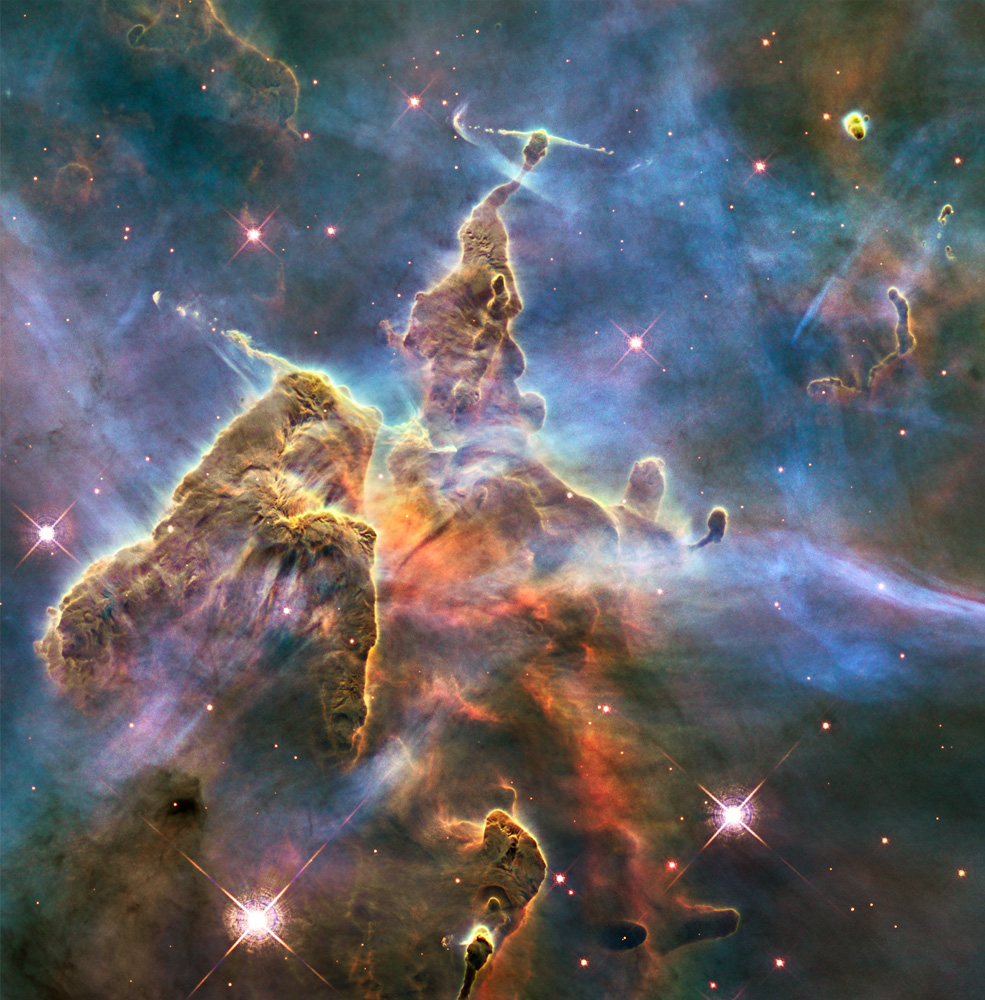
Exploring the Birth of Stars
Seeing ultraviolet, visible, and near-infrared light helps Hubble uncover the mysteries of star formation.

The Death Throes of Stars
When stars die, they throw off their outer layers, creating the clouds that birth new stars.

Finding Planetary Construction Zones
Hubble’s sensitivity uncovers the seeds of planets in enormous disks of gas and dust around stars.

Recognizing Worlds Beyond Our Sun
Hubble can detect and measure the basic organic components for life on planets orbiting other stars.

Seeing Light Echoes
Like ripples on a pond, pulses of light reverberate through cosmic clouds forming echoes of light.

Tracing the Growth of Galaxies
Hubble’s Deep Field observations are instrumental in tracing the growth of galaxies.

Galaxy Details and Mergers
Galaxies evolve through gravitational interaction with their neighbors, creating a menagerie of forms.

Monster Black Holes are Everywhere
Supermassive black holes lie at the heart of nearly every galaxy.
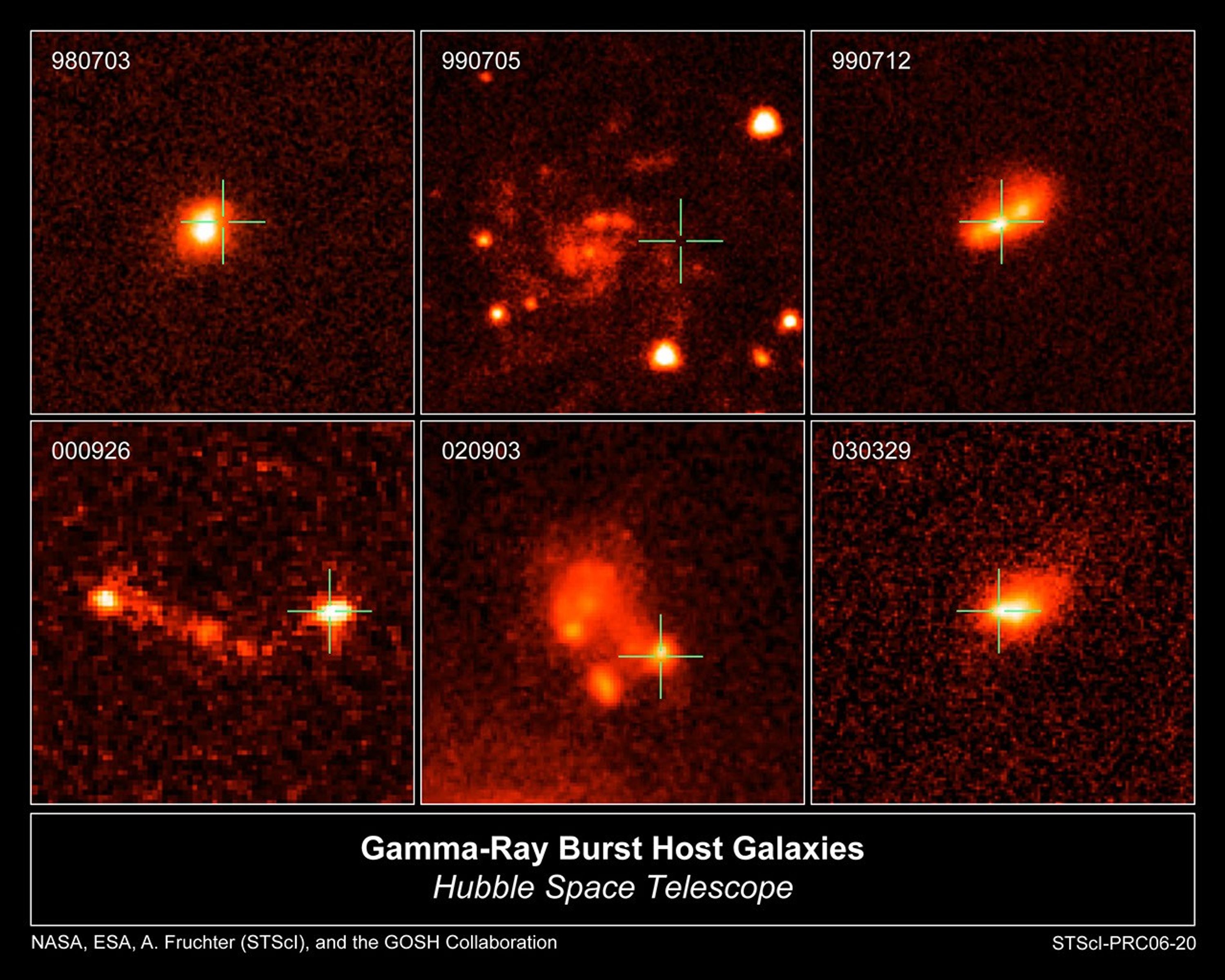
Homing in on Cosmic Explosions
Hubble helps astronomers better understand and define some of the largest explosions in the universe.
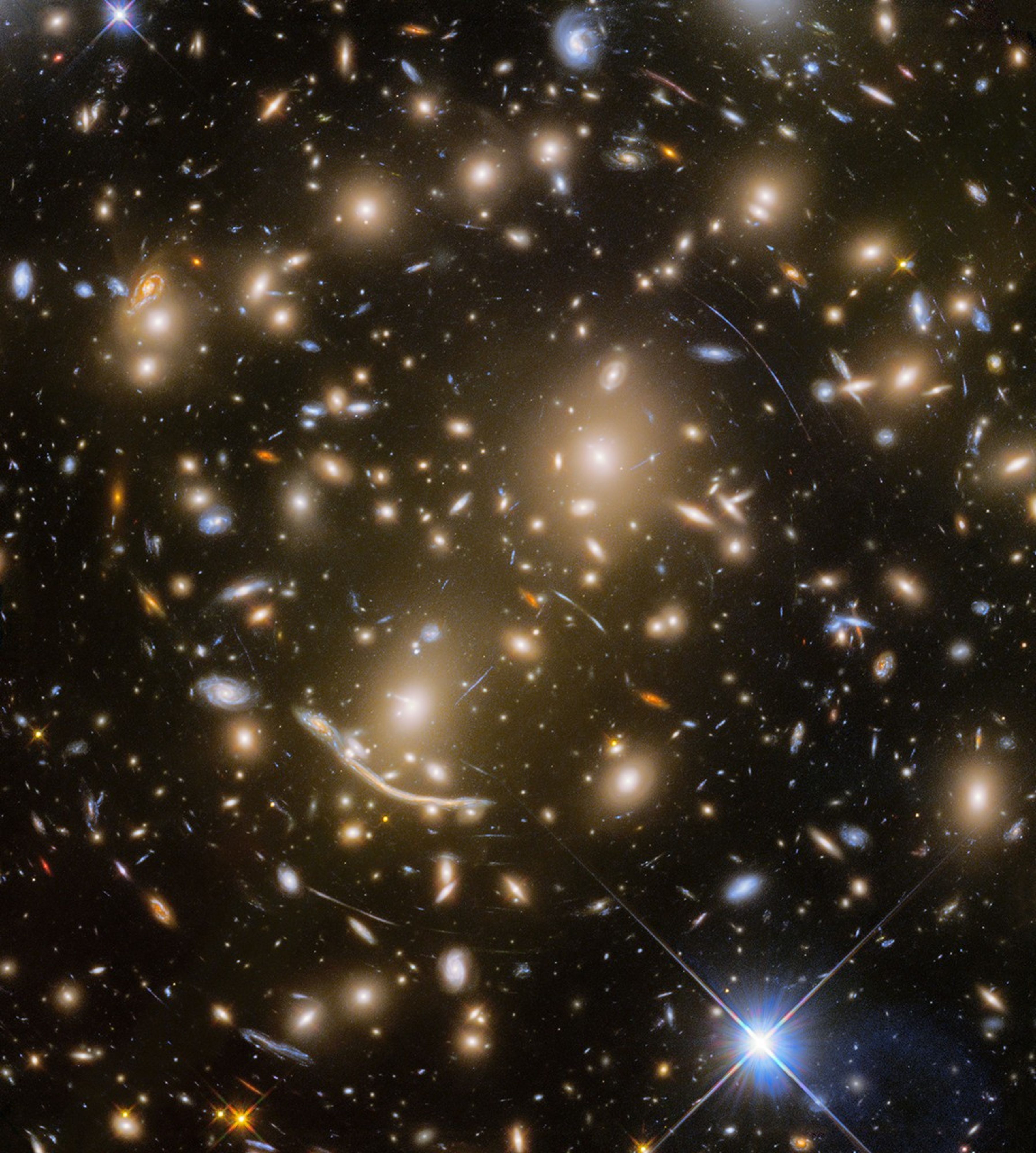
Focusing in on Gravitational Lenses
Gravitational lenses are ‘Nature’s Boost’, expanding our view deeper into space and farther back in time.

Shining a Light on Dark Matter
The gravitational pull of dark matter guides the formation of everything we can see in the universe.
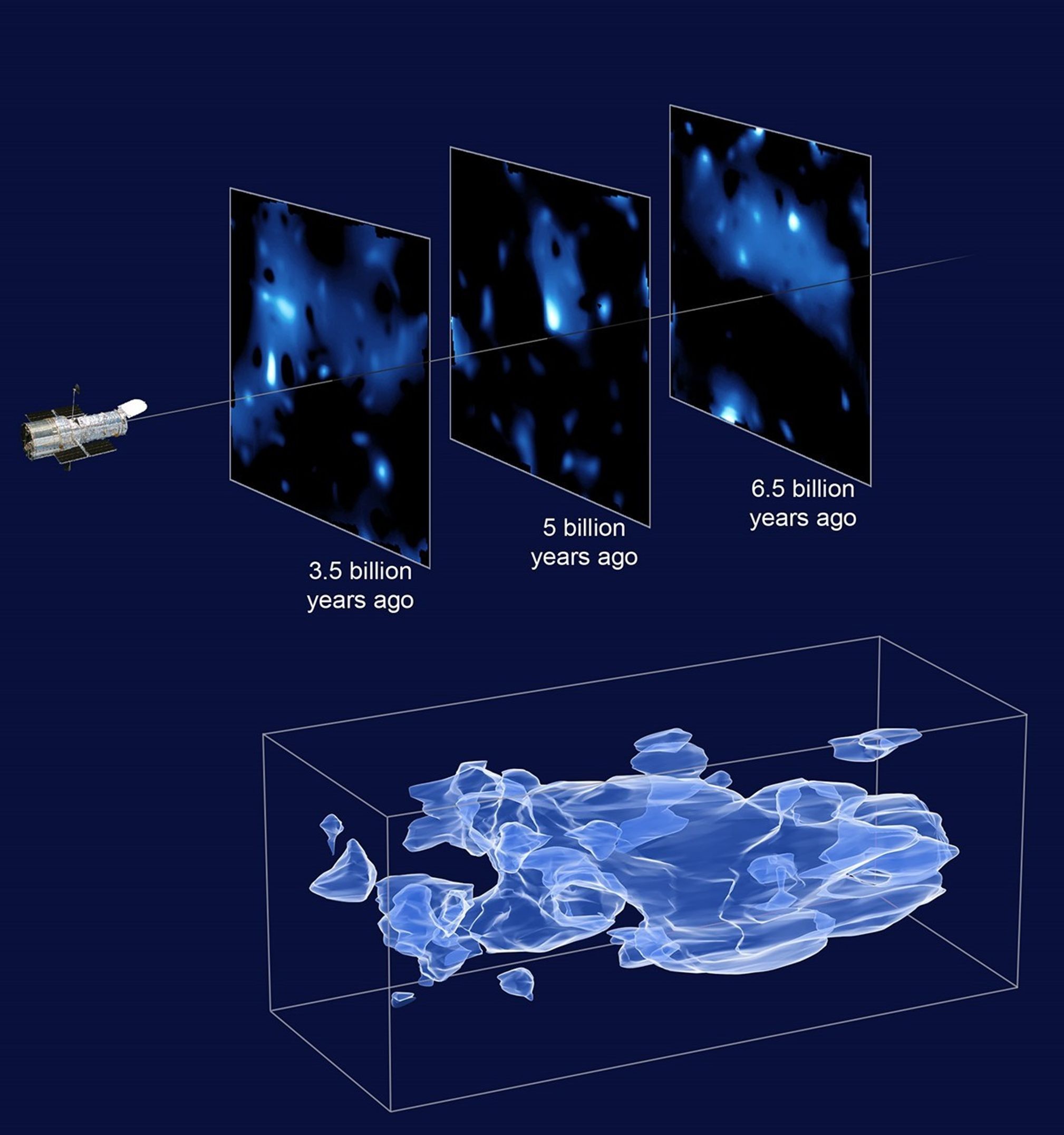
Mapping the Cosmic Web
Filaments and sheets of matter create an interconnected web that forms the large-scale structure of the universe.