
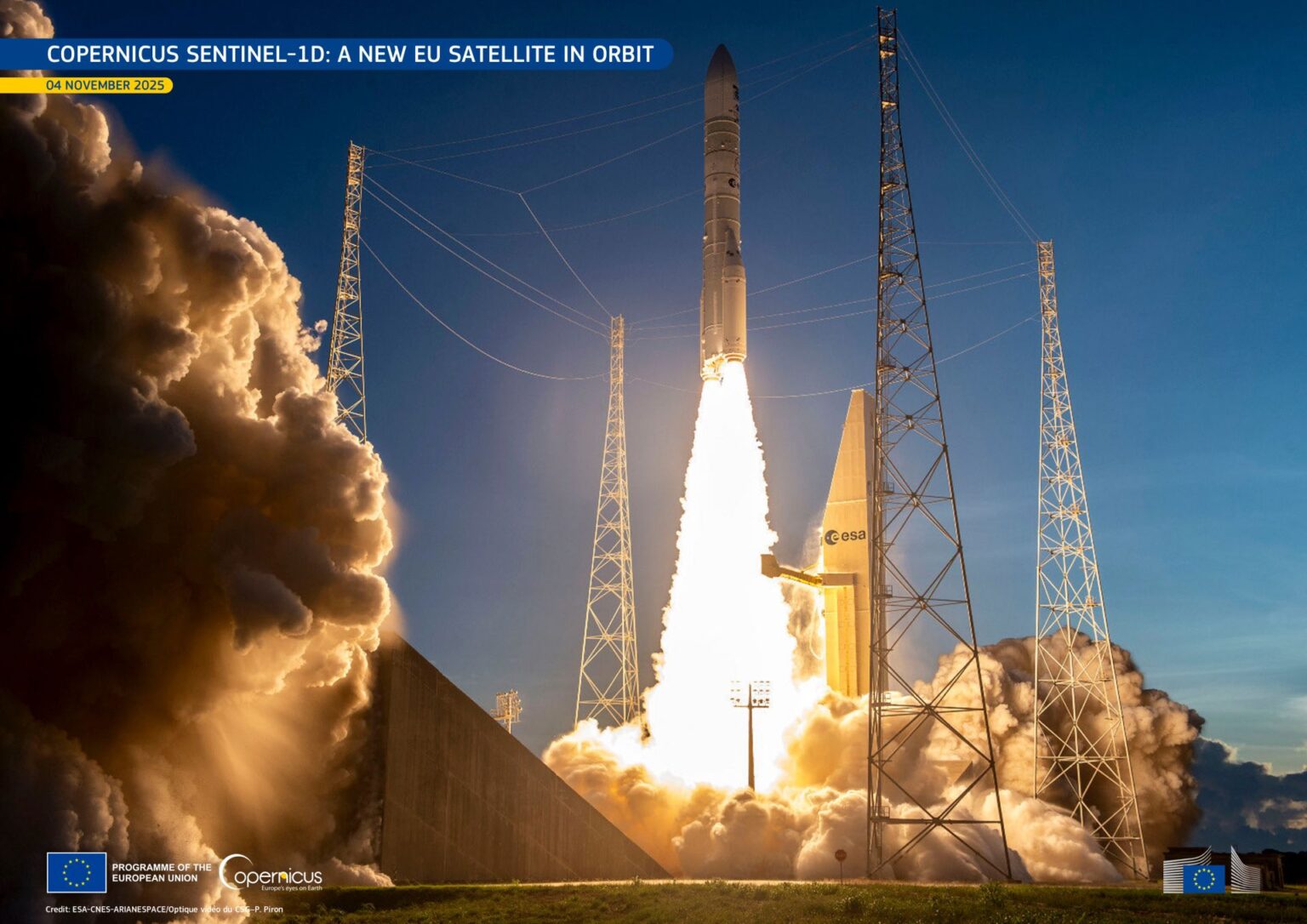
Europe’s Copernicus program notched a significant milestone recently with the successful launch of Sentinel-1D, the final satellite in the first generation of the Sentinel-1 radar Earth-observing mission. The satellite lifted off on Nov. 4, 2025 aboard an Ariane 6 rocket.
With Sentinel-1D now in space, Europe has reinforced its capacity to monitor the planet independently and continuously, regardless of weather conditions or the availability of daylight.
What is it?
Managed by the European Union in partnership with the European Space Agency, the Copernicus program was created to secure autonomous access to environmental and security data.
You may like
The program integrates satellite measurements with ground-based and airborne systems to generate high-quality, near-real-time information about Earth’s land, oceans, climate and atmosphere. Its constellation of Sentinel satellites has become a foundation for monitoring environmental change, supporting disaster response, protecting maritime routes and informing agricultural planning. Millions of users — from scientists and government agencies to businesses, farmers and humanitarian responders — rely on Copernicus data daily.
Where is it?
The launch of Sentinel-1D happened at Europe’s Spaceport in Kourou, French Guiana.
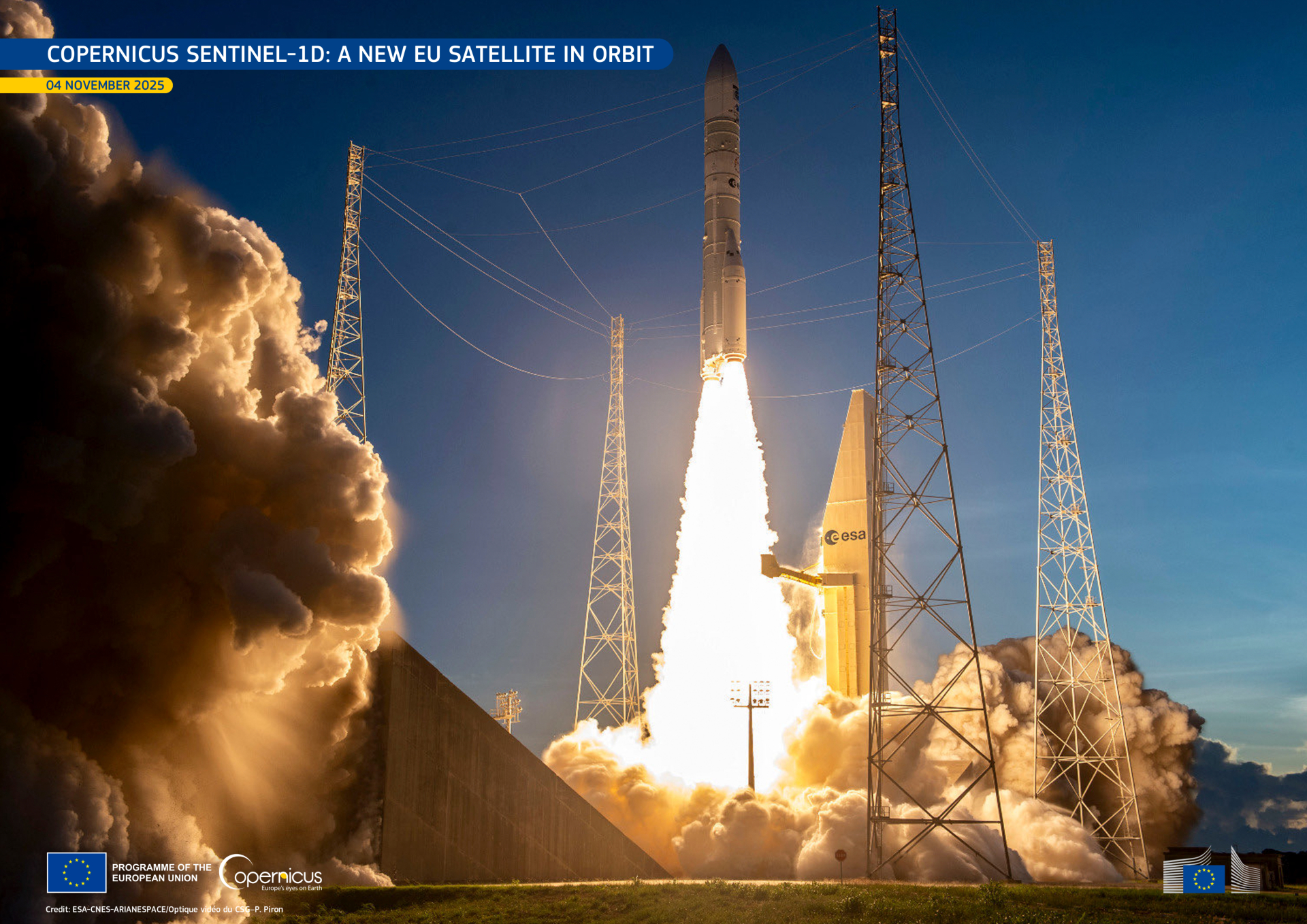
This launch was the fourth to date for the Ariane 6 heavy lifter, which is operated by the France-based company Arianespace. (Image credit: ESA-CNES-ARIANESPACE/Optique vidéo du CSG–P. Piron)Why is it amazing?
While Sentinel-1D adds advanced capability, its launch was especially symbolic. It completed the first generation of the Sentinel-1 constellation, ensuring mission continuity after the retirement of Sentinel-1B in 2021 and safeguarding the uninterrupted delivery of radar data that Europe’s agencies, industries and research communities depend on. It was also the fourth launch of the Ariane 6 rocket.
With this launch, the first chapter of the Sentinel-1 mission drew to a close, and Europe began preparing for the next evolution of its space-based observing system.
Want to learn more?
You can learn more about the European Space Agency, the Copernicus program and the Ariane 6 rocket.