
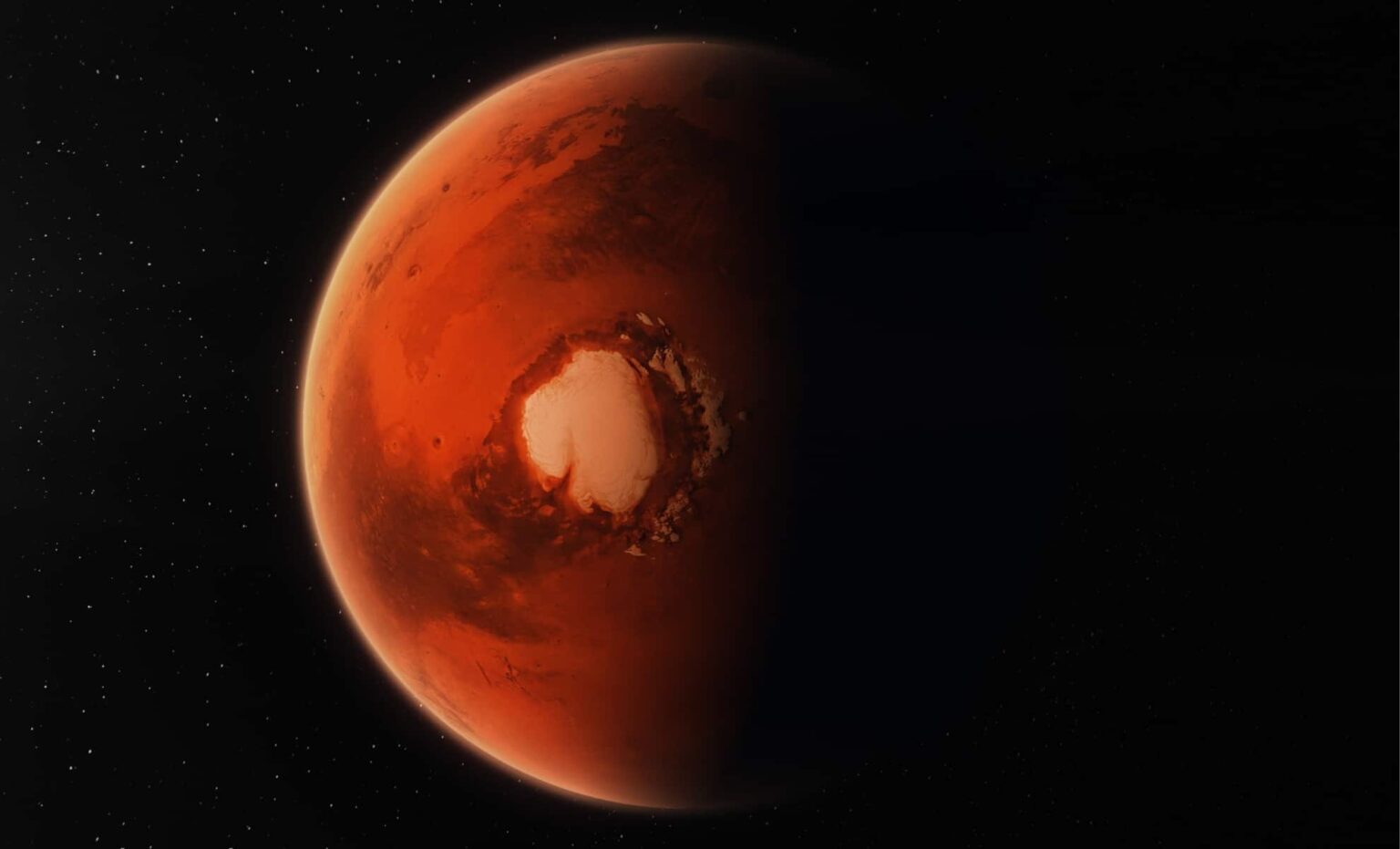
A new study suggests that microbial remnants could survive millions of years, preserved in frozen Martian surfaces exposed to radiation and extreme cold. The findings come from a lab-based simulation of Mars-like conditions, conducted by NASA’s Goddard Space Flight Center and Penn State University. Their results indicate that organic molecules and possibly microbes may endure deep freezes far longer than previously thought.
The study reorients the search for Martian life away from rocks and sediments, and toward the planet’s icy zones. By mimicking Martian radiation and subzero temperatures, researchers discovered that certain environments—particularly pure water ice—are far more favorable for preserving biological material than soil. These results offer a new direction for upcoming missions like the Mars Life Explorer, currently under NASA review.
Organic Survival in Pure Ice
In the experimental setup, the research team placed Escherichia coli bacteria in water ice, silicate rock, and clay—materials common on Mars. According to NASA scientist Alexander Pavlov, the samples were cooled to -51°C and bombarded with gamma radiation levels equivalent to 50 million years of cosmic exposure on Mars.
The results were striking. More than 10% of the bacteria’s amino acids survived in the pure ice, while the same molecules degraded ten times faster when mixed with soil or clay. As Pavlov noted, this difference “was surprising,” suggesting that ice alone provides a kind of molecular sanctuary, even under extreme planetary conditions.
The implications are significant. As co-author Christopher House, geoscientist at Penn State, observed: “That means if there are bacteria near the surface of Mars, future missions can find it.” Ice, long overlooked in favor of ancient sediments, may actually be Mars’s most reliable biological archive.
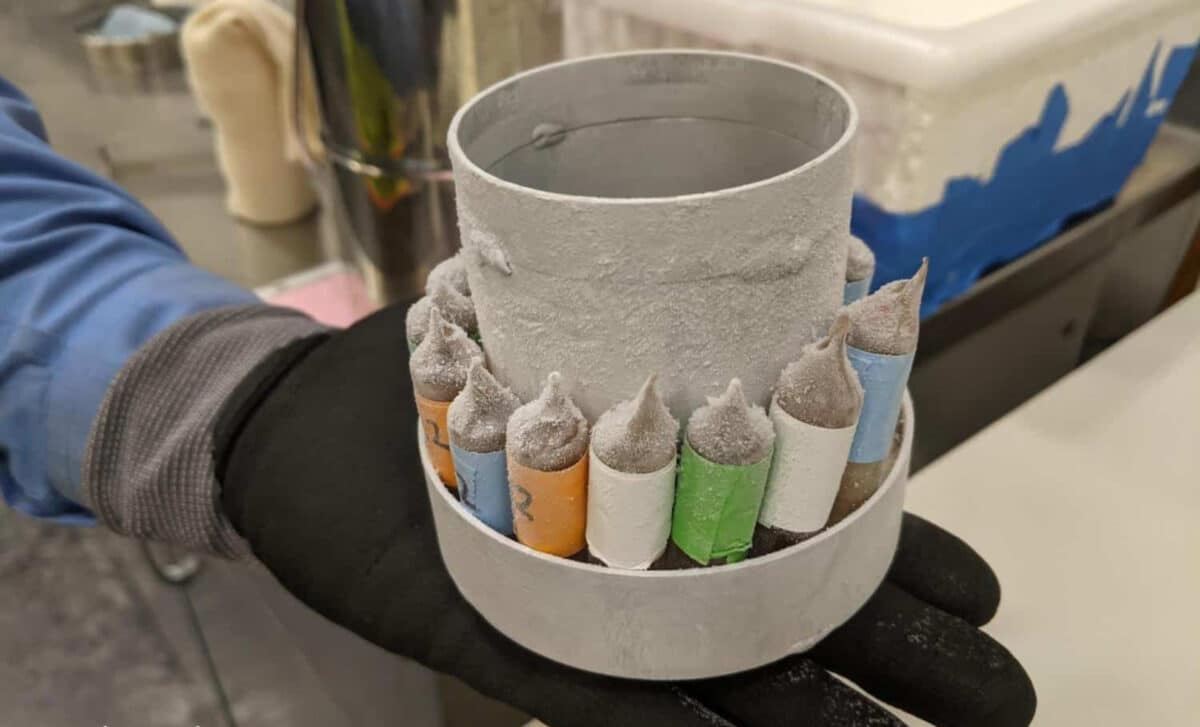 Samples of E. coli mixed with water ice and Martian sediment were cooled to minus 60 degrees Fahrenheit, then blasted with an equivalent of 20 million years of cosmic radiation at Penn State’s Radiation Science and Engineering Center – © Alexander Pavlov
Lessons From the Phoenix Lander
Much of the evidence supporting this icy hypothesis builds on prior Mars missions. In 2008, NASA’s Phoenix lander was the first to excavate and photograph subsurface ice near the Martian Arctic Circle. While Phoenix lacked instruments to detect life, its scoop proved that accessible water ice exists just below the surface.
This aligns with current estimates that large areas of Mars contain permafrost, some only centimeters deep. “There is a lot of ice on Mars, but most of it is just below the surface,” said House. Any future mission aimed at detecting organic compounds will require equipment capable of drilling or scooping, like Phoenix, but enhanced with modern tools.
A potential follow-up, the Mars Life Explorer mission, could incorporate these lessons. According to the researchers, spectrometers or sample-return systems capable of probing ice-rich layers stand a realistic chance of finding preserved biomolecules—if they’re there.
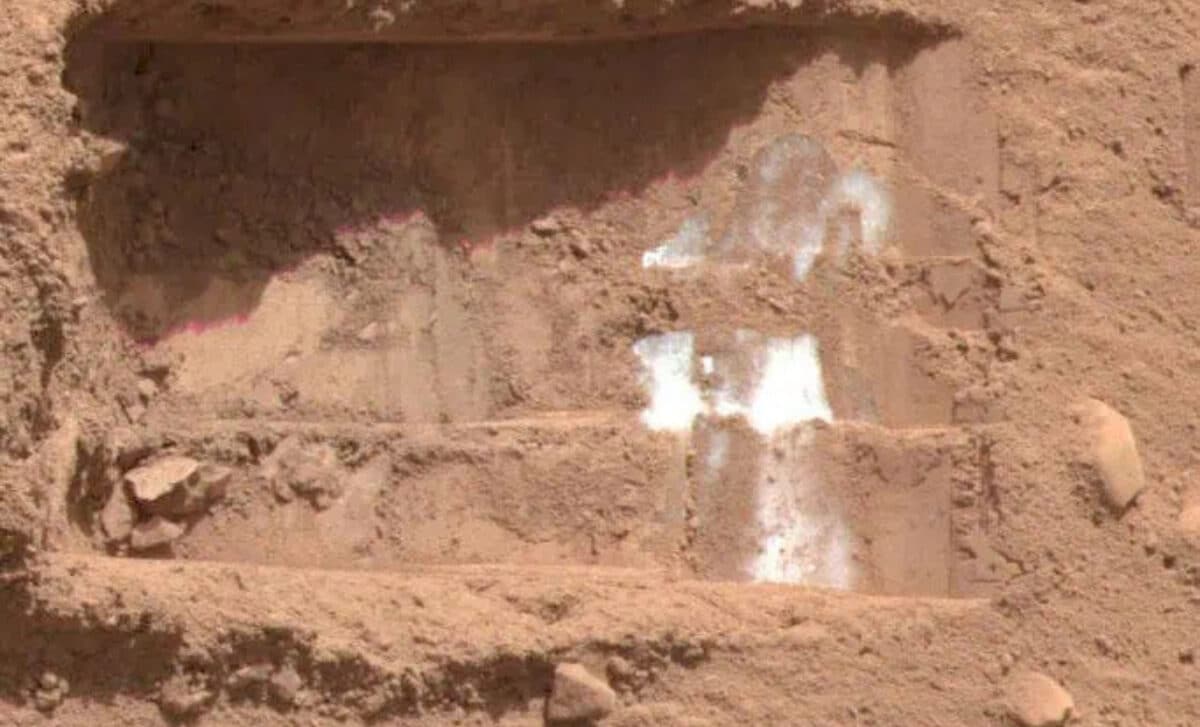 NASA’s Phoenix mission in 2008 was the first to excavate down and capture photos of ice, pictured here, in the Mars equivalent of the Arctic Circle – © NASA/JPL-Caltech/University of Arizona/Texas A&M University
From Mars to the Outer Moons
The scope of the research stretches beyond Mars. Pavlov’s team repeated the same experiments under conditions mimicking the icy moons Europa and Enceladus, which orbit Jupiter and Saturn. These environments, even colder than Mars, showed slower molecular decay rates, making them even more promising for biosignature preservation.
This supports the goals of the upcoming NASA Europa Clipper mission, which will begin its flybys of Jupiter’s moon in 2030. According to Pavlov, “pure ice or ice-dominated regions are an ideal place to look for recent biological material.”
Whether on a frozen moon or beneath Martian regolith, the evidence now points clearly: cold preserves. For decades, cosmic radiation was seen as a total sterilizer of Mars’s surface. But this study shifts the narrative, suggesting that beneath the dust, microbial clues could still be intact, frozen in time and waiting to be uncovered.