
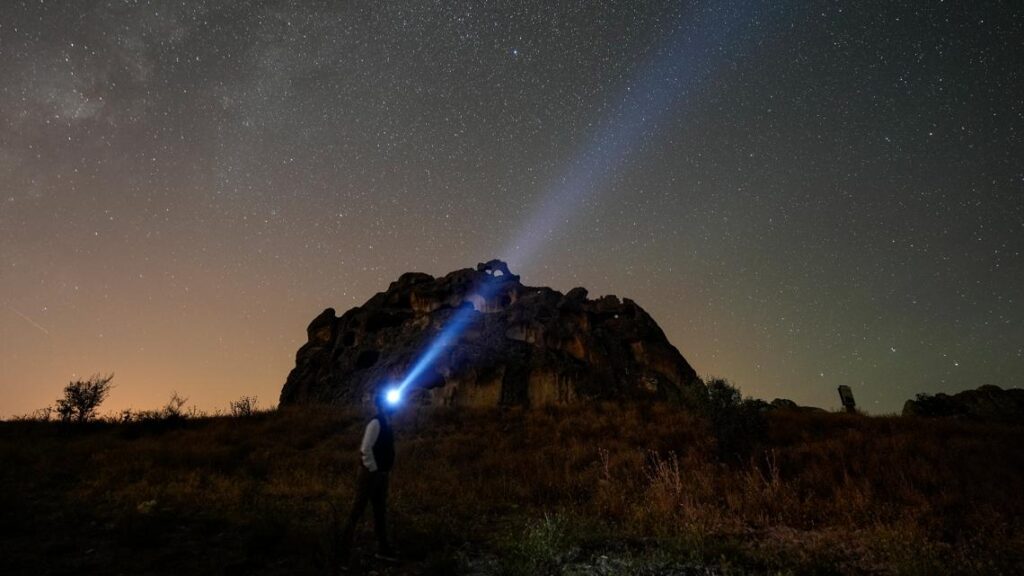
Despite the low count, the Leonids are historically known to produce some powerful storms every 33 years or so, NASA says.
WASHINGTON — Stargazers are getting another celestial treat this month, with the Leonids dazzling skies this week.
The Leonid meteor shower, known for colorful, bright streaks, will peak early on Nov. 17. According to NASA, stargazers can see up to 15 meteors per hour during this time.
Conditions are relatively favorable for 2025 as the Leonids peak near a new moon. The moon is expected to be 9% full, according to the American Meteor Society.
Earlier this month, the southern and northern Taurids peaked, giving stargazers plenty of options to catch a meteor.
Despite the low count, the Leonids are historically known to produce some powerful storms every 33 years or so, NASA says. During a storm in 1966, thousands of meteors per minute appeared to fall like rain in the night sky.
What are meteor showers?
Meteor showers occur annually as the Earth passes through debris trails left by comets, NASA says.
They are usually named after a star or constellation that is close to where they appear in the sky. About 48.5 tons of “meteoritic material” fall on Earth each day, NASA says. Most of the material vaporizes while traveling through Earth’s atmosphere, producing a bright trail that is known to us as a shooting star.
NASA says that several meteors can be seen on any given night, but the number dramatically increases during meteor showers.
How to watch the Leonid meteor shower?
Find a spot away from city lights and head outside after midnight. Lie flat on your back and look up. Allow yourself at least 30 minutes for your eyes to adjust to the darkness.
NASA says the meteor shower is best viewed during the pre-dawn hours, but the sweet spot is between midnight and 2 a.m.
When is the next meteor shower?
The Geminids, usually the strongest meteor shower of the year, will peak on Dec. 13 into Dec. 14.