
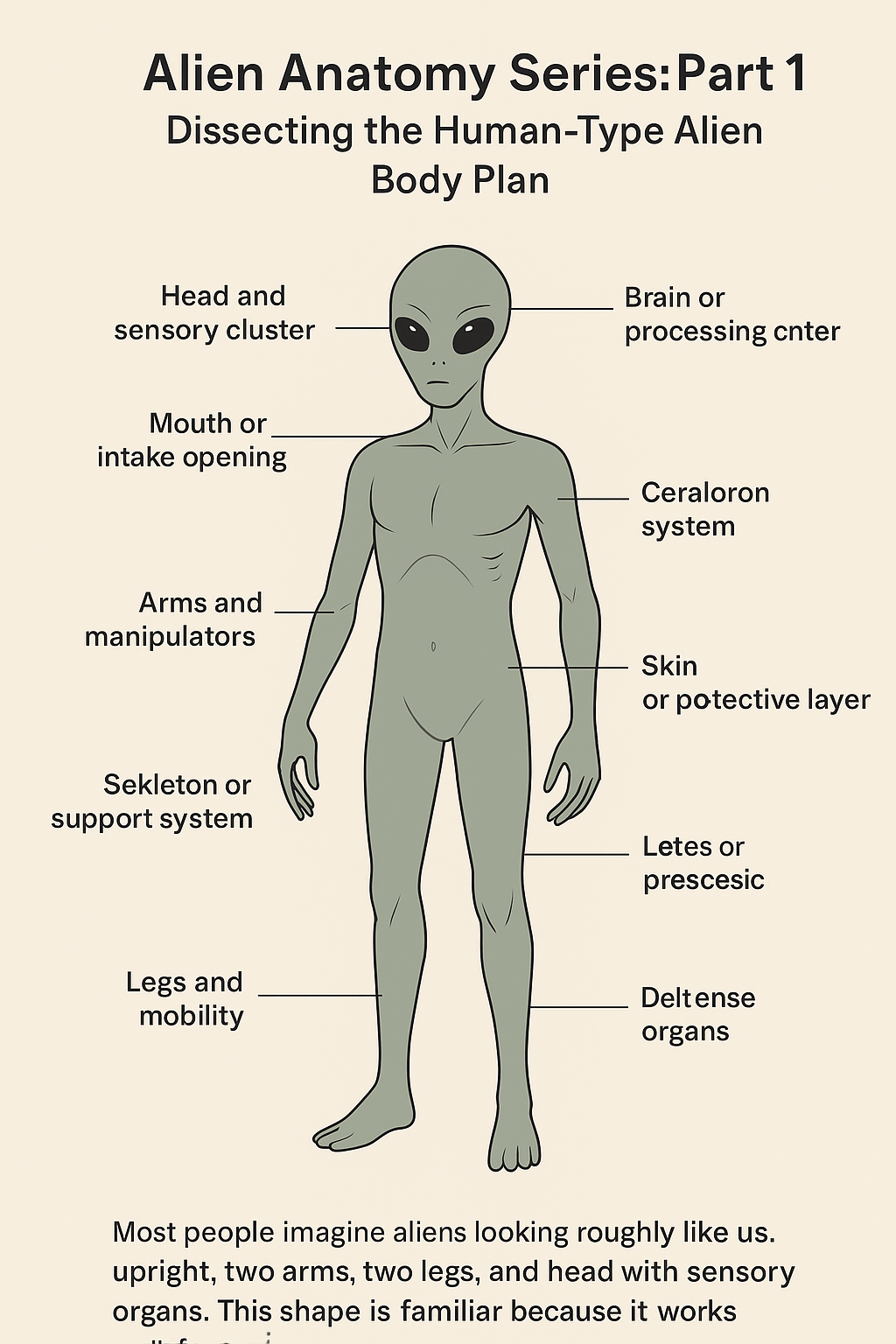
Most people imagine aliens resembling humans: upright posture, two arms, two legs, and a head with sensory organs. This form is familiar because it supports tool use, mobility, and intelligence. In a real humanoid alien, every feature would have a functional purpose.
Head and sensory hub
A centralized head allows multiple sensory organs to work together efficiently. Eyes, ears, and chemical detectors positioned near the brain enable rapid processing of environmental information.
Visual organs
Humanoid aliens might perceive light beyond the human spectrum. They could detect infrared, ultraviolet, or even electromagnetic fields.
Nutrient intake
If the alien consumes matter, an intake organ is logical. It could handle solids, liquids, or gases, with form and structure adapted to diet.
Arms and manipulators
Precision and dexterity require capable limbs. Hands, claws, or tentacle-like appendages allow gripping, shaping, and operating tools.
Legs and locomotion
Two legs free the arms for complex tasks. Bipedal balance is advantageous on flat ground or rugged terrain.
Support structure
A rigid internal framework is necessary to maintain posture. Exoskeletons may serve the same purpose but could limit flexibility or growth.
Circulation and respiration
Gas exchange organs, similar to lungs, would supply oxygen or other necessary gases. Circulatory fluids transport energy and nutrients throughout the body.
Protective covering
Skin or outer layers shield the body from environmental stress. This covering could be thick, reflective, scaled, or even semi-transparent.
Brain or control center
Centralized processing enables intelligence, rapid sensory integration, and precise movement coordination.
Reproductive system
Humanoid aliens might reproduce $ exually, though their methods could be vastly different from humans. Fertilization could involve specialized organs or unique processes.
Defense adaptations
Armor plates, spikes, chemical secretions, or color-changing surfaces could help avoid predators or environmental hazards.
Communication methods
Vocalization is one possibility, but aliens might also use light signals, chemical cues, or electromagnetic pulses to convey information.
Did I miss something?
by Nisaan-Nanda